Cold Laser Therapy Side Effects: Is It Safe for Long-Term Use?
When exploring treatment options for pain relief and recovery, safety is often the first question patients ask. If you've been reading about cold laser therapy for pain relief and its applications across different conditions, you've likely wondered: what are the cold laser therapy side effects, and is this treatment safe to use over time? These are completely reasonable questions, and the good news is that the clinical record on this therapy is reassuringly straightforward. This post takes a thorough look at what the research shows about cold laser therapy side effects, who should exercise caution, what contraindications exist, and what you can reasonably expect in terms of long-term safety. Our goal is to give you clear, honest information so you can have a confident, informed conversation with your care team.
What the Research Says About Cold Laser Therapy Side Effects
Cold laser therapy, also referred to as low-level laser therapy (LLLT) or photobiomodulation, has been studied extensively over the past several decades. The body of research consistently points to one standout characteristic: cold laser therapy side effects are remarkably rare and generally mild when they do occur.
Unlike many conventional pain treatments, cold laser therapy does not use heat to damage or ablate tissue. Instead, it delivers low-level wavelengths of light, typically in the range of 600 to 1,000 nanometers, that are absorbed at the cellular level. Because no tissue is cut, burned, or chemically altered, the physiological disruption is minimal compared to surgical or pharmaceutical interventions.
Clinical studies and systematic reviews have found that serious adverse events from cold laser therapy are extraordinarily uncommon. Across thousands of documented treatment sessions reported in peer-reviewed literature, no serious adverse events have been consistently recorded when therapy is administered by a qualified practitioner following appropriate protocols. That track record makes cold laser therapy one of the more favorable options from a safety standpoint within the broader landscape of pain management modalities.
The Most Commonly Reported Mild Side Effects
When cold laser therapy side effects do appear, they tend to be temporary and localized. The most commonly noted include:
- Temporary redness or skin irritation at or near the treatment site, which typically resolves within a few hours
- Mild warmth or tingling sensation during or immediately after a session
- Transient discomfort in sensitive areas, particularly if the underlying condition involves significant inflammation
- Occasional temporary increase in soreness in the treated area, sometimes called a "healing response," which generally subsides within 24 to 48 hours
These effects, when they occur, are typically self-limiting: meaning they resolve on their own without intervention. Most patients report no side effects at all during or after their sessions.
Understanding Cold Laser Therapy Contraindications
Even with an excellent safety profile, cold laser therapy is not universally appropriate for every person or every situation. Being informed about contraindications is an important part of understanding the full picture of cold laser therapy side effects and safety.
Primary Contraindications to Be Aware Of
Qualified practitioners are trained to screen for these situations before beginning treatment. The most widely recognized contraindications include:
- Pregnancy: Cold laser therapy is generally not applied to the abdomen or lower back area during pregnancy. While there is no strong evidence of harm, the precautionary approach is standard practice given that pregnancy-specific research remains limited.
- Direct eye exposure: The eyes are highly sensitive to laser light at any level. Protective eyewear is a standard safety protocol during treatment, and direct application near the eyes requires extreme care. This is a non-negotiable safety measure in any reputable clinical setting.
- Active cancer or malignant tissue: Laser therapy is typically avoided over known or suspected cancerous tissue, as the cellular stimulation effects of photobiomodulation are not appropriate in that context. Patients with a history of cancer should always discuss their full medical history with their provider.
- Thyroid tissue: Direct application over the thyroid gland is generally avoided out of caution due to the gland's sensitivity.
- Photosensitive medications: Certain medications can increase sensitivity to light. Patients taking photosensitizing drugs should inform their provider before beginning any laser-based therapy.
This list underscores why a thorough intake process matters. At Prodigy Chiro Care, every patient's health history is reviewed carefully before cold laser therapy is recommended, because personalized, attentive care is the foundation of safe treatment.
Is Cold Laser Therapy Safe for Long-Term Use?
One of the most common questions patients ask is whether cold laser therapy is safe when used repeatedly over weeks, months, or even years. This is a particularly relevant question for people managing chronic conditions: those who might use cold laser therapy not just as a short-term solution but as an ongoing part of their wellness and pain management routine.
The existing research supports a favorable long-term safety profile. Studies examining repeated cold laser therapy applications, some spanning treatment courses of 10 to 20 sessions or more, have not identified cumulative harm or progressive tissue damage associated with consistent use at appropriate parameters. Unlike many pharmaceutical pain management approaches, cold laser therapy does not carry risks of systemic side effects such as gastrointestinal issues, dependency, or organ strain that can become significant concerns with long-term use.
It's also worth noting that cold laser therapy's non-invasive nature means there is no recovery period required. Patients can resume normal activities immediately following a session: there is no downtime, no wound healing, and no post-procedure restrictions in the vast majority of cases. That quality makes it a sustainable option for people who need regular, ongoing support for managing discomfort.
That said, the best approach to any therapy, short or long-term, is one guided by a qualified professional who monitors your progress and adjusts your care plan based on how your body responds. If you're curious about how cold laser therapy compares to other approaches as part of a long-term pain management strategy, our post on cold laser therapy side effects versus traditional pain treatments offers a useful side-by-side perspective.
How Proper Administration Affects Safety Outcomes
It's worth emphasizing that the safety record of cold laser therapy is strongly tied to proper administration. Like any therapeutic tool, outcomes, including safety outcomes, depend significantly on who is using it and how.
Why Practitioner Training and Equipment Quality Matter
Cold laser therapy involves specific parameters: wavelength, power output (measured in milliwatts), energy density (measured in joules per square centimeter), and treatment duration. When these variables are appropriately calibrated for the patient's condition, tissue type, and treatment area, the therapy is well-tolerated. When parameters are poorly set or the equipment is substandard, the likelihood of mild adverse effects, such as temporary skin irritation, increases.
This is why seeking care from a trained, licensed provider using FDA-cleared equipment matters. If you're interested in the broader regulatory context around this therapy, our post on cold laser therapy FDA approved status walks through what clearance and approval mean in practical terms for patients.
What a Safe Treatment Session Looks Like
In a properly administered cold laser therapy session, patients should expect:
- A brief intake review to confirm suitability for treatment that day
- Protective eyewear provided for both patient and practitioner
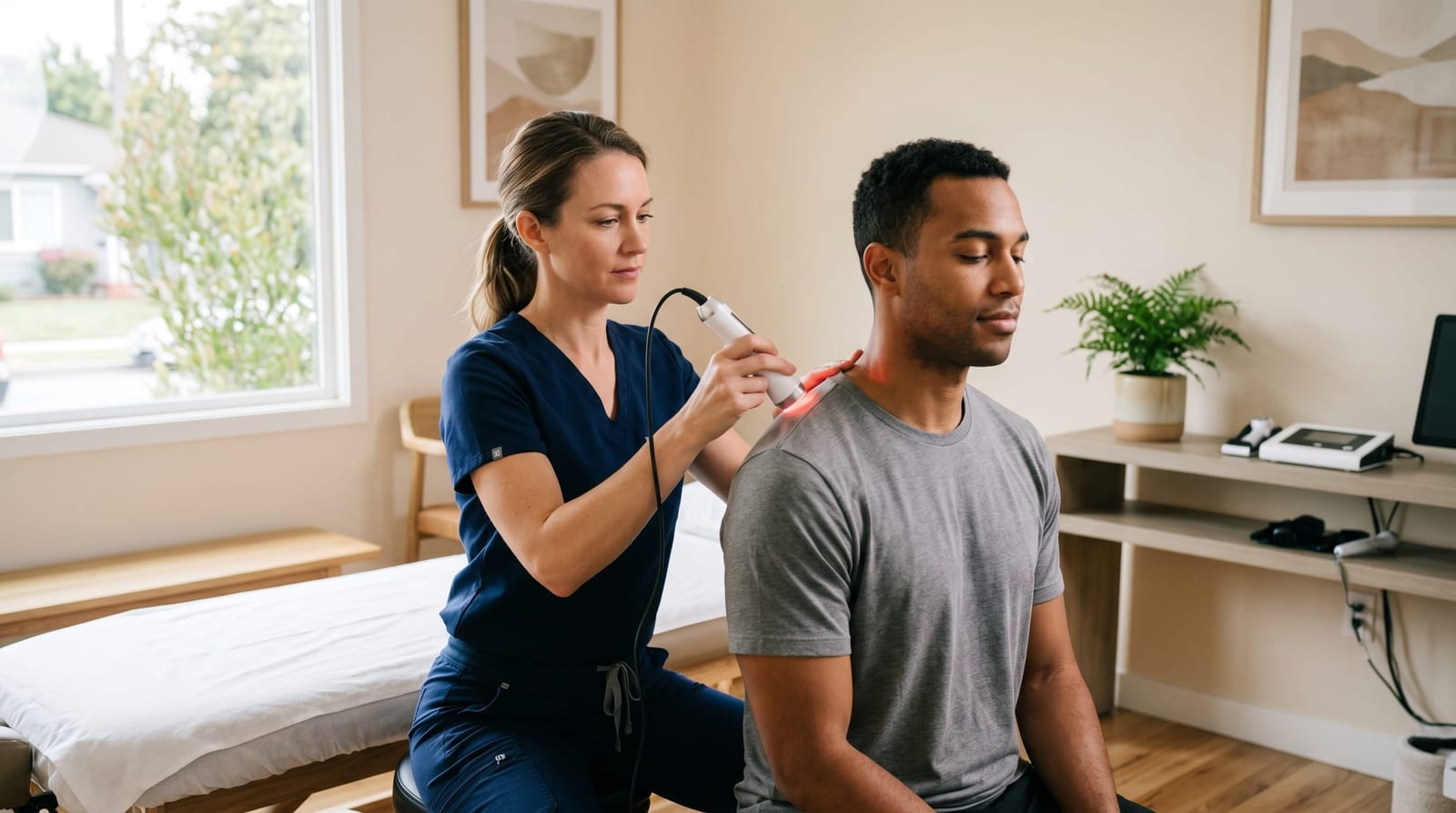
- Comfortable positioning with the laser applied to the targeted area
- Sessions typically lasting between 5 and 20 minutes depending on the condition and area being treated
- Clear communication from the practitioner about what sensations, if any, to expect
Cold Laser Therapy Side Effects Compared to Alternative Treatments
Context matters when evaluating cold laser therapy side effects. Comparing cold laser therapy's safety profile to other commonly used pain management approaches helps illustrate why many patients and practitioners view it as an appealing option.
Nonsteroidal anti-inflammatory drugs (NSAIDs), for example, are among the most widely used pain relief options. Yet regular use of NSAIDs carries documented risks including gastrointestinal irritation, increased cardiovascular risk with prolonged use, and potential kidney strain: concerns that grow more significant with long-term use. Corticosteroid injections can be effective but are generally recommended on a limited basis due to potential effects on tissue integrity with repeated administration. Surgical interventions, while appropriate for certain conditions, carry inherent recovery timelines, infection risk, and anesthesia considerations.
Cold laser therapy's side effect profile, temporary mild redness or discomfort in a small subset of patients, with no documented systemic effects at appropriate parameters, stands in favorable contrast. For patients exploring cold laser therapy for specific conditions like carpal tunnel syndrome or tennis elbow, this safety distinction is often a meaningful part of the decision-making process. You can learn more about condition-specific considerations in our posts on cold laser therapy carpal tunnel and cold laser treatment tennis elbow.
Who Should Talk to a Provider Before Starting Cold Laser Therapy
While cold laser therapy has a strong general safety profile, certain individuals benefit from a more detailed conversation with their healthcare provider before beginning treatment. This isn't cause for alarm: it's simply good, personalized care.
Consider discussing cold laser therapy with your provider in advance if you:
- Are pregnant or trying to become pregnant
- Have a current or prior cancer diagnosis
- Take medications that increase photosensitivity
- Have an active skin condition or open wound in the area to be treated
- Have a pacemaker or implanted electronic device (practitioners will assess whether and how to proceed)
- Have a thyroid condition
For a more comprehensive look at safety screening and what patients across different health situations need to know, our detailed post on is cold laser therapy safe covers these considerations in greater depth.
Key Takeaways: Cold Laser Therapy's Safety Profile in Perspective
Cold laser therapy has earned its reputation as one of the gentler, more patient-friendly therapeutic modalities available in modern chiropractic and rehabilitative care. Cold laser therapy side effects, when they occur at all, tend to be mild, temporary, and localized. No serious adverse events have been consistently documented across extensive clinical use. Contraindications exist and are important to screen for, but they apply to a relatively limited set of circumstances. And for long-term use, the absence of systemic side effects makes cold laser therapy a genuinely sustainable option for many patients.
If you've been wondering whether cold laser therapy might be a good fit for your situation, and whether its safety profile aligns with your health goals, the best next step is a conversation with a qualified provider who can review your individual circumstances thoughtfully. At Prodigy Chiro Care, we're here to help you explore your options with clarity and care. Reach out to our team today to learn more about how cold laser therapy fits into our approach to personalized wellness and pain relief support.