Cold Laser Treatment for Tennis Elbow: A Non-Invasive Path to Recovery
Tennis elbow is one of those conditions that tends to linger far longer than most people expect. You rest it. You ice it. You wait. And yet weeks later, that familiar ache along the outside of your elbow returns the moment you pick up a bag, shake someone's hand, or reach for a coffee mug. If you've been exploring your options, you may have come across cold laser treatment for tennis elbow as a non-invasive approach worth considering. This post takes a close look at how cold laser therapy works for lateral epicondylitis, what the research suggests about outcomes, what a typical treatment course looks like, and why combining it with chiropractic care may offer a more complete path to recovery than either approach alone.
What Is Tennis Elbow and Why Is It Stubborn?
Lateral epicondylitis, more commonly known as tennis elbow, is a condition involving the tendons that attach the forearm muscles to the bony prominence on the outside of the elbow. Despite the name, only about 5% of tennis elbow cases are actually related to tennis. The condition is far more common among people who perform repetitive gripping, twisting, or lifting motions at work or during daily activities.
The reason tennis elbow tends to be so persistent comes down to what's happening at the tissue level. Over time, repetitive stress causes small tears and degenerative changes within the tendon. Unlike muscle tissue, tendons have a relatively poor blood supply. That limited circulation means healing is slower and less reliable. The body struggles to deliver the repair resources the tissue needs.
This is also why passive approaches, rest alone, anti-inflammatory medication, or simply waiting, often fall short. They may quiet the symptoms temporarily, but they don't necessarily address the underlying tissue changes that keep the condition coming back. For many people, a more active healing approach makes a meaningful difference.
It's worth noting that tennis elbow shares a lot in common with other repetitive strain injury treatment challenges, where overuse and poor recovery combine to create a cycle that's difficult to break without targeted support.
How Cold Laser Treatment Works for Tennis Elbow
Cold laser therapy, also called low-level laser therapy (LLLT) or photobiomodulation, uses specific wavelengths of light to penetrate soft tissue without generating heat. The light energy is absorbed at the cellular level, where it supports the body's natural repair processes.
What Happens at the Cellular Level
When the laser light reaches the tendon cells, it stimulates the mitochondria: the energy-producing structures within each cell, to increase their output of adenosine triphosphate (ATP). More available energy at the cellular level means cells can carry out repair and regeneration more efficiently. The therapy also supports the reduction of inflammation and helps modulate pain signals along the nerve pathways near the treatment site.
For a condition like tennis elbow, where the core problem is degenerative change and poor tissue healing, this cellular-level support is particularly relevant. The goal isn't to mask the pain: it's to help the tissue itself recover more effectively.
Low-Level vs. High-Intensity Laser Therapy
It's worth understanding that not all laser therapy is the same. Traditional low-level laser therapy uses lower power outputs and longer treatment times. Class IV, or high-intensity laser therapy, uses higher power outputs and can penetrate deeper into tissue, which may be significant for structures like the lateral epicondyle that sit beneath layers of muscle and connective tissue.
Some clinical observations suggest that high-intensity laser therapy may produce stronger outcomes for musculoskeletal conditions including elbow tendinopathy, partly because of this deeper tissue reach. Your provider will select the appropriate device and protocol based on your specific presentation.
What the Research Suggests
Research on cold laser treatment for tennis elbow has been growing over the past two decades. A 2013 study published in the Nitte University Journal found that low-level laser therapy produced a significant effect on tennis elbow symptoms, including measurable reductions in pain and functional improvement. The Swedish Agency for Health Technology Assessment (SBU) has also reviewed the evidence on LLLT for musculoskeletal conditions, noting its application in elbow-related soft tissue problems.
Studies examining Class IV laser therapy for lateral epicondylitis have reported promising outcomes for both pain reduction and functional recovery. One consistent finding across the research is that laser therapy tends to perform best when it's part of a broader, individualized treatment plan rather than a standalone intervention.
It's also worth noting that approximately 1 to 3% of the general population is affected by tennis elbow at any given time, and up to 50% of tennis players will experience it at some point in their playing careers. Yet the condition is just as common, if not more so, among office workers, construction workers, and anyone whose daily tasks involve repetitive forearm use. Recovery timelines without treatment can stretch from 6 months to 2 years for some individuals, which underscores why many people seek more active therapeutic support.
What a Cold Laser Treatment Protocol Looks Like
One of the questions people most commonly ask is what actually happens during a session and how many visits they should expect. While every care plan is tailored to the individual, there are some general patterns worth understanding.
A Typical Session
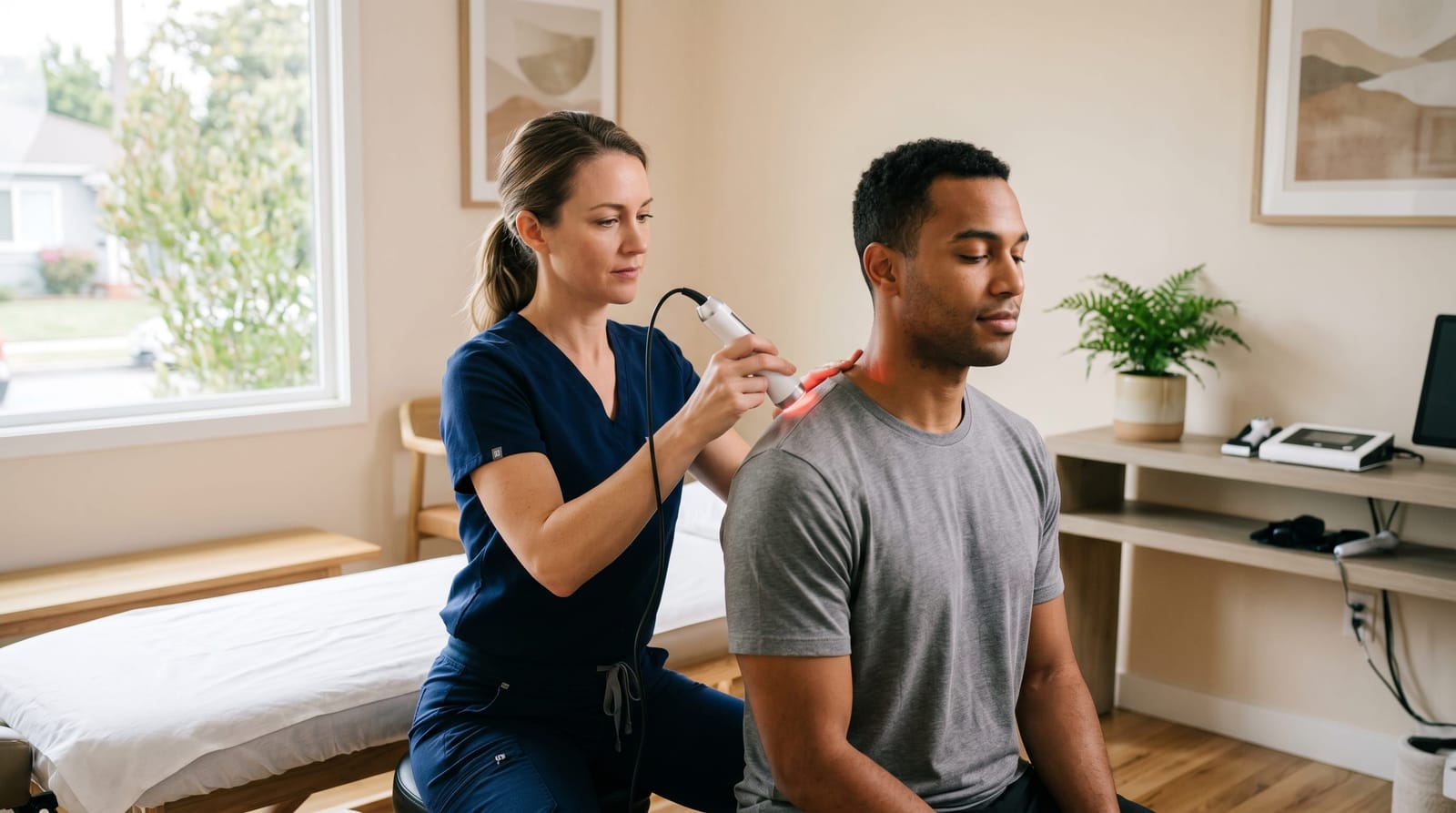
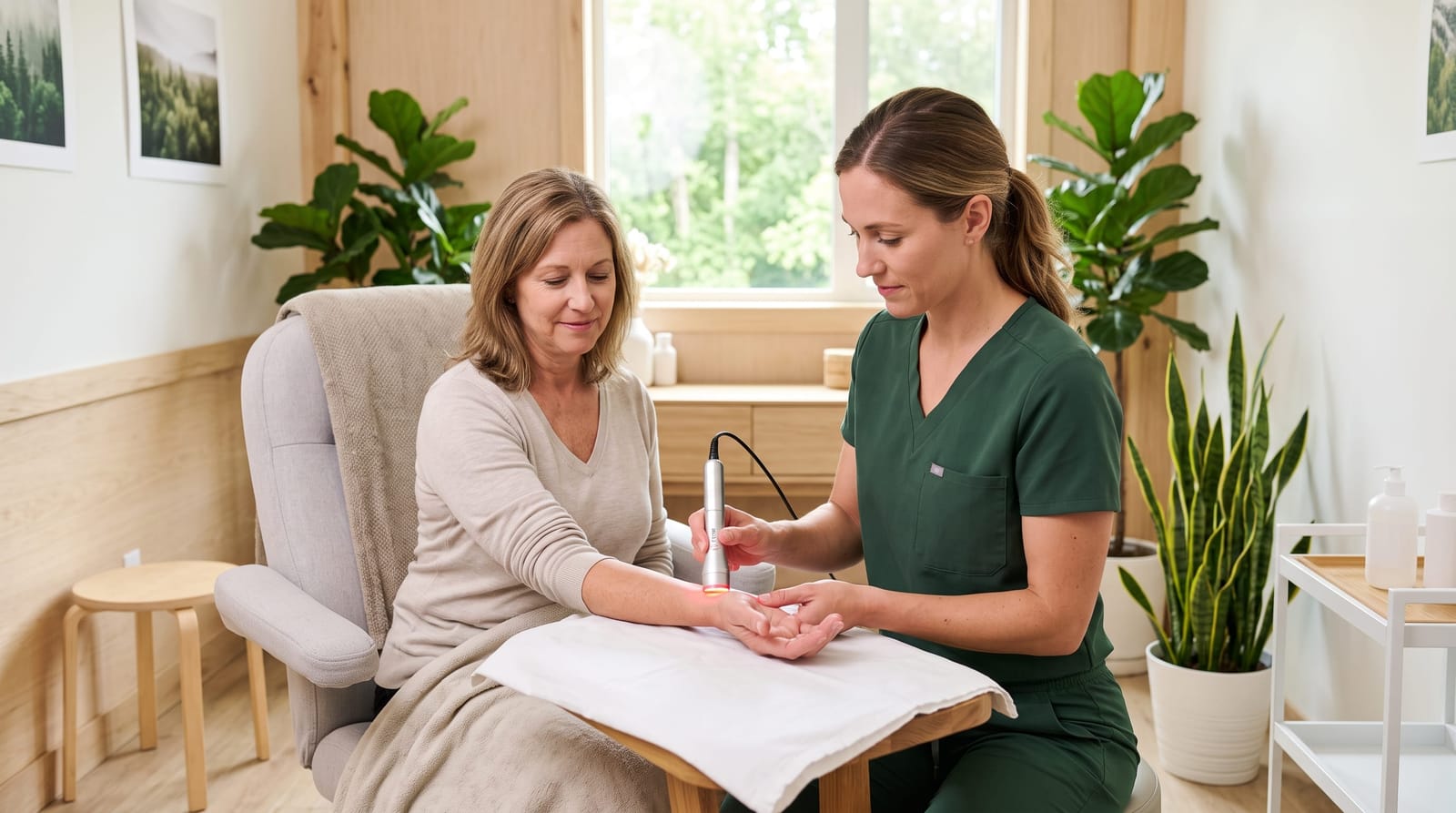
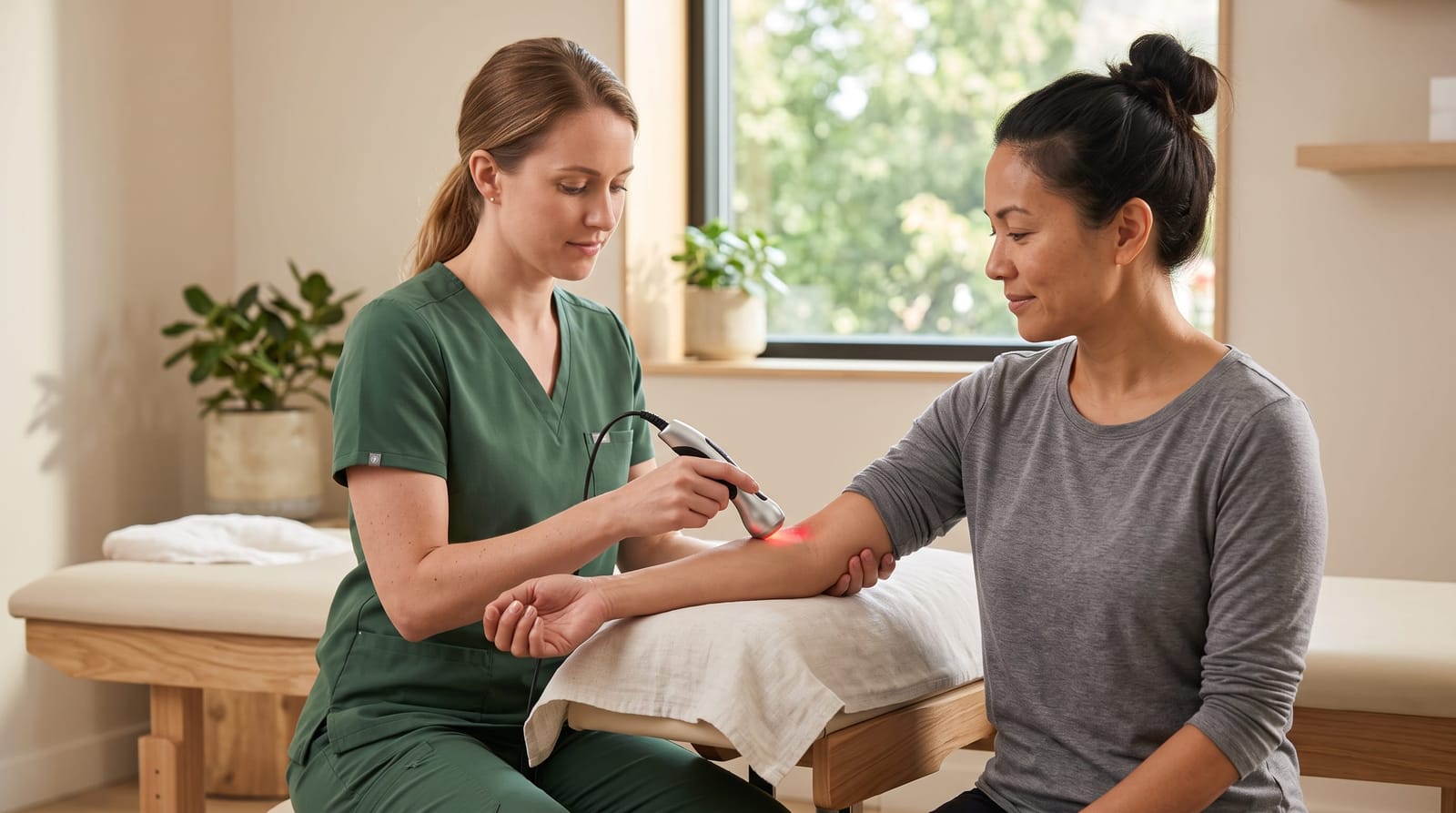
A cold laser session for tennis elbow is non-invasive and generally comfortable. The provider positions the laser handpiece directly over the lateral epicondyle and the surrounding soft tissue. The light penetrates the skin and works at depth without any cutting, needles, or significant discomfort. Sessions typically range from a few minutes to around 10 to 15 minutes depending on the equipment used and the area being treated.
Treatment Frequency and Duration
Most protocols involve multiple sessions per week, particularly in the early phase of care. A common starting point is 6 to 12 sessions over 3 to 6 weeks. Some patients notice meaningful changes within the first several sessions. Others see more gradual progress over the course of the full treatment period.
Progress is typically assessed by tracking changes in pain levels, grip strength, and functional ability, for example, how comfortably you can perform daily tasks that previously aggravated the elbow. Reassessment at regular intervals helps guide any adjustments to the plan.
Combining Cold Laser Therapy with Chiropractic Care
Tennis elbow rarely exists in isolation. In many cases, there are contributing biomechanical factors that extend beyond the elbow itself. The way the wrist, forearm, shoulder, and even the cervical spine function together plays a role in how much stress is placed on the lateral epicondyle during everyday movements.
This is where combining cold laser treatment for tennis elbow with chiropractic care makes a great deal of practical sense. Cold laser works to support healing and reduce inflammation at the tissue level. Chiropractic assessment and manipulation address the mechanical contributors: joint restrictions, postural patterns, and movement dysfunctions that may be placing unnecessary load on the elbow structures.
The Wrist and Forearm Connection
Restrictions in wrist and forearm joint mobility can alter how forces travel through the arm during gripping and rotating movements. When those movements become compensatory, the lateral elbow bears more stress than it should. Improving joint mobility through gentle manipulation or mobilization techniques can reduce that mechanical burden and support longer-term recovery.
The Shoulder and Cervical Spine Connection
Research has also linked shoulder mechanics and cervical nerve root function to elbow pain presentations. Nerve irritation from the neck, particularly at the C5 to C7 levels, can contribute to symptoms that feel localized in the elbow. A thorough chiropractic evaluation considers the whole kinetic chain, not just the site of pain.
For patients managing conditions that involve repetitive stress across multiple joints, this integrated approach becomes even more important. If you're curious how this kind of combined care applies to other upper extremity conditions, cold laser therapy carpal tunnel treatment follows a similarly integrated logic, addressing both tissue healing and nerve function together.
What to Realistically Expect During Recovery
Recovery from tennis elbow is a process, and it's important to approach it with reasonable expectations. Cold laser treatment supports the body's own healing capacity: it's not a switch that turns off pain instantly. Most patients begin to notice gradual improvements in comfort and function as treatment progresses.
Some key markers that suggest the therapy is working well include reduced pain during previously aggravating activities, improved grip strength, and a decrease in morning stiffness around the elbow. These changes typically build over the course of treatment rather than appearing all at once.
Lifestyle modifications also play a meaningful role. Activity modification during the healing period, reducing the movements or loads that provoked symptoms, helps the tissue repair without continued re-injury. Your care provider can offer guidance on how to adjust activities appropriately during recovery.
Long-term outcomes tend to be more sustainable when the biomechanical contributors have been identified and addressed alongside the tissue healing component. This is one of the core reasons that a combined chiropractic and cold laser approach tends to be favored over laser therapy alone for persistent cases.
Related Topics Worth Exploring
Tennis elbow is one of the most common repetitive strain presentations seen in chiropractic and rehabilitation settings, but it's far from the only one. If you work in an environment that places repetitive demands on your upper extremities, whether at a workstation, on a job site, or on a sports field, understanding how these conditions develop and how they're managed is genuinely useful. Our post on repetitive strain injury treatment explores how cold laser therapy is applied across a broader range of overuse conditions affecting both athletes and office workers.
Conclusion
Cold laser treatment for tennis elbow offers a science-supported, non-invasive option for people who want to move beyond passive management and support genuine tissue recovery. By working at the cellular level to encourage healing and reduce inflammation, cold laser therapy addresses the underlying changes that make tennis elbow so persistent. When combined with chiropractic care that targets the biomechanical contributors, patients gain a more comprehensive approach to recovery: one that works toward lasting improvement rather than temporary relief.
If you've been dealing with elbow pain that hasn't responded well to rest and conventional measures, our team at Prodigy Chiro Care would be happy to discuss whether cold laser therapy is a good fit for your situation. Reach out to schedule a consultation and take the first step toward feeling better.