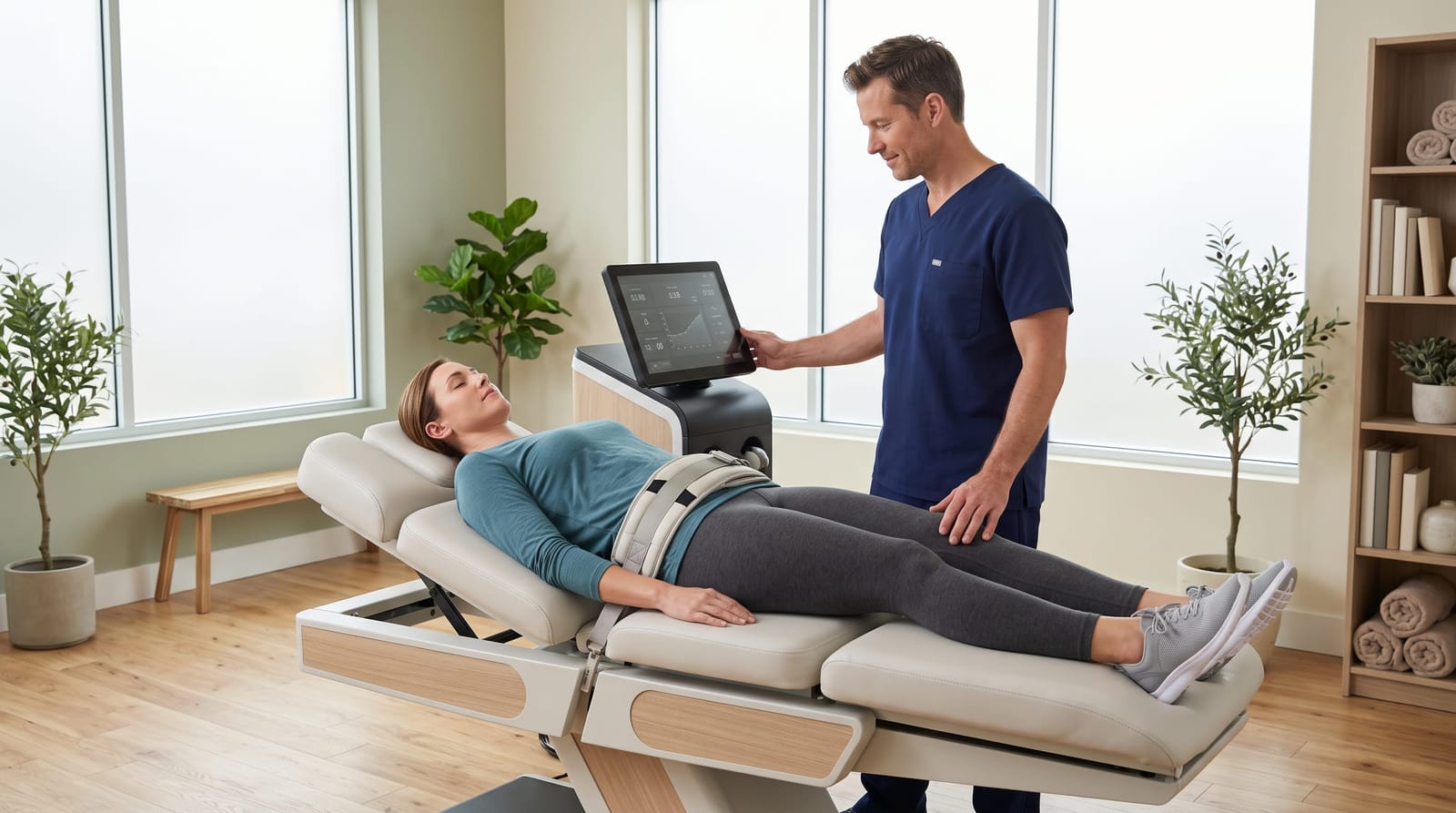
Who Is a Good Candidate for Spinal Decompression Therapy?

If you've been living with persistent back or neck pain, you've probably wondered whether spinal decompression is right for you. It's a fair question, and an important one to answer before committing to any treatment plan. Understanding the ideal spinal decompression candidate profile can help you walk into a consultation feeling informed and confident. This post breaks down the conditions that respond well to decompression therapy, the situations where it may not be appropriate, and how a proper evaluation helps determine fit.
What Conditions Make Someone a Strong Candidate?
Spinal decompression therapy is designed to address pain that originates from mechanical pressure on spinal discs and nerves. Not every type of back pain fits that profile, but several common conditions do.
Herniated and Bulging Discs
A herniated disc occurs when the soft inner material of a spinal disc pushes through its outer layer, potentially pressing on nearby nerves. A bulging disc is similar, though the disc wall remains intact while the disc extends beyond its normal boundary. Both conditions can cause localized pain as well as radiating symptoms into the arms or legs. Spinal decompression creates gentle negative pressure within the disc space, which may help draw the displaced material back toward its normal position and encourage fluid and nutrient exchange within the disc. Studies suggest that disc herniation accounts for roughly 90% of sciatica cases, making it one of the most commonly treated conditions with decompression therapy.
Sciatica and Pinched Nerves
Sciatica describes pain that travels along the sciatic nerve: typically from the lower back down through one leg. It's often caused by nerve compression at the lumbar spine. Pinched nerves in the cervical spine can cause similar radiating pain, numbness, or tingling into the shoulders and arms. These nerve-related symptoms are among the most frequently reported reasons people explore spinal decompression. Research estimates that up to 40% of people will experience sciatica at some point in their lives, and many find limited relief from rest or medication alone.
Degenerative Disc Disease
As spinal discs lose hydration and height over time, the resulting compression can contribute to chronic pain and reduced mobility. Spinal decompression is often considered for individuals experiencing disc-related degeneration, particularly when pain has persisted for three months or longer and other conservative approaches have provided incomplete relief. It's worth noting that decompression is not a reversal of disc degeneration: rather, it may help manage discomfort and support disc health as part of a broader care plan.
Chronic Back or Neck Pain Without Surgical Resolution
Some individuals continue to experience back or neck pain even after surgery. This is sometimes called failed back surgery syndrome. For appropriate candidates, non-surgical spinal decompression may offer a complementary path to managing ongoing discomfort. A thorough evaluation by a qualified provider is essential before pursuing this route.
Who May Not Be a Good Fit? Understanding Contraindications
Spinal decompression is not appropriate for everyone. Certain health conditions and circumstances make this therapy unsuitable, and a responsible provider will screen for these during an initial evaluation.
Individuals who are generally not considered good candidates include those who:
- Are pregnant
- Have spinal fractures or recent vertebral injuries
- Have been diagnosed with severe osteoporosis
- Have spinal tumors or metastatic cancer affecting the spine
- Have had spinal fusion surgery involving hardware such as rods or screws
- Have an abdominal aortic aneurysm
- Are experiencing significant spinal instability
This is not an exhaustive list. Each patient's medical history is unique, which is why a thorough intake process matters so much. A detailed health history review, including imaging like MRI or X-ray, helps identify factors that could affect safety and suitability. Always consult with a licensed healthcare provider to discuss your specific circumstances before beginning any treatment program.
The Typical Candidate Profile: What Patterns Emerge?
While every patient is different, certain patterns appear consistently among those who tend to respond well to spinal decompression therapy.
Most strong candidates share a few common characteristics:
- They have a confirmed disc-related diagnosis supported by imaging
- Their pain has persisted for at least several weeks, often months
- They have tried other conservative care options, such as physical therapy, medication, or standard chiropractic adjustments, without achieving adequate relief
- They are not experiencing neurological emergencies such as sudden loss of bladder or bowel control
- They are willing to commit to a full course of treatment, typically ranging from 15 to 30 sessions depending on the provider's assessment
One important point: consistency matters. Patients who complete their full recommended treatment plan tend to report more satisfying outcomes than those who stop after just a few sessions. The decompression process works gradually, and the spine needs repeated, controlled sessions to respond effectively.
How an Initial Evaluation Determines Candidacy
The evaluation process is where everything comes together. At Prodigy Chiro Care, the goal of an initial consultation is not simply to sell a treatment: it's to genuinely determine whether spinal decompression is the right fit for your situation.
A thorough candidacy evaluation typically includes:
- Health history review: Your provider will ask about your symptoms, how long they've lasted, what makes them better or worse, and what treatments you've already tried.
- Review of imaging: MRI or X-ray results help confirm the structural cause of your symptoms and rule out contraindications such as fractures or instability.
- Physical and neurological assessment: Range of motion, reflexes, and sensation may be assessed to understand how your spine is currently functioning.
- Goal setting: Your provider will discuss what you're hoping to achieve and whether decompression therapy aligns with those goals.
If decompression is a good fit, you'll receive a clear explanation of the recommended plan, including frequency, duration, and what to expect during sessions. If it's not the right option, a quality provider will tell you that honestly and help point you toward more appropriate care.
If you're also weighing practical considerations alongside your health questions, our overview of how much spinal decompression costs in Los Angeles can give you a clearer picture of what to expect financially as you plan your care.
Frequently Asked Questions
Can I be a candidate for spinal decompression if I've already had back surgery?
It depends on the type of surgery. Individuals who have had certain procedures, such as spinal fusion with hardware, are generally not considered candidates. However, some people with a history of surgery, particularly those with ongoing disc-related pain, may still qualify. A detailed evaluation including your surgical history and current imaging is necessary to make that determination. Always discuss your surgical background with your provider before beginning any new treatment.
Is age a factor in determining candidacy?
Age alone is not a disqualifying factor. Spinal decompression is commonly used with adults across a wide age range, including those in their 40s, 50s, and 60s who are dealing with age-related disc changes. What matters more is the overall health of the spine, the nature of the condition, and the absence of contraindications. Bone density and general health are considered during the evaluation process.
How do I know if my pain is disc-related versus something else?
Disc-related pain often has recognizable patterns: it may radiate into the legs or arms, worsen with certain movements, or be accompanied by numbness or tingling. However, back pain can have many causes, and a proper diagnosis requires a clinical evaluation and often imaging such as an MRI. This is why a professional assessment is the most reliable first step, rather than self-diagnosing based on symptoms alone.
How many sessions does spinal decompression typically require?
Treatment plans vary based on the individual's condition and how the spine responds. Most protocols involve somewhere between 15 and 30 sessions, typically scheduled several times per week over a period of four to eight weeks. Your provider will outline a specific plan after your evaluation. Patients who complete the full recommended course tend to have more positive experiences than those who discontinue treatment early.
Is Spinal Decompression Right for You?
Determining whether you're a strong spinal decompression candidate comes down to your diagnosis, your history with other treatments, and the absence of contraindications. Conditions like herniated discs, sciatica, bulging discs, and pinched nerves are among the most common reasons people pursue this therapy, and many find it a valuable part of their recovery journey. The best next step is a thorough evaluation with a qualified provider who can review your individual situation and give you an honest, personalized answer. That conversation is always a better starting point than trying to self-diagnose from a search engine.