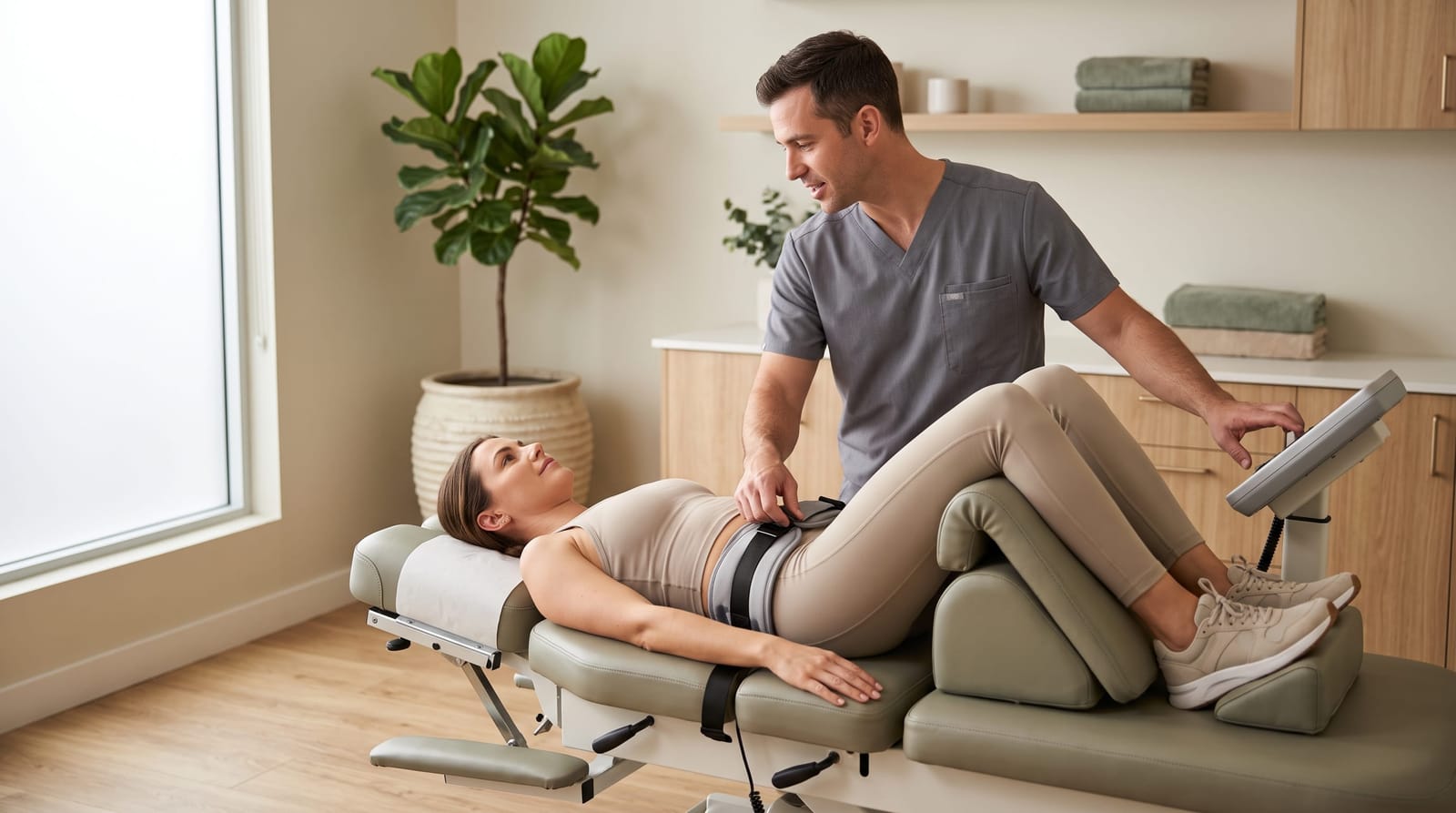
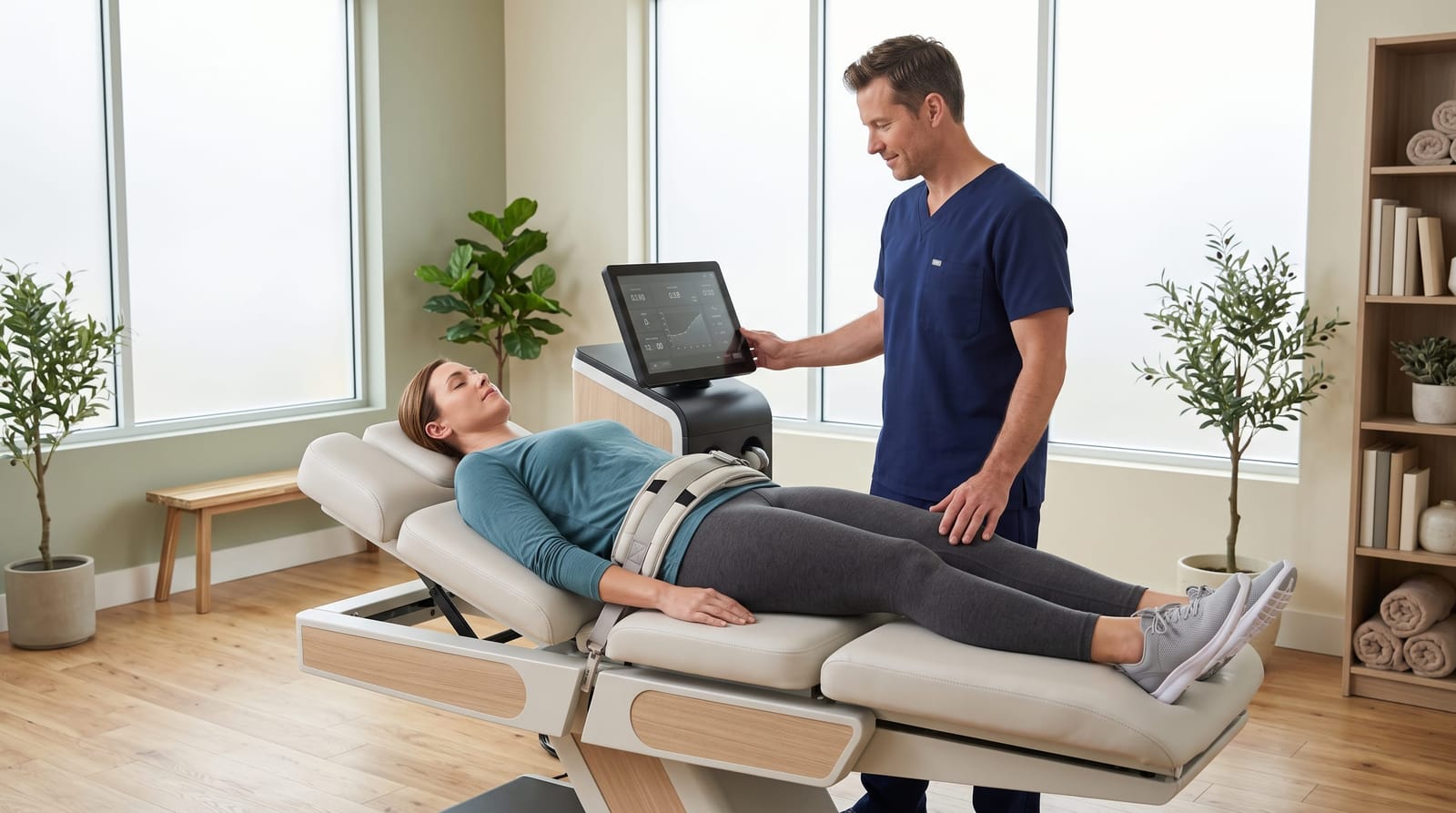
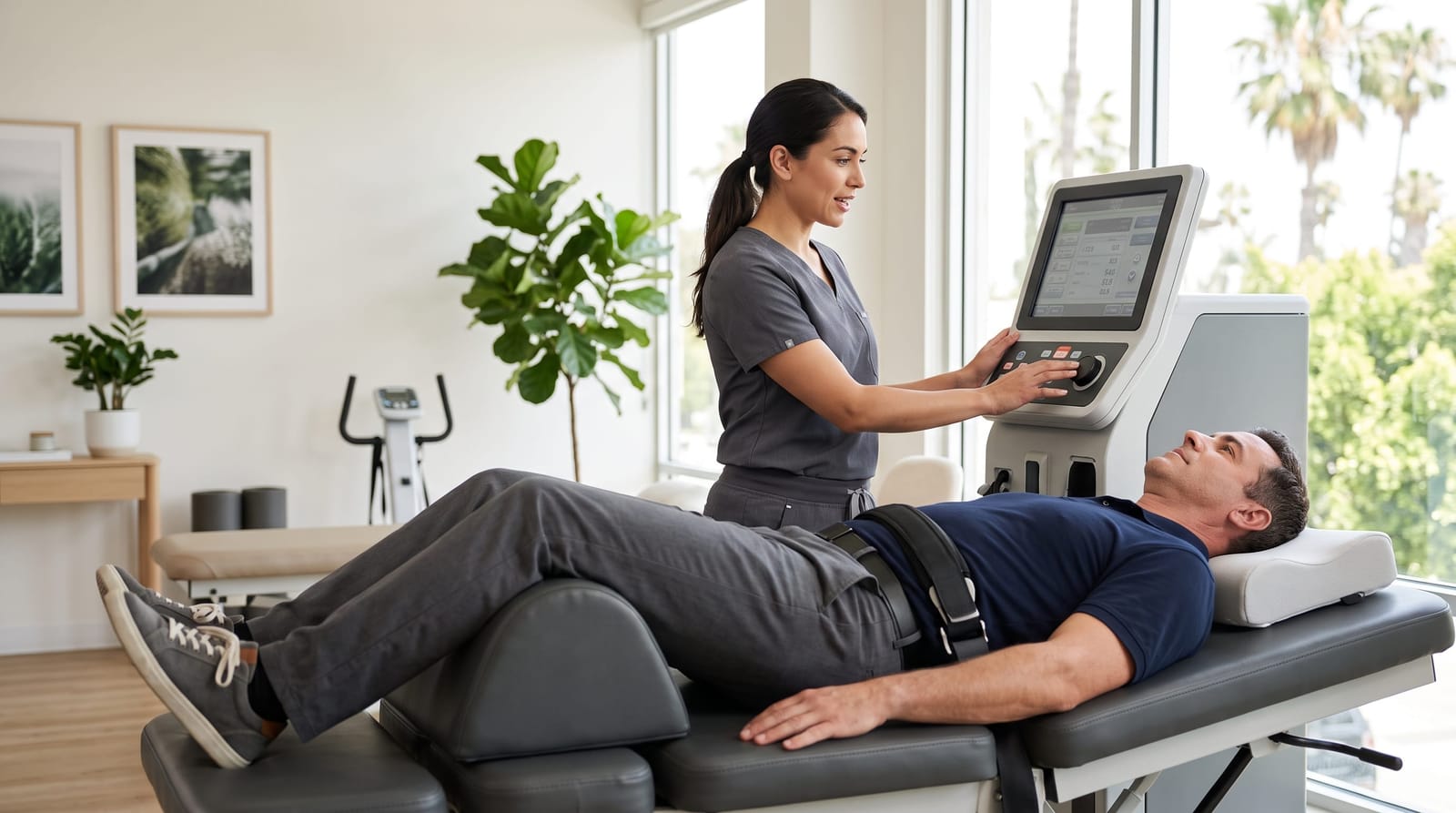
What Makes Computerized Spinal Decompression Different From Traction?
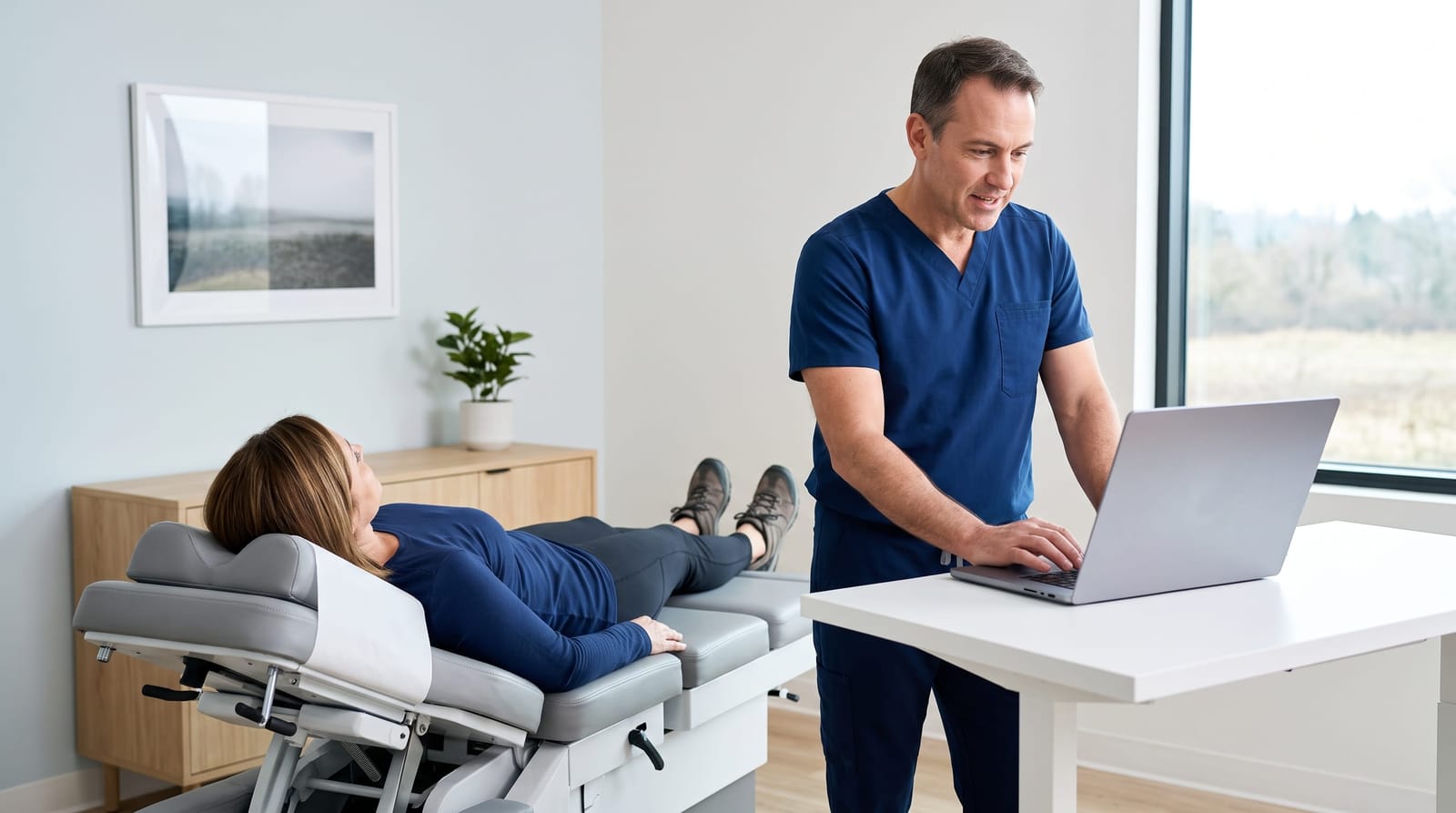
If you've been researching options for back or neck discomfort, you've likely come across both "spinal traction" and "spinal decompression", and wondered whether they're just two names for the same thing. It's a fair question, and the answer matters more than you might expect. While both approaches involve gently stretching the spine, the technology behind them is fundamentally different. This beginner's guide breaks down exactly what separates computerized spinal decompression from traditional traction, so you can walk into any provider conversation as an informed, confident patient.
Traction: The Starting Point
To understand what makes computerized decompression different, it helps to know what traditional traction actually is. Traction has been used in clinical settings for decades. In its most basic form, it involves applying a steady, continuous pulling force to the spine: either manually (by a practitioner) or through a simple mechanical device that holds a fixed tension.
The concept makes intuitive sense: if compressed spinal structures are causing discomfort, creating space between vertebrae might offer some relief. And for certain situations, basic traction has shown some value.
However, traditional traction has a significant limitation: it applies force in a relatively blunt, static way. When the body senses a sustained pulling force, it often interprets that as a potential threat and responds accordingly: the surrounding muscles tighten to protect the area. This involuntary reaction is commonly called the muscle guarding response, and it's one of the core reasons why straightforward traction can fall short. If the muscles are contracting against the pull, the discs and nerve roots aren't receiving the decompressive effect the treatment is intended to create.
Think of it like trying to gently stretch a rubber band while someone is actively resisting the stretch from the other end. The force is there, but the result is diminished.
What Computerized Decompression Actually Does Differently
Computerized spinal decompression technology was developed specifically to address the muscle guarding problem, and it does so through a combination of engineering precision and real-time responsiveness that simply isn't possible with a basic traction device.
Here's the key distinction: computerized decompression tables use sophisticated sensors and proprietary algorithms to continuously monitor how the body is responding to the applied tension. Rather than holding a fixed pull, the system delivers a carefully programmed variable tension curve: gradually ramping force up, holding briefly, then easing back down, all in a precise, rhythmic pattern.
This logarithmic pull pattern is designed to stay just below the threshold that triggers muscle guarding. By cycling tension in a way the nervous system doesn't register as a threat, the surrounding musculature remains relaxed. When the muscles stay relaxed, the true decompressive effect can reach the disc itself: creating the negative intradiscal pressure that is the actual therapeutic goal.
Negative intradiscal pressure is the mechanism thought to support disc rehydration and may help draw bulging or herniated disc material back toward a more natural position, potentially reducing pressure on nearby nerve roots. This is a fundamentally different physiological outcome than what a sustained static pull can reliably produce.
The Engineering Features That Set Advanced Equipment Apart
Not all machines marketed as "decompression tables" are created equal. Understanding a few specific engineering features can help you distinguish genuine computerized decompression technology from a rebranded basic traction table.
Logarithmic Pull Patterns
True decompression systems use mathematically defined tension curves, not simple on/off cycling. The force ramps up gradually along a logarithmic curve that mirrors how the body tolerates passive stretch, making the process both more comfortable and more effective at maintaining muscle relaxation throughout the session.
Real-Time Biofeedback Sensors
Advanced tables incorporate load cells and tension sensors that detect even subtle changes in the patient's resistance in real time. If the body begins to guard, the system can automatically modulate the pull before a full guarding response is triggered. This closed-loop feedback system is what truly separates computerized decompression from any purely mechanical device.
Tension-Angle Customization
The angle at which tension is applied significantly affects which spinal segment receives the decompressive effect. Computerized systems allow clinicians to adjust the pelvic tilt and pull angle with precision, targeting specific disc levels: something that isn't reliably possible with a standard traction table. This level of customization supports a more targeted approach for each individual patient's anatomy and presentation.
Dual-Segment Table Design
Proper decompression tables have independently moving upper and lower sections. The lower section moves to create the distraction force while the upper section remains stable, isolating the stretch to the lumbar spine rather than pulling indiscriminately on the entire body.
Why These Differences Matter for Disc and Nerve Health
The spine's intervertebral discs are largely avascular: meaning they don't have a direct blood supply and rely on a process called imbibition to absorb nutrients and fluids from surrounding tissue. This process is facilitated by pressure changes within the disc. When negative intradiscal pressure is created in a controlled, sustained way, as computerized decompression is designed to do, it may support the disc's natural ability to rehydrate over a course of treatment.
For nerve root decompression, the goal is to reduce the mechanical pressure that a bulging or herniated disc may be placing on an adjacent spinal nerve. The precision of computerized systems, particularly their ability to target specific spinal levels and maintain consistent decompressive force without triggering guarding, is what makes this a more controlled, reliable process compared to traditional traction.
It's worth noting that individual responses to any spinal therapy vary, and consulting with a qualified provider is the right way to understand whether this approach may be appropriate for your specific situation. If you're wondering whether you might be a spinal decompression candidate, that conversation starts with a thorough clinical evaluation.
Questions to Ask Before Choosing a Provider
Because the term "spinal decompression" has become broadly used, and sometimes applied to basic traction setups, it's worth asking direct questions when evaluating a clinic. Here are a few that can help you verify the technology being used:
- "What specific decompression table do you use, and what is the manufacturer?" Reputable computerized systems have recognized brand names and documented engineering specifications.
- "Does your system use real-time biofeedback, or does it apply a fixed tension?" A provider using true computerized decompression should be able to explain how their equipment monitors and adjusts tension during treatment.
- "Can you show me how the tension curve is customized for my specific spinal level?" Angle and tension customization should be part of any genuine decompression protocol.
- "Is your table a split-design decompression table, or is it a standard traction setup?" The physical design of the table itself is a meaningful indicator of the technology category.
- "How does your decompression protocol differ from basic spinal traction?" A knowledgeable provider should be able to articulate this distinction clearly and confidently.
A clinic that genuinely uses advanced computerized decompression technology will welcome these questions, and will be able to answer them specifically, not generically.
Frequently Asked Questions
Is spinal decompression the same as traction?
No. While both involve applying a distractive force to the spine, they differ significantly in how that force is delivered. Traditional traction applies a relatively static, fixed pull. Computerized spinal decompression uses real-time biofeedback and variable tension curves to modulate force dynamically, which is designed to prevent the muscle guarding response that can limit traction's effectiveness.
What is negative intradiscal pressure, and why does it matter?
Negative intradiscal pressure refers to a reduction in the internal pressure within a spinal disc, created when the vertebrae are gently and precisely distracted. This pressure change is thought to support disc rehydration and may help reduce pressure on surrounding nerve roots. Computerized decompression systems are specifically engineered to create this effect consistently and safely.
How do I know if a clinic is using real decompression technology vs. a basic traction table?
Ask about the specific equipment being used and whether it features real-time biofeedback sensors, programmable tension-angle customization, and a split-segment table design. You can also ask the provider to explain how their system differs from standard traction. Genuine computerized decompression technology has specific, verifiable engineering features that a knowledgeable provider will be able to describe clearly.
Is computerized spinal decompression safe?
Computerized spinal decompression is generally considered a gentle, non-surgical approach and is used at many chiropractic and rehabilitation clinics. As with any care, it isn't appropriate for every individual or every condition. A qualified provider will conduct a thorough evaluation to help determine whether it's a suitable option for your specific situation before recommending any treatment.
Understanding the Difference Is the First Step
The gap between traditional traction and computerized spinal decompression isn't just marketing language: it reflects real differences in engineering, mechanism, and the care experience itself. When you understand what logarithmic tension curves, biofeedback sensors, and tension-angle customization actually do, you're better equipped to evaluate providers, ask the right questions, and make informed decisions about your care. This post is one piece of a broader look at advanced spinal decompression technology: a topic worth exploring fully if you're considering this approach for your spinal health.