Tennis Elbow vs Golfer's Elbow: How Treatment Differs at a Chiropractic Clinic
Elbow pain can stop you from doing the things you love, whether that's swinging a racquet, lifting groceries, or simply shaking someone's hand. Two of the most common causes are tennis elbow and golfer's elbow. They sound similar, and they both involve the elbow. But they affect different sides of the joint and respond to different care approaches. This post breaks down what sets these conditions apart, how each one is typically addressed, and what tennis elbow treatment looks like at a chiropractic clinic like Prodigy Chiro Care.
Understanding the Difference: Location Is Everything
Both conditions involve irritation of the tendons that attach to the elbow. The key difference is where that irritation occurs.
Tennis elbow, known clinically as lateral epicondylitis, affects the outside of the elbow. The tendons connected to the muscles that extend your wrist and fingers become strained through repetitive motion. Despite the name, only about 5% of cases are actually caused by playing tennis. Most people who develop it work jobs involving repetitive arm, wrist, or hand movements.
Golfer's elbow, medial epicondylitis, affects the inside of the elbow. It involves the tendons connected to the muscles that flex your wrist and fingers. Again, the name is misleading. Many people who develop golfer's elbow have never set foot on a golf course. Plumbers, painters, construction workers, and desk workers are all commonly affected.
A simple way to tell them apart: press along the bony bump on the outside of your elbow. Tenderness there suggests tennis elbow. Press along the inside bump. Tenderness there points toward golfer's elbow. Of course, a proper evaluation from a qualified provider is the right way to understand what's actually going on.
Symptom Comparison: What Each Condition Tends to Feel Like
The symptoms overlap in some ways but differ in important ones. Knowing the distinction helps you have a more informed conversation with your care team.
Tennis Elbow Symptoms
- Pain and tenderness on the outer elbow
- Discomfort that worsens when gripping objects or lifting
- Weakness in the hand and wrist
- Pain that may radiate down the forearm toward the wrist
- Difficulty with tasks like turning a doorknob or holding a coffee cup
Golfer's Elbow Symptoms
- Pain and tenderness on the inner elbow
- Discomfort that increases with wrist flexion or forearm rotation
- Stiffness in the elbow joint, especially in the morning
- Occasional tingling or numbness into the ring and little fingers
- Weakened grip strength
Research suggests that tennis elbow is significantly more prevalent overall: it affects approximately 1% to 3% of the general population and accounts for the majority of elbow overuse injuries seen in clinical settings. Golfer's elbow is less common but still frequently encountered, especially among people who perform repeated wrist flexion movements throughout the day.
How Treatment Approaches Differ
Because tennis elbow and golfer's elbow involve different muscle groups, the targeted care for each condition is not identical, even though some general principles overlap.
Tennis Elbow Treatment
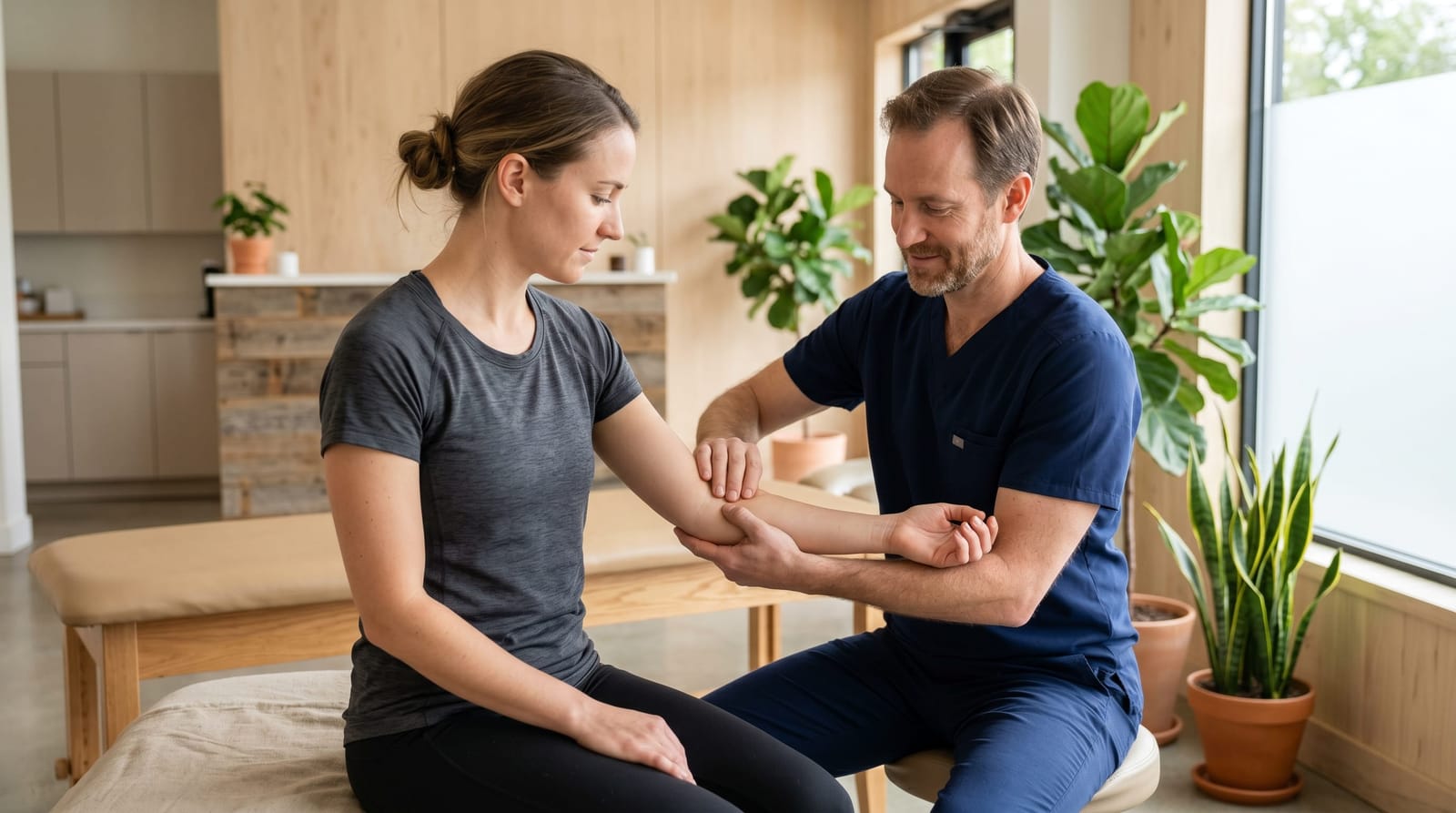
Tennis elbow treatment focuses on reducing strain on the wrist extensor muscles and tendons on the outer elbow. A chiropractic approach may include soft tissue work to the forearm extensors, joint mobilization of the elbow and wrist, and therapeutic exercises that gradually strengthen the affected area. Studies suggest that approximately 80% to 95% of people with tennis elbow improve with non-surgical care over time. Surgery is rarely needed: reserved for fewer than 10% of cases that do not respond to conservative treatment over 6 to 12 months.
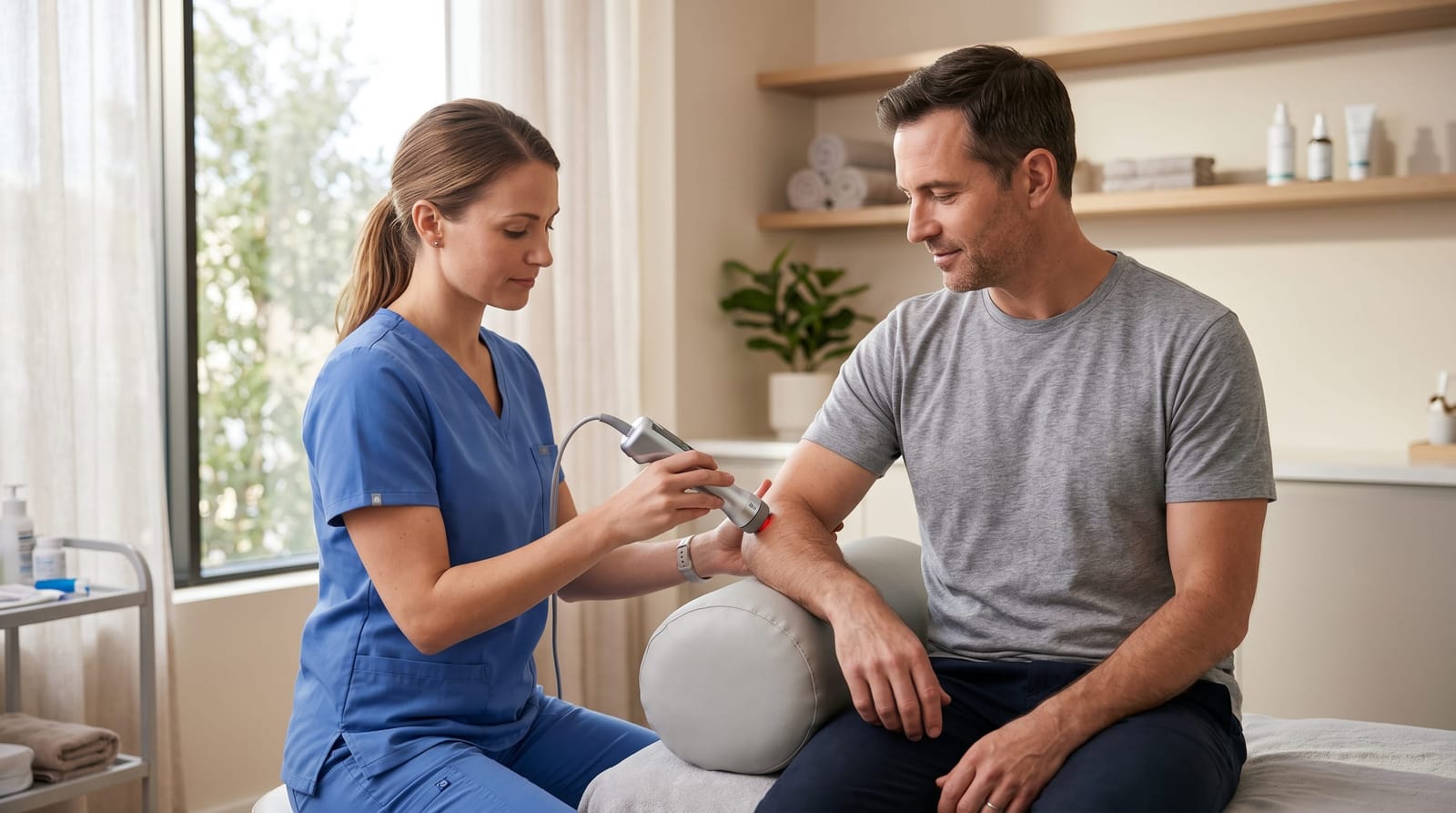
Supporting therapies can also play a meaningful role. Techniques like cold laser treatment for tennis elbow have been explored as part of multi-modal care plans to support tissue recovery and comfort. Bracing, activity modification, and ergonomic guidance are other common components of a well-rounded plan.
Golfer's Elbow Treatment
Golfer's elbow treatment targets the wrist flexors and the inner elbow structures. The soft tissue focus shifts to the medial side of the forearm. Stretching and strengthening exercises emphasize flexor muscle groups rather than extensors. Nerve involvement, since the ulnar nerve runs near the medial epicondyle, may also be assessed and addressed if tingling or numbness is present.
The general timeline for improvement with golfer's elbow is similar to tennis elbow, though the condition is sometimes slower to respond in people who continue repetitive motions at work or in daily life. Rest and activity modification remain essential for both.
What a Chiropractic Evaluation Looks Like at Prodigy Chiro Care
At Prodigy Chiro Care, an evaluation for elbow pain begins with a thorough conversation about your symptoms, daily activities, and how the discomfort affects your quality of life. This matters because two people with the same diagnosis can have very different experiences and functional limitations.
The physical assessment looks at range of motion, grip strength, tenderness location, and how specific movements affect your symptoms. From there, a care plan is shaped around what your body actually needs, not a one-size-fits-all protocol.
For tennis elbow, that might mean soft tissue therapy targeting the extensor carpi radialis brevis, joint mobilization of the radiohumeral joint, and a progressive loading exercise program. For golfer's elbow, the focus shifts to the medial soft tissues, flexor strengthening, and possibly nerve-focused care if there are signs of ulnar nerve irritation.
Both conditions benefit from patient education. Understanding why your elbow hurts, and what movements to modify while healing, is a core part of recovery support at Prodigy Chiro Care.
Frequently Asked Questions
Can you have tennis elbow and golfer's elbow at the same time?
Yes, it is possible to experience irritation on both sides of the elbow simultaneously. This is less common but can occur in people whose daily activities involve both gripping and flexing motions repeatedly. A thorough evaluation helps identify what's contributing on each side so care can be appropriately tailored.
How long does tennis elbow treatment typically take?
Recovery varies from person to person. Many people notice meaningful improvement within 6 to 12 weeks of consistent care and activity modification. Some cases take longer, particularly if the condition has been present for months before care begins. There are no guaranteed timelines, but early attention generally supports a more comfortable recovery process.
Is chiropractic care appropriate for both tennis elbow and golfer's elbow?
Chiropractic care can be a helpful part of a non-surgical care approach for both conditions. Chiropractors address the muscles, joints, and soft tissues involved in elbow overuse injuries. At Prodigy Chiro Care, each plan is individualized based on your specific presentation and goals.
Do I need imaging before starting care?
Not always. Many elbow overuse conditions are identified through a clinical evaluation without the immediate need for imaging. If your provider has questions about what's happening structurally, or if symptoms aren't responding as expected, they may recommend further evaluation. Your care team will guide you appropriately based on what they find.
The Bottom Line
Tennis elbow and golfer's elbow are related but distinct conditions that affect different sides of the elbow and different muscle groups. Effective care depends on correctly identifying which one, or which combination, you're dealing with. At Prodigy Chiro Care, tennis elbow treatment and golfer's elbow care are approached individually, with attention to your specific symptoms, activities, and recovery goals. If elbow pain has been slowing you down, understanding the difference is a great first step toward getting the right support.