Spinal Decompression for a Pinched Nerve: Does It Work?
If you've been dealing with sharp, radiating discomfort from what your doctor suspects is a pinched nerve, you've probably started researching your options, and spinal decompression may have come up. It's a reasonable question: can a non-surgical therapy actually address nerve compression at its source? This guide walks you through what a pinched nerve is, how spinal decompression therapy works to relieve pressure on affected nerves, and what the research suggests about outcomes. By the end, you'll have a clearer picture of whether this approach might be worth discussing with a qualified provider.
What Is a Pinched Nerve, and What Causes It?
A "pinched nerve" is the everyday term for nerve compression: a condition where surrounding tissue places excess pressure on a nerve root, interfering with its normal function. That pressure can come from several sources, and understanding the cause matters because it shapes which treatment approaches may be appropriate.
Common contributors to nerve compression in the spine include:
- Herniated or bulging discs: The soft inner material of a spinal disc pushes outward and presses against a nearby nerve root.
- Degenerative disc disease: As discs lose height over time, the space available for nerves narrows.
- Bone spurs (osteophytes): Bony growths that develop along vertebrae can encroach on nerve pathways.
- Spinal stenosis: A narrowing of the spinal canal that reduces the space available for the spinal cord and branching nerves.
- Facet joint changes: Arthritic changes in the small joints of the spine can reduce the openings through which nerve roots pass.
Symptoms often extend beyond the spine itself. Numbness, tingling, or weakness that radiates into the arms or legs, commonly described as sciatica when it travels down the leg: are hallmark signs that a nerve is being compressed somewhere along its path. According to research cited by the National Institutes of Health, lumbar disc herniation with associated nerve root compression is one of the leading causes of back-related disability in adults between the ages of 30 and 60.
A proper evaluation from a licensed healthcare provider is always the starting point for understanding what's actually happening in your spine before beginning any treatment.
How Does Spinal Decompression Therapy Target Nerve Compression?
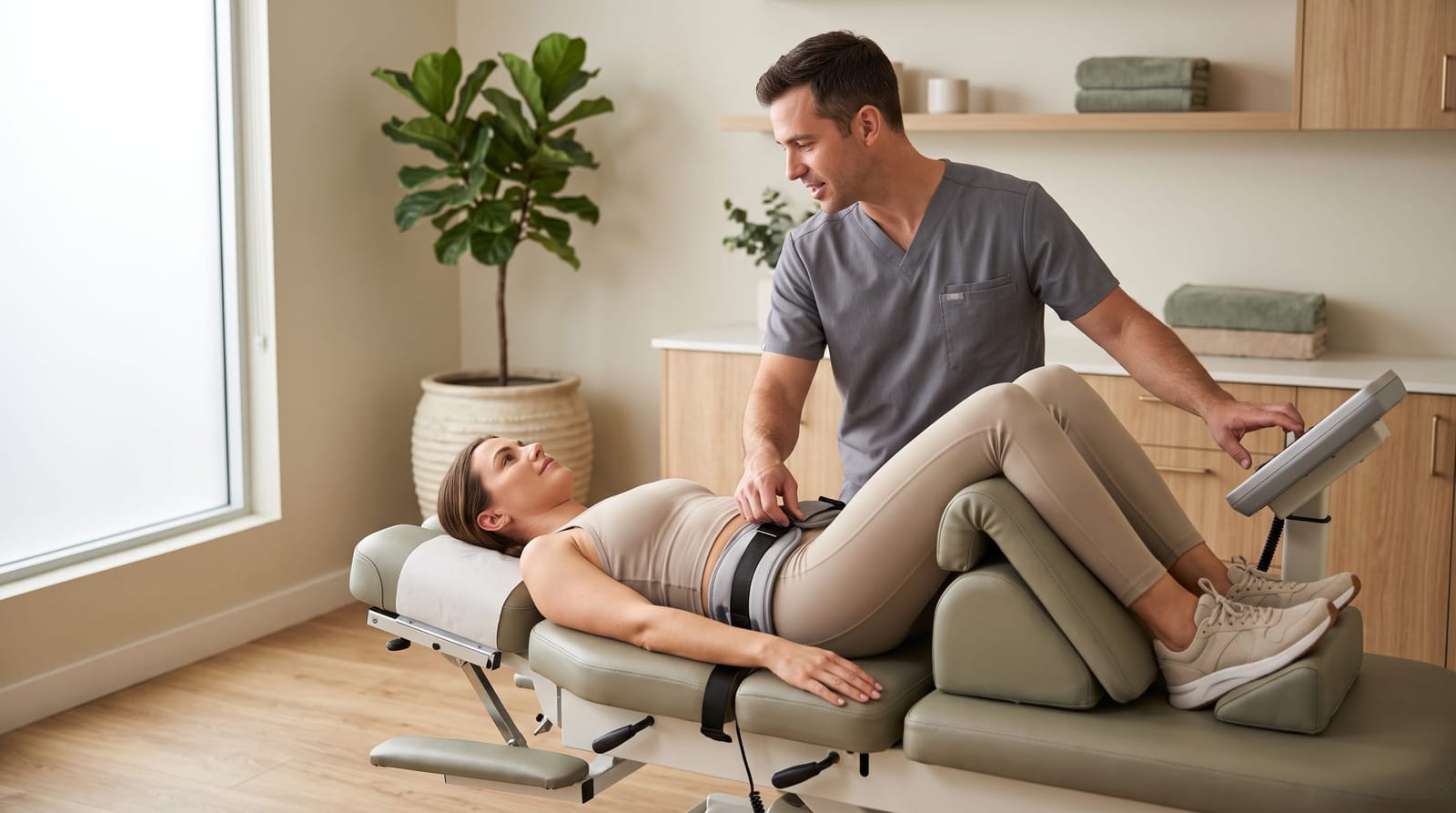
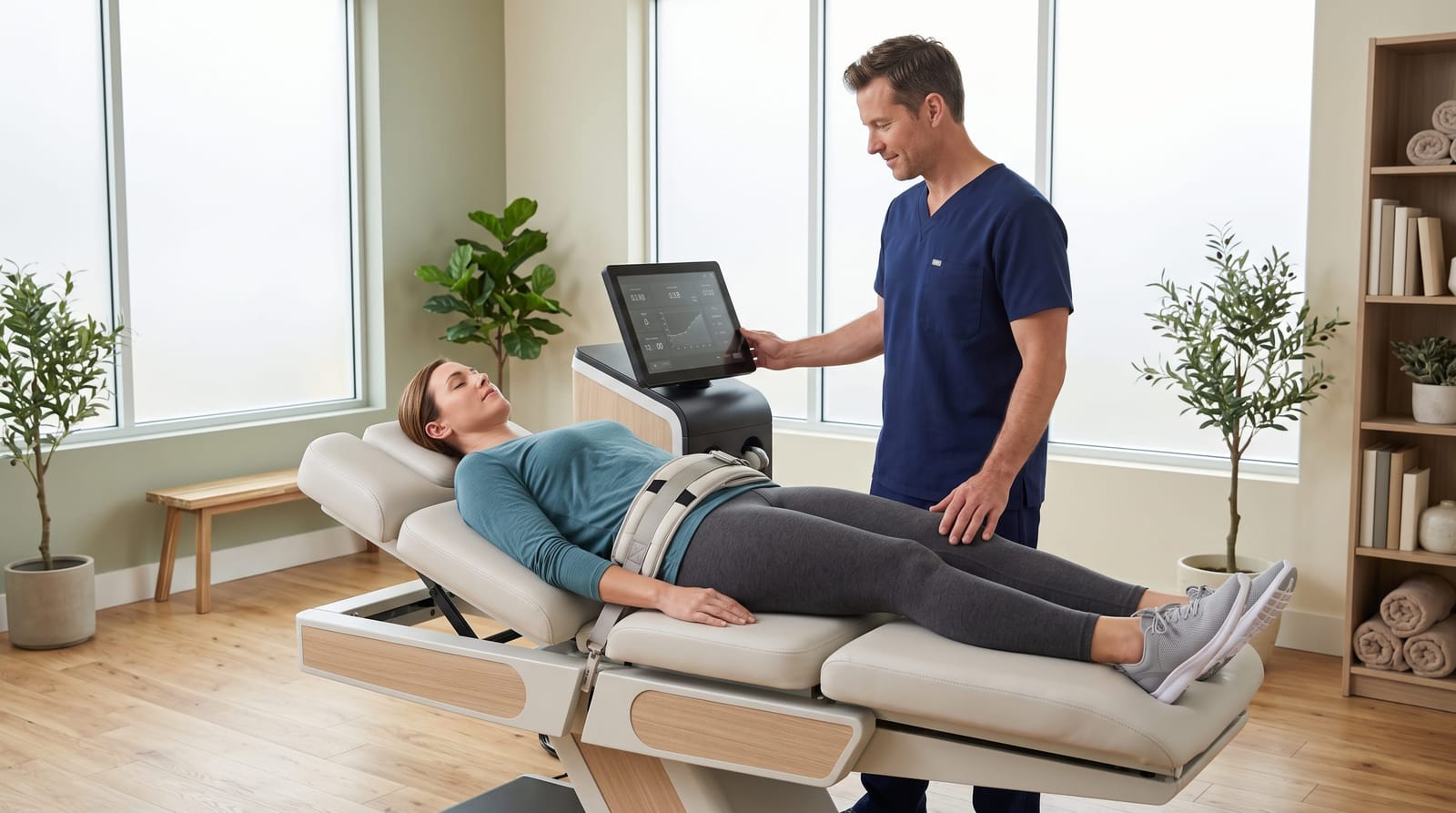
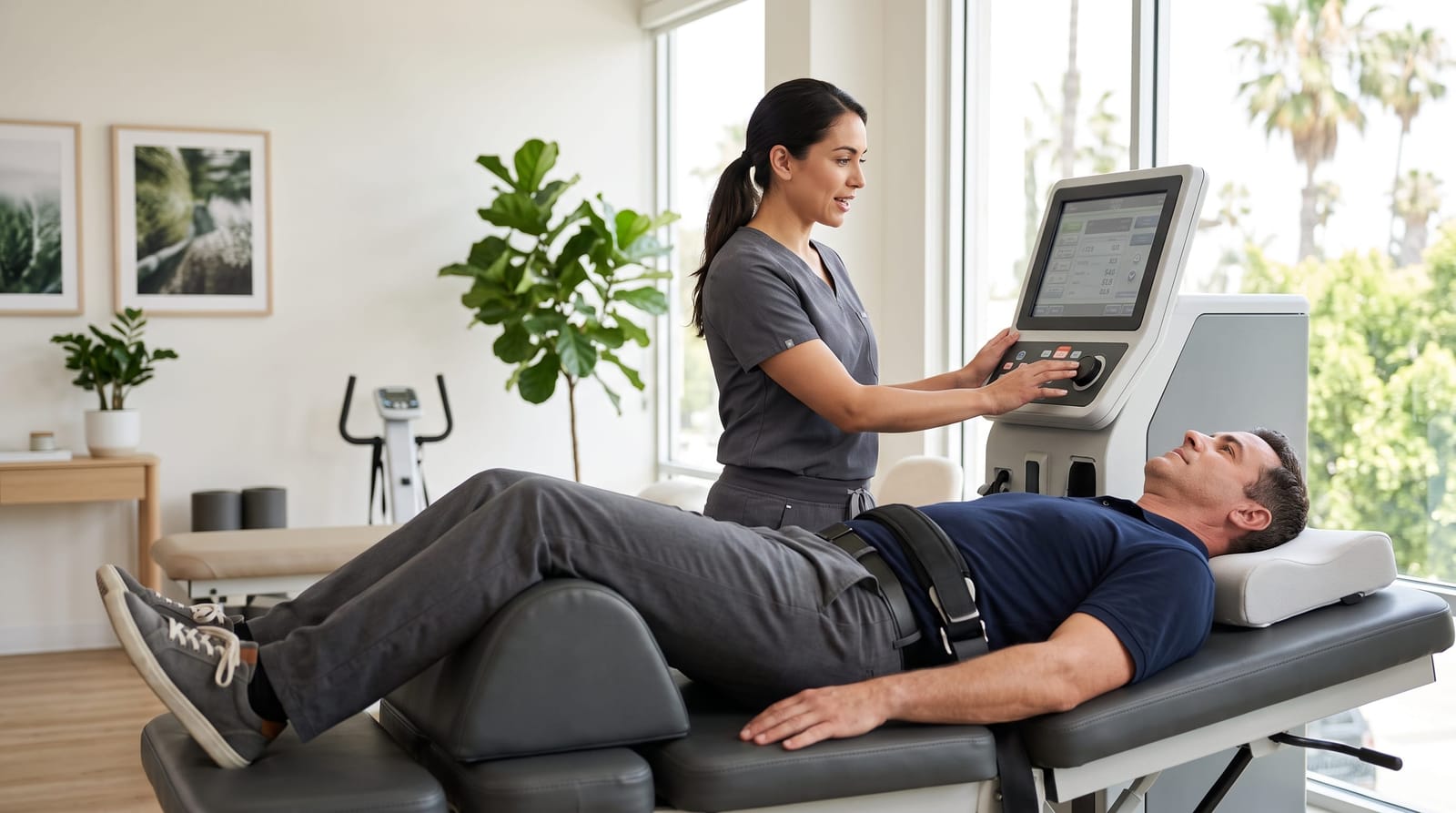
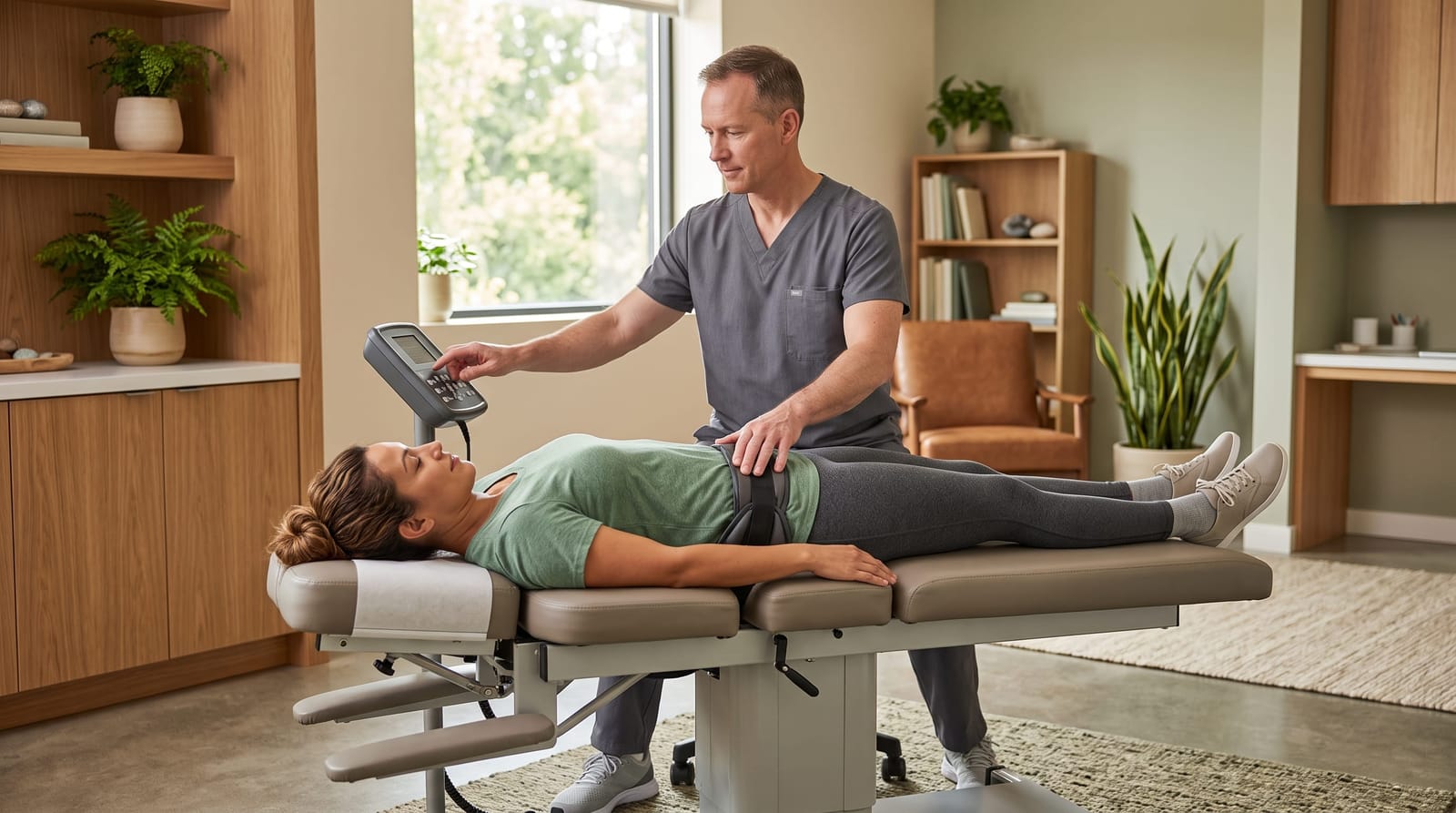
Spinal decompression therapy uses a motorized table to apply gentle, controlled traction to the spine. What makes computerized decompression distinct from older traction methods is precision: the table's software adjusts the angle, force, and rhythm of each pull in real time, responding to muscle resistance rather than applying a static load.
The goal is to create what's called negative intradiscal pressure: a slight reduction in pressure inside the disc. Here's why that matters for a pinched nerve:
- When intradiscal pressure drops, a retraction effect may draw herniated or bulging disc material back toward the center of the disc, reducing how much it encroaches on the nerve root.
- The decompression motion also encourages the flow of nutrients, oxygen, and fluids into the disc: supporting the disc's ability to maintain its structure over time.
- By gently creating space between vertebrae, the therapy may help relieve the mechanical pressure that's been irritating or compressing the nerve.
A typical course of spinal decompression for a pinched nerve involves multiple sessions: research studies have generally examined protocols ranging from 15 to 30 sessions over four to eight weeks, with each session lasting approximately 30 to 45 minutes. The process is designed to be gradual and comfortable, not forceful.
It's worth noting that spinal decompression therapy for conditions like bulging discs follows a very similar process, if you're navigating a related disc issue, the spinal decompression for bulging disc treatment process covers that in detail.
What Does the Research Say?
Clinical evidence on spinal decompression as a non-surgical option for nerve compression is encouraging, though it's important to review it honestly rather than with overstatement.
Several published studies have examined outcomes for patients with disc-related nerve compression who underwent computerized decompression therapy:
- A study published in the Journal of Neuroimaging found that approximately 86% of participants with herniated discs reported significant reduction in symptoms following a course of spinal decompression therapy.
- Research in the American Journal of Pain Management reported that over 70% of patients with chronic low back pain related to disc herniation experienced measurable improvement after decompression treatment.
- A 2014 retrospective study found that patients who combined spinal decompression with other supportive care had notably higher rates of symptom improvement compared to those who pursued passive rest alone.
It's also worth understanding what decompression isn't: it is not a surgical procedure, it does not involve injections, and it is not considered appropriate for every type of spinal condition. Situations involving advanced spinal instability, fractures, certain tumors, or severe spinal stenosis requiring surgical intervention are generally not candidates for decompression therapy. A thorough evaluation helps determine whether this approach is suitable for a given individual.
What Results Can Patients Realistically Expect?
Setting realistic expectations is one of the most important parts of approaching any treatment thoughtfully. Spinal decompression therapy is not a single-session fix, and responses vary from person to person depending on the nature and duration of the underlying condition.
Here's a general picture of what the experience often looks like:
- Early sessions (weeks 1-2): Some patients begin to notice subtle changes in their discomfort level. Others may feel little change at first. The process is cumulative, not immediate.
- Mid-course (weeks 3-5): Many patients report more consistent improvement in radiating symptoms: reduced numbness or tingling, and greater ease with daily movement.
- Completion and beyond: A full course of treatment, paired with any supportive recommendations from the provider, often produces the most durable results. Maintaining spinal health through movement, posture habits, and follow-up care contributes to longer-term outcomes.
What patients consistently report valuing about decompression therapy is the absence of downtime: sessions are typically followed by normal daily activity, without the recovery period associated with surgical options.
That said, no treatment guarantees a specific result, and anyone considering spinal decompression should have a full conversation with their healthcare provider about whether it's an appropriate fit for their particular situation.
Is Spinal Decompression the Right First Step?
For many people, the treatment journey for a pinched nerve begins conservatively, and that's often the right call. Most clinical guidelines recommend starting with non-surgical options before considering more invasive interventions, unless there are urgent neurological concerns that require immediate medical attention.
Spinal decompression therapy fits naturally within that conservative-first approach. It is non-invasive, does not require anesthesia or recovery periods, and can be combined with other supportive therapies, such as rehabilitative exercises or posture work, to address contributing factors alongside the mechanical compression itself.
If you've been told you have a herniated disc, degenerative disc changes, or spinal stenosis that's compressing a nerve root, asking a qualified provider whether computerized spinal decompression is appropriate for your specific case is a reasonable next step.
Frequently Asked Questions
How many spinal decompression sessions are typically needed for a pinched nerve?
Most clinical protocols studied in the research involve between 15 and 30 sessions, typically spread over four to eight weeks. The exact number depends on the individual's condition, how their body responds to early sessions, and any supporting therapies included in their care plan. A provider can give a more specific estimate after an initial evaluation.
Is spinal decompression painful?
Most patients describe the experience as gentle and comfortable, often compared to a slow, rhythmic stretch. The computerized table is designed to respond to muscle tension in real time, which helps prevent the kind of guarding that can make older traction methods uncomfortable. Patients typically remain fully clothed and are able to relax during the session.
Can spinal decompression help with sciatica caused by a pinched nerve?
Sciatica, radiating discomfort that travels down the leg, is often caused by compression of the sciatic nerve root in the lumbar spine, frequently related to a herniated disc. Because spinal decompression targets disc-related nerve pressure, it is one of the approaches commonly explored for sciatica symptoms. Whether it's appropriate depends on the specific cause and severity of the nerve compression, which requires a professional evaluation.
How is computerized spinal decompression different from regular traction?
Traditional traction applies a fixed pulling force, which can trigger muscle guarding and limit effectiveness. Computerized decompression tables use software to continuously adjust the angle and intensity of the distraction force in real time, cycling between peak and resting tension. This precision is what allows the therapy to target specific spinal levels and create the negative intradiscal pressure associated with the treatment's benefits.
The Bottom Line
Spinal decompression for a pinched nerve is a well-studied, non-surgical approach that works by reducing intradiscal pressure and gently creating space around compressed nerve roots. The research suggests meaningful improvement for a significant percentage of patients dealing with disc-related nerve compression, and it fits naturally within a conservative, non-invasive treatment path. Results vary, and the right fit depends on individual circumstances, which is why a professional evaluation is always the essential starting point. To understand the full technology behind this approach, explore our overview of advanced spinal decompression technology and how computerized tables deliver better outcomes.