Sitting with Sciatica: Workplace Pain Management

For professionals dealing with sciatica, sitting with sciatica can transform a productive workday into hours of unbearable pain. According to the American Chiropractic Association, over 40% of workers experience lower back pain, with sciatica affecting approximately 10-25% of adults annually. At Prodigy Chiro Care & Spinal Decompression, we understand that sitting with sciatica presents unique challenges that require specialized workplace pain management strategies. This comprehensive guide provides evidence-based solutions for managing sciatica symptoms while maintaining your professional responsibilities and productivity.
Understanding How Sitting with Sciatica Affects Your Spine
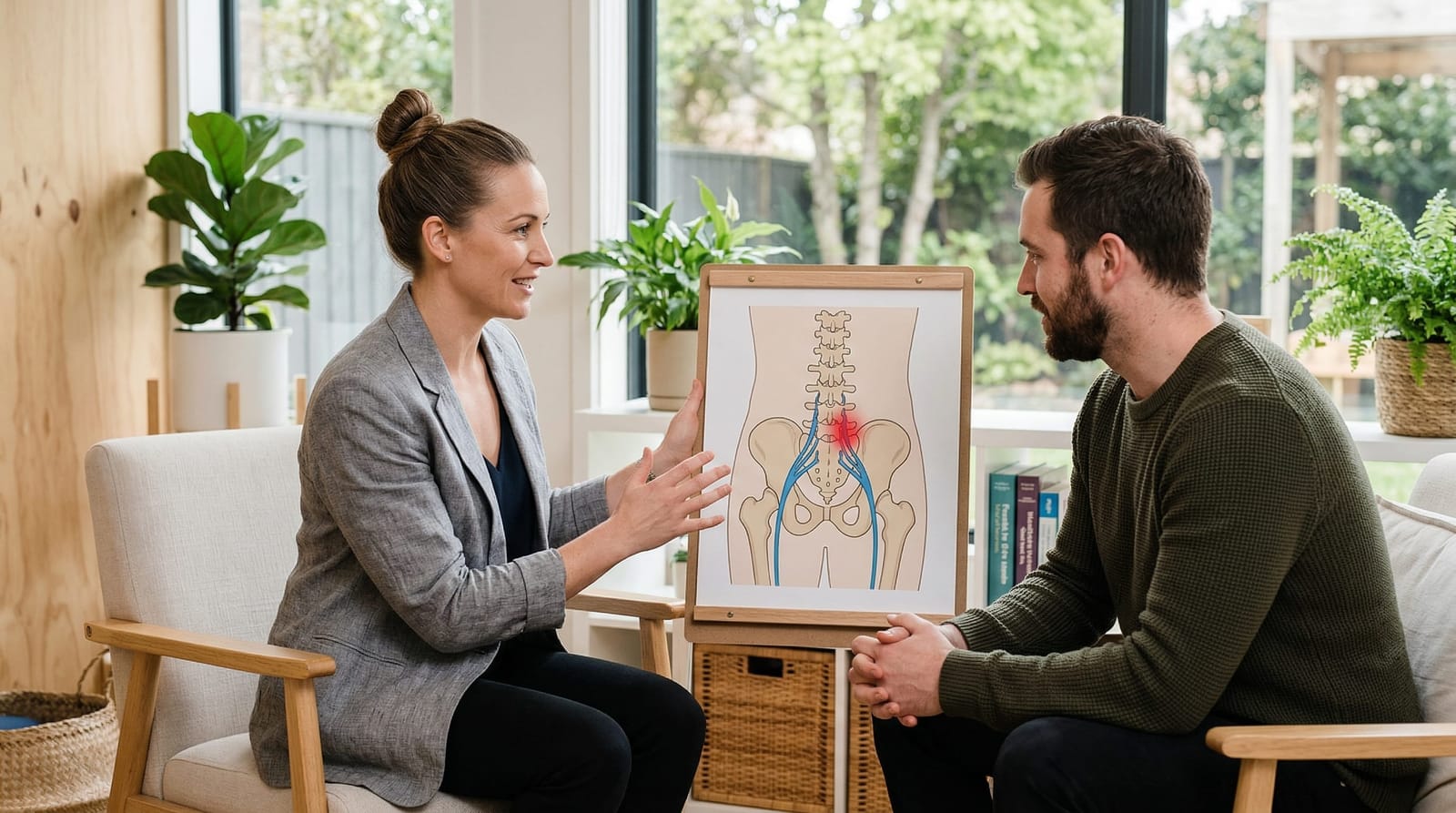
When sitting with sciatica, your lumbar spine experiences up to 40% more pressure compared to standing, according to research published in the Journal of Biomechanics. This increased pressure directly impacts the sciatic nerve, which originates from the lower spine and extends down through your hip and leg. The prolonged compression from sitting with sciatica can intensify inflammation around nerve roots, leading to shooting pain, numbness, and tingling sensations.
The Biomechanics of Sitting with Sciatica
Sitting with sciatica creates a cascade of biomechanical changes in your spine. The intervertebral discs experience increased intradiscal pressure, potentially worsening existing disc herniations. Research from the Spine Journal indicates that disc pressure increases by 200% when transitioning from lying down to sitting. This pressure can compress the sciatic nerve roots at L4, L5, or S1 vertebral levels, the most common sites for sciatica development.
Why Traditional Office Chairs Worsen Sciatica
Standard office chairs often lack adequate lumbar support, forcing your spine into an unnatural C-shaped curve when sitting with sciatica. This position increases pressure on the posterior aspect of your intervertebral discs, where most herniations occur. The lack of proper cushioning and support can maintain sustained pressure on trigger points, perpetuating the pain cycle associated with sitting with sciatica.
Ergonomic Chair Solutions for Sitting with Sciatica
Selecting the right ergonomic chair is crucial for managing sitting with sciatica effectively. Clinical studies show that proper ergonomic seating can reduce lower back pain by up to 68% in office workers. At Prodigy Chiro Care & Spinal Decompression, we recommend specific chair features that address the unique challenges of sitting with sciatica.
Essential Chair Features for Sciatica Management
- Adjustable Lumbar Support: Look for chairs with dynamic lumbar support that maintains the natural 15-20 degree lordotic curve of your lower spine when sitting with sciatica
- Seat Depth Adjustment: Proper seat depth prevents pressure on the popliteal area behind your knees, which can restrict blood flow and worsen sciatica symptoms
- Waterfall Edge Design: This feature reduces pressure on your thighs and promotes better circulation while sitting with sciatica
- Memory Foam Cushioning: High-density memory foam distributes weight evenly and reduces pressure points that can aggravate sciatic nerve pain
- Armrest Adjustability: Proper armrest height reduces shoulder tension and prevents compensatory postures that can worsen sitting with sciatica
Chair Positioning Guidelines
When sitting with sciatica, your chair height should position your hips slightly higher than your knees, creating an angle of 100-110 degrees at your hip joint. This position reduces posterior disc pressure by approximately 25% compared to a 90-degree sitting position. Your feet should rest comfortably on the floor or footrest, maintaining proper circulation and reducing nerve compression.
Advanced Posture Techniques for Sitting with Sciatica
Proper posture while sitting with sciatica involves more than just "sitting up straight." Research from the University of Alberta demonstrates that specific postural modifications can reduce sciatic nerve tension by up to 35%. These evidence-based techniques form the foundation of our treatment approach at Prodigy Chiro Care & Spinal Decompression.
The Neutral Spine Position
Achieving a neutral spine while sitting with sciatica requires maintaining three natural curves: cervical lordosis, thoracic kyphosis, and lumbar lordosis. Your ears should align over your shoulders, which should align over your hips. This alignment distributes load evenly across your vertebrae and reduces concentrated pressure on any single spinal segment.
Core Activation Strategies
Engaging your deep core muscles while sitting with sciatica provides internal spinal support. The transversus abdominis, multifidus, and pelvic floor muscles work together to create intra-abdominal pressure, reducing load on your lumbar spine by up to 30%. Practice gentle core activation by drawing your navel toward your spine at about 20% effort level throughout your workday.
Hip Flexor Management
Tight hip flexors from prolonged sitting with sciatica can create an anterior pelvic tilt, increasing lumbar lordosis and nerve compression. Regularly shifting your weight, performing seated hip flexor stretches, and adjusting your chair angle can help maintain optimal hip positioning and reduce sciatic nerve tension.
Workplace Accommodations and Environmental Modifications
Creating a sciatica-friendly workspace involves systematic environmental modifications that support your spine throughout the day. The Occupational Safety and Health Administration (OSHA) reports that proper ergonomic interventions can reduce workplace-related musculoskeletal disorders by up to 59%. Prodigy Chiro Care & Spinal Decompression works with patients to implement comprehensive workplace strategies for managing sitting with sciatica.
Sit-Stand Desk Implementation
Alternating between sitting and standing every 30-45 minutes can significantly reduce sciatica symptoms. Research published in the Applied Ergonomics journal shows that sit-stand desk usage reduces lower back discomfort by 54% within four weeks. When transitioning from sitting with sciatica to standing, do so gradually to allow your spine to decompress and readjust.
Workstation Layout Optimization
- Monitor Position: Place your computer screen 20-24 inches away with the top third at eye level to prevent forward head posture while sitting with sciatica
- Keyboard and Mouse Placement: Position input devices to maintain 90-degree angles at your elbows and neutral wrist positions
- Document Holder: Use a document holder positioned at screen height to minimize neck rotation and maintain spinal alignment
- Foot Support: Implement adjustable footrests to maintain proper hip and knee angles when sitting with sciatica
- Lighting Adjustment: Optimize lighting to prevent slouching or leaning forward to see your work clearly
Movement Integration Strategies
The human spine requires regular movement to maintain disc nutrition and prevent stiffness. Studies show that remaining in any static position for more than 20 minutes can increase tissue stress. When sitting with sciatica, implement micro-movements such as pelvic tilts, shoulder blade squeezes, and gentle spinal rotations every 15-20 minutes.
Therapeutic Exercises for Office-Based Sciatica Relief
Incorporating targeted exercises into your workday can provide immediate relief while sitting with sciatica and prevent symptom progression. Clinical trials demonstrate that workplace-based exercise programs can reduce lower back pain intensity by up to 42% over 12 weeks.
Seated Decompression Techniques
Seated spinal decompression exercises can provide immediate relief while sitting with sciatica. The seated cat-cow stretch involves gently arching and rounding your back to promote spinal mobility and reduce disc pressure. Perform this movement 5-10 times every hour to maintain spinal flexibility and nerve mobility.
Neural Mobilization Exercises
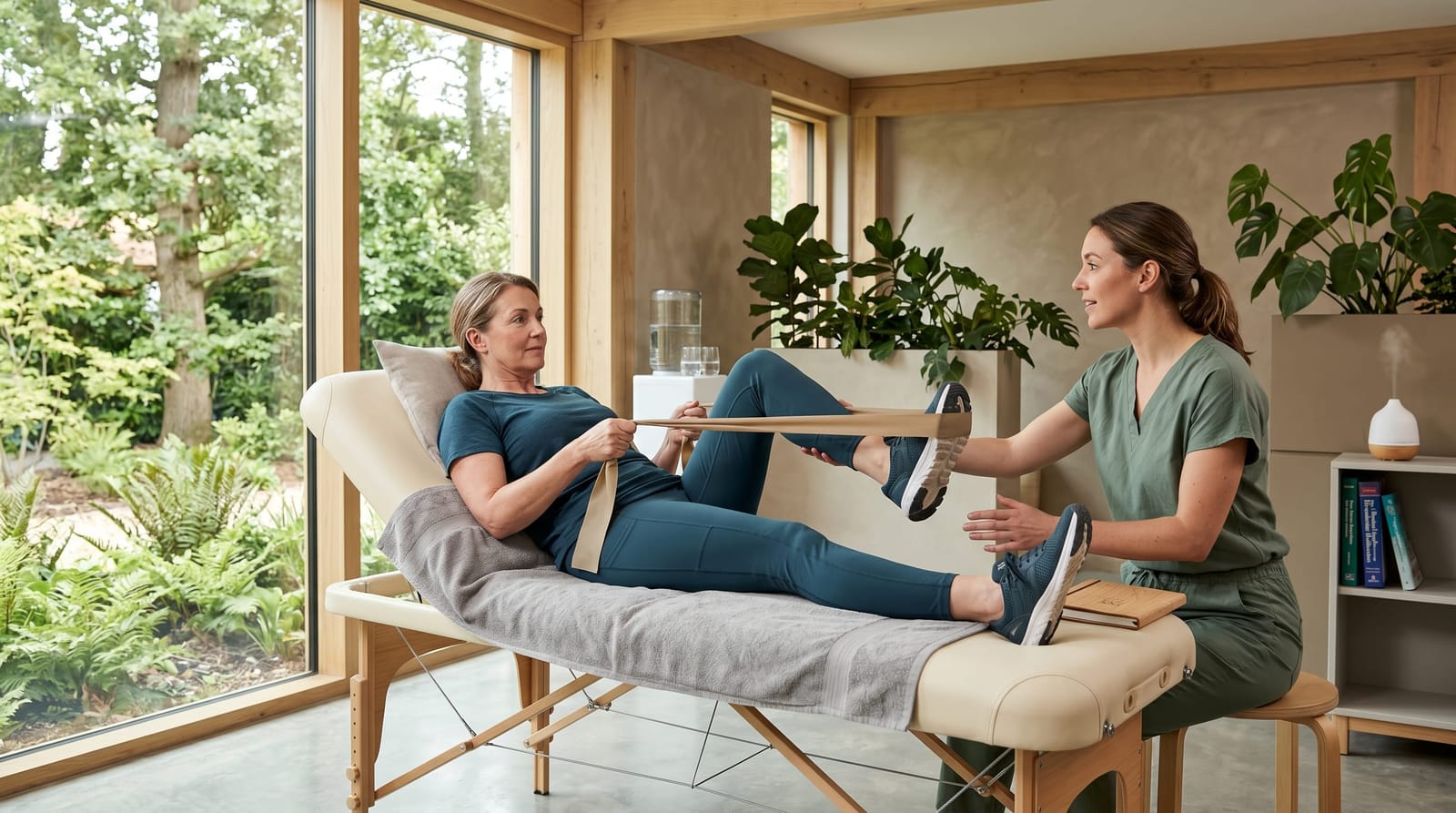
Gentle neural mobilization techniques can improve sciatic nerve gliding and reduce adhesions. The seated neural glide involves extending your affected leg while pointing your toes toward your shin. This movement helps restore normal nerve mobility and can reduce pain while sitting with sciatica. Perform 10-15 repetitions, 2-3 times daily.
Piriformis Muscle Releases
Piriformis syndrome contributes to approximately 15-20% of sciatica cases. The seated figure-four stretch targets piriformis tightness by placing your ankle on the opposite knee and gently leaning forward. Hold for 30 seconds and repeat 3 times on each side to address this common contributor to sitting with sciatica discomfort.
Technology Solutions for Sciatica Management
Modern technology offers innovative solutions for managing sitting with sciatica in the workplace. Wearable posture monitors can provide real-time feedback about your spinal position, while smartphone apps can remind you to take movement breaks. At Prodigy Chiro Care & Spinal Decompression, we integrate these technologies into comprehensive treatment plans for our patients.
Postural Monitoring Devices
Wearable posture devices can detect when you're slouching while sitting with sciatica and provide gentle vibration reminders to correct your position. Studies show that real-time postural feedback can improve sitting posture by 67% within four weeks of consistent use.
Ergonomic Assessment Apps
Mobile applications can guide you through proper workstation setup for managing sitting with sciatica. These tools use your device's camera to analyze your posture and provide personalized recommendations for improving your workspace ergonomics.
Pain Management Strategies While Working
When sitting with sciatica becomes unavoidable due to work demands, having effective pain management strategies is crucial. Research indicates that multimodal pain management approaches are 73% more effective than single-intervention strategies for chronic sciatica.
Heat and Cold Therapy Application
Applying heat or cold therapy while sitting with sciatica can provide significant relief. Heat therapy increases blood flow and reduces muscle tension, while cold therapy can decrease inflammation and numb pain. Portable heat pads or cold packs designed for office use can be discreetly applied during your workday.
Breathing and Relaxation Techniques
Controlled breathing exercises can activate your parasympathetic nervous system and reduce pain perception while sitting with sciatica. The 4-7-8 breathing technique involves inhaling for 4 counts, holding for 7 counts, and exhaling for 8 counts. This practice can reduce stress-related muscle tension and improve pain tolerance.
Mindfulness and Pain Awareness
Mindfulness meditation has been shown to reduce chronic pain intensity by up to 57% in clinical studies. When sitting with sciatica, practicing body awareness can help you identify early warning signs of symptom flare-ups and implement preventive measures before pain becomes severe.
When to Seek Professional Treatment
While workplace modifications can significantly improve sitting with sciatica, professional treatment may be necessary when symptoms persist or worsen. At Prodigy Chiro Care & Spinal Decompression, we utilize advanced diagnostic techniques and evidence-based treatments to address the root causes of sciatica.
Warning Signs Requiring Immediate Attention
Certain symptoms while sitting with sciatica warrant immediate professional evaluation. These include progressive weakness in your leg, loss of bladder or bowel control, severe pain that doesn't respond to rest or position changes, and numbness in the saddle area. These symptoms may indicate serious nerve compression requiring urgent intervention.
Advanced Treatment Options
Prodigy Chiro Care & Spinal Decompression offers comprehensive treatment approaches including non-surgical spinal decompression, chiropractic manipulation, therapeutic exercise, and ergonomic counseling. Our integrated approach addresses both immediate symptom relief and long-term prevention of sitting with sciatica complications.
Frequently Asked Questions About Sitting with Sciatica
How long can I sit with sciatica before taking a break?
When sitting with sciatica, take movement breaks every 20-30 minutes. Research shows that static postures maintained for longer than 20 minutes can increase tissue stress and worsen symptoms. Set regular reminders to stand, stretch, or change positions throughout your workday.
What is the best chair angle for sitting with sciatica?
The optimal chair angle for sitting with sciatica is a slight recline of 100-110 degrees. This position reduces disc pressure by approximately 25% compared to upright sitting while maintaining adequate core support and preventing slouching.
Can sitting with sciatica cause permanent damage?
While sitting with sciatica doesn't typically cause permanent damage, prolonged poor postures can contribute to disc degeneration and chronic pain patterns. Early intervention and proper ergonomic modifications can prevent long-term complications and maintain spinal health.
Should I use a cushion when sitting with sciatica?
Yes, specialized cushions can be beneficial when sitting with sciatica. Coccyx cushions with cutouts reduce pressure on the tailbone, while lumbar support cushions maintain proper spinal curvature. Memory foam cushions can distribute weight more evenly and reduce pressure points.
How do I know if my workspace is properly set up for sitting with sciatica?
A properly configured workspace for sitting with sciatica should allow you to maintain neutral spine alignment with feet flat on the floor, knees at 90-100 degrees, and lumbar support maintaining your lower back curve. Your computer screen should be at eye level to prevent forward head posture.
Building Long-term Success with Sciatica Management
Successfully managing sitting with sciatica requires a comprehensive approach that combines immediate symptom relief with long-term prevention strategies. The key is developing sustainable habits that support spinal health throughout your career.
Creating a Sustainable Routine
Develop a daily routine that includes regular movement breaks, postural awareness checks, and therapeutic exercises. Consistency is more important than intensity when managing sitting with sciatica. Small, frequent interventions are more effective than occasional intensive treatments.
Tracking Progress and Symptoms
Maintaining a symptom diary can help identify patterns and triggers related to sitting with sciatica. Track pain levels, activities, postures, and interventions to identify what works best for your specific situation. This information is valuable for healthcare providers and helps optimize your management strategy.
Conclusion
Managing sitting with sciatica in the workplace requires a multifaceted approach combining ergonomic modifications, postural awareness, therapeutic exercises, and professional treatment when necessary. The evidence clearly shows that proactive management strategies can significantly reduce pain and improve quality of life for professionals dealing with sciatica. At Prodigy Chiro Care & Spinal Decompression, we're committed to helping patients develop comprehensive strategies for sitting with sciatica that promote both immediate relief and long-term spinal health. Remember that every individual's experience with sitting with sciatica is unique, and working with qualified healthcare professionals ensures the most effective treatment approach. By implementing these evidence-based strategies and maintaining consistency in your approach, you can successfully manage sitting with sciatica while maintaining your professional productivity and overall well-being. Don't let sciatica control your work life: take proactive steps today to reclaim your comfort and health in the workplace.