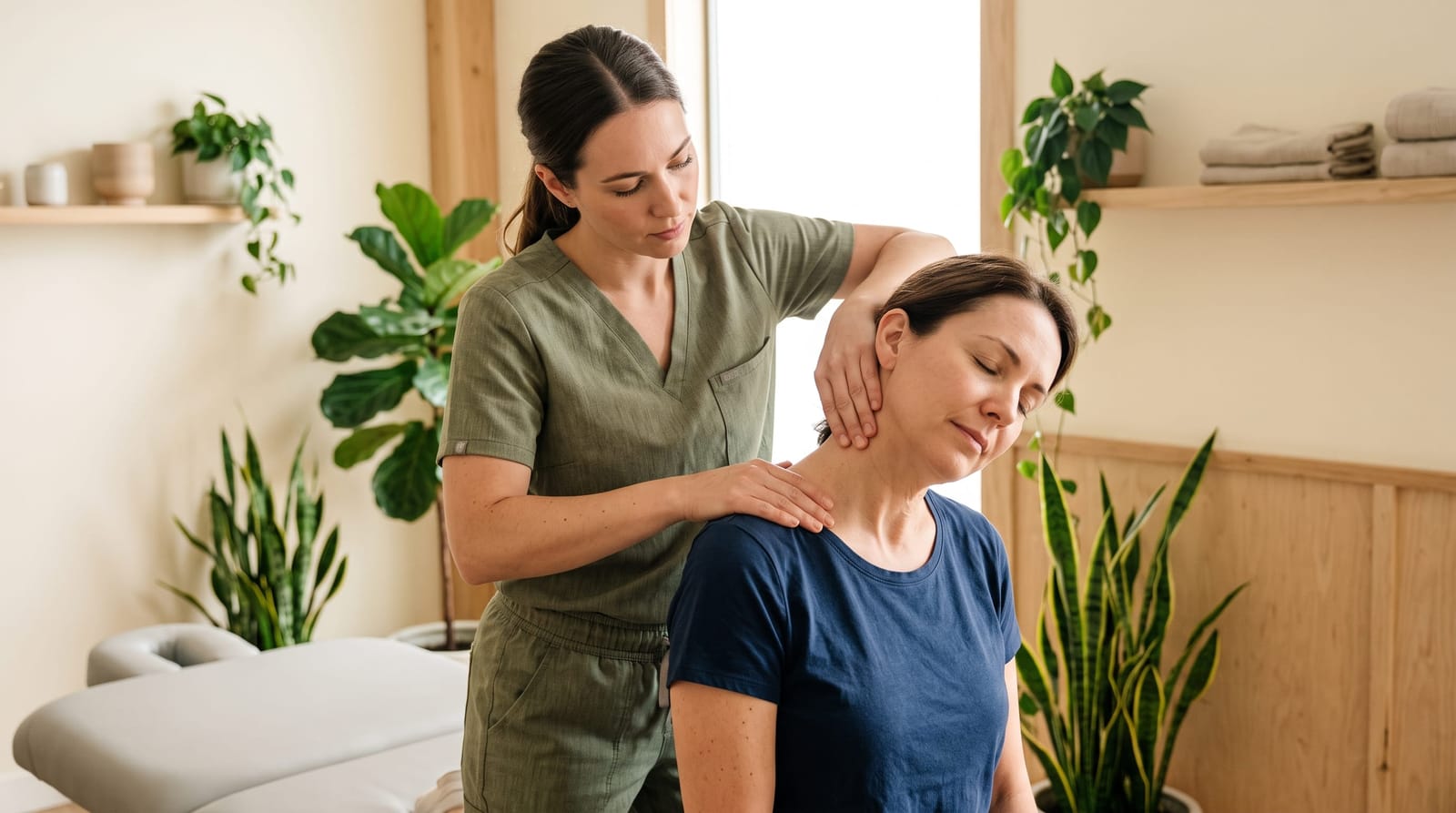
Scoliosis and Chiropractic Care: What Treatment Can and Cannot Do

If you or someone you love has been diagnosed with scoliosis, you've likely wondered whether chiropractic care can help, and just as importantly, what its realistic limits are. It's a fair and important question. While scoliosis is most commonly associated with spinal concerns, many patients also experience secondary upper body discomfort, shoulder tension, and postural strain that overlaps with conditions like shoulder pain and thoracic tightness. This guide takes an honest, evidence-based look at what chiropractic manipulation can realistically offer scoliosis patients, and where expectations need to be grounded in reality.
Understanding Scoliosis: A Quick Orientation
Scoliosis is a lateral curvature of the spine: meaning the spine bends sideways rather than running in a straight vertical line. It affects an estimated 2-3% of the general population, with adolescent idiopathic scoliosis being the most common form. Curves are measured in degrees using what's called the Cobb angle. Mild curves are generally defined as under 20 degrees, moderate curves fall between 20 and 40 degrees, and severe curves exceed 40 degrees.
Most people with mild to moderate scoliosis live full, active lives. However, they may experience muscle imbalances, postural asymmetry, reduced spinal mobility, and chronic discomfort: particularly in the mid-back, lower back, and along the shoulders. These functional symptoms are where chiropractic care has its most meaningful role to play.
It's worth noting that scoliosis is not a single, uniform condition. Causes vary: some cases are congenital (present at birth), others are neuromuscular, and many cases in adolescents and adults have no identified cause. This variation matters because it directly shapes what treatment approaches are appropriate for each individual.
Where Chiropractic Manipulation Evidence-Based Research Stands Today
When evaluating any treatment, it's important to look at what peer-reviewed research actually supports. The evidence base for chiropractic manipulation is strongest for low back pain and neck pain. Multiple systematic reviews have found spinal manipulative therapy to be an effective option for these conditions, with guidelines from organizations including the American College of Physicians recommending it as a first-line non-pharmacological approach for acute and chronic low back pain.
A 2017 review published in the Journal of the American Medical Association found that spinal manipulation was associated with modest but significant improvements in both pain and function for acute low back pain. Separately, a comprehensive evidence synthesis by the U.S. Department of Veterans Affairs and Department of Defense found spinal manipulative therapy effective for reducing pain and improving function, with serious adverse events occurring in fewer than 1 in 1 million treatment sessions.
For scoliosis specifically, the research picture is more nuanced. Studies have shown that chiropractic care can meaningfully reduce pain, improve muscular balance, and enhance quality of life in scoliosis patients: particularly those with mild to moderate curves. However, the current body of evidence does not support claims that chiropractic manipulation can permanently reduce the Cobb angle or structurally correct a spinal curve in adults. Honest, patient-centered care means sharing both sides of that picture.
What Chiropractic Care Can Realistically Offer Scoliosis Patients
Even without structural correction, there's genuine value in what a well-designed chiropractic care plan can do for someone living with scoliosis. Here's what the evidence and clinical experience support:
- Pain and discomfort management: Spinal manipulation, soft tissue therapy, and targeted mobilization can reduce the muscular tension and joint stiffness that often accompany scoliotic curves. Many patients report meaningful improvements in day-to-day comfort.
- Improved mobility and flexibility: Scoliosis can restrict range of motion in the thoracic and lumbar spine. Chiropractic care can help restore functional movement, making daily activities easier.
- Postural awareness and muscular balance: Scoliosis creates uneven loading patterns throughout the body. Chiropractic assessment and corrective exercises help patients understand and address these imbalances over time.
- Reduced secondary symptoms: Shoulder tension, rib discomfort, and even headaches can arise as downstream effects of scoliotic posture. Addressing spinal alignment and muscular function can ease these secondary complaints.
- Support for overall wellness: Regular check-ins, movement guidance, and supportive care help scoliosis patients stay active and maintain quality of life over the long term.
For patients managing workplace demands, the connection between spinal posture and upper extremity strain is real. Understanding how ergonomic solutions for office workers with carpal tunnel and shoulder pain intersect with scoliosis management can be an important part of a comprehensive care approach.
What Chiropractic Care Cannot Do for Scoliosis
Setting realistic expectations is not pessimism: it's respect for the patient. Here's where transparency matters:
- It cannot structurally correct an adult curve: Once skeletal maturity is reached, a scoliotic curve is largely fixed in its bony structure. Chiropractic care does not change bone anatomy or permanently reduce the Cobb angle in adult patients.
- It is not a substitute for medical monitoring: Patients with moderate to severe curves, particularly adolescents still growing, need regular imaging and specialist oversight. Chiropractic care works best as a complement to, not a replacement for, orthopedic or physiatric management when curves are clinically significant.
- It cannot guarantee symptom elimination: Like any healthcare approach, outcomes vary by individual. Some patients respond very well; others experience more modest improvement. No ethical provider should promise complete pain elimination.
- It is not appropriate as a sole treatment for severe curves: Curves exceeding 40-50 degrees, progressive adolescent scoliosis, or cases with neurological involvement require specialist evaluation and may need bracing or surgical consultation.
A qualified chiropractor will perform a thorough intake, review any existing imaging, and refer appropriately when a condition falls outside the scope of conservative care. That collaborative, patient-first approach is what evidence-based chiropractic practice looks like in action.
Building a Personalized Care Plan for Scoliosis
No two scoliosis cases are alike, which is why individualized assessment matters so much. At Prodigy Chiro Care, an initial evaluation for a scoliosis patient typically includes a postural assessment, functional movement screening, and a detailed review of symptoms and health history. From there, a care plan is built around what that specific patient actually needs.
A typical plan might incorporate:
- Gentle spinal mobilization or manipulation targeted to areas of restricted movement
- Soft tissue work to reduce muscular tension on the overloaded side of the curve
- Rehabilitative exercises to strengthen supporting musculature and improve balance
- Postural education and ergonomic guidance: particularly relevant for patients who spend long hours at a desk
- Progress reassessment at regular intervals to adjust the plan as needed
For patients whose scoliosis-related discomfort overlaps with their work environment, a workplace ergonomic assessment can be a valuable extension of chiropractic care: identifying how daily positioning habits may be contributing to symptoms and how to adjust them effectively.
Frequently Asked Questions
Can chiropractic manipulation straighten a scoliosis curve?
In adults with fully developed spines, chiropractic manipulation does not structurally straighten a scoliotic curve or permanently reduce the Cobb angle. What it can do is improve mobility, reduce pain, and support better muscular balance around the curve, all of which contribute meaningfully to quality of life.
Is chiropractic care safe for scoliosis patients?
For most patients with mild to moderate scoliosis, chiropractic care is considered safe when performed by a licensed, experienced provider who has reviewed the patient's history and imaging. Research suggests serious complications from spinal manipulation occur in fewer than 1 in 1 million treatment sessions. As with any care, a thorough intake and individualized approach are essential.
How many chiropractic visits does a scoliosis patient typically need?
There's no universal answer: it depends on the severity of symptoms, the patient's goals, and how well they respond to care. Many patients notice improvements in comfort and mobility within 6-12 visits, though ongoing maintenance care is often beneficial for managing a chronic condition like scoliosis over the long term.
Should I see a chiropractor or an orthopedic specialist for scoliosis?
Ideally, both can play a role depending on your situation. Orthopedic specialists are important for monitoring curve progression, especially in growing adolescents, and for evaluating surgical candidacy when needed. Chiropractors are well-suited to address the functional and symptomatic side of scoliosis, pain, stiffness, posture, and mobility, as part of a collaborative care team.
The Honest Bottom Line
Chiropractic manipulation, when practiced with an evidence-based mindset, offers real and meaningful benefits for many scoliosis patients: particularly around pain relief, improved mobility, and postural support. It doesn't rewrite anatomy, and no responsible provider would suggest otherwise. What it does offer is a thoughtful, non-surgical path toward feeling better and functioning more comfortably in daily life. If scoliosis is affecting your quality of life, a personalized evaluation at Prodigy Chiro Care is a practical first step toward understanding your options clearly.