How Custom Orthotics Are Made: From Assessment to Final Product
When considering custom orthotics as part of your comprehensive foot care plan, understanding how are custom orthotics made can help you appreciate why these personalized devices are so effective. The creation of custom orthotics involves a sophisticated blend of biomechanical science, advanced manufacturing techniques, and skilled craftsmanship. This process typically spans 2-3 weeks from initial assessment to final fitting, answering the question of how are custom orthotics made through multiple precise stages.
The detailed process of how are custom orthotics made involves multiple specialized steps that distinguish them from mass-produced insoles. Each step is crucial for creating a device that precisely matches your foot's unique contours. Unlike over-the-counter options, understanding how are custom orthotics made reveals the individualized design considerations that significantly impact their effectiveness. At Prodigy Chiro Care & Spinal Decompression, we understand this comprehensive process ensures every custom orthotic delivers targeted support and correction your feet require.
How Are Custom Orthotics Made: Initial Biomechanical Assessment Process
The custom orthotic creation process begins with a thorough biomechanical evaluation conducted by a qualified podiatrist or pedorthist. This critical first step determines exactly how are custom orthotics made to address your specific needs through comprehensive gait analysis and postural assessment. Understanding how are custom orthotics made starts with recognizing that this assessment phase forms the foundation for all subsequent manufacturing decisions.
Comprehensive Medical History Review
Healthcare providers begin by documenting your complete medical history, which directly influences how are custom orthotics made for your unique situation. This documentation includes several key areas that shape the orthotic design process:
- Previous foot injuries or surgeries that affect biomechanical function
- Current pain locations and severity levels requiring specific accommodation
- Daily activity patterns and occupational demands influencing wear requirements
- Existing medical conditions affecting foot function and orthotic material selection
- Previous orthotic experiences and outcomes guiding design improvements
This information helps determine the appropriate orthotic design and select materials needed for your specific condition. Studies show that 85% of custom orthotic success depends on accurate initial assessment and proper patient history documentation. This data directly influences how are custom orthotics made to achieve optimal therapeutic outcomes.
Physical Examination and Gait Analysis
The physical examination includes detailed analysis of foot structure, joint mobility, and muscle function that determines how are custom orthotics made for your biomechanical needs. Advanced clinics utilize computerized gait analysis systems that capture over 1,000 data points per second. They measure ground reaction forces, pressure distribution, and timing sequences throughout your walking cycle.
Digital pressure mapping technology reveals areas of excessive pressure that may exceed 15-20 PSI, while normal foot pressure ranges from 3-8 PSI. This indicates zones requiring specific orthotic accommodation or correction. This data directly influences how are custom orthotics made to redistribute forces and improve biomechanical function throughout your gait cycle.
Understanding How Are Custom Orthotics Made: Foot Impression Techniques
Creating accurate foot impressions represents the foundation of quality custom orthotic fabrication and directly answers how are custom orthotics made with precision. Modern techniques have evolved significantly from traditional plaster casting methods to incorporate digital scanning and 3D modeling technologies. Understanding how are custom orthotics made requires appreciating these advanced impression techniques that ensure accurate foot replication.
Traditional Plaster Casting Methods
Plaster casting remains the gold standard for capturing detailed foot anatomy, particularly for complex deformities requiring specialized approaches to how are custom orthotics made. The process involves specific steps that ensure accurate foot replication:
- Positioning the foot in neutral subtalar joint position for optimal biomechanical alignment
- Applying plaster bandages in specific layering patterns to capture anatomical details
- Maintaining proper foot alignment during the 8-10 minute curing time
- Careful cast removal to preserve anatomical details essential for manufacturing
Experienced practitioners can capture foot contours with remarkable accuracy, achieving precision within 1-2 millimeters using proper plaster casting techniques. This precision ensures the resulting orthotic matches your foot's unique shape precisely, demonstrating how are custom orthotics made with exacting standards.
Digital Scanning and 3D Modeling
Advanced digital scanners capture foot dimensions using structured light or laser technology, revolutionizing how are custom orthotics made in modern facilities. These systems create 3D models with resolution up to 0.1 millimeter accuracy and process foot scans in under 60 seconds. They generate detailed topographical maps that highlight pressure points, arch heights, and anatomical variations crucial to understanding how are custom orthotics made.
Digital methods offer several advantages including immediate visual feedback and the ability to modify designs before manufacturing begins. They also create permanent digital records for future orthotic adjustments or replacements. Research indicates that 3D scanning accuracy exceeds traditional methods by 15-20% for most foot measurements, improving how are custom orthotics made for optimal patient outcomes.
How Are Custom Orthotics Made: Design and Material Selection Process
Understanding how are custom orthotics made requires appreciation for the sophisticated design phase where biomechanical principles meet material science. This stage transforms raw foot data into a therapeutic device engineered for your specific needs. The design process demonstrates how are custom orthotics made through careful analysis of individual biomechanical requirements.
Computer-Aided Design (CAD) Development
Specialized CAD software processes foot impression data to create detailed orthotic designs that showcase how are custom orthotics made using advanced technology. Skilled technicians analyze your biomechanical assessment results and modify the basic foot shape to incorporate necessary corrections:
- Arch support modifications ranging from 5-15mm elevation based on individual anatomy
- Heel cup adjustments for improved stability and alignment during weight-bearing
- Forefoot accommodations for pressure redistribution across metatarsal heads
- Metatarsal support positioning based on individual anatomical variations
- Post adjustments for motion control and biomechanical correction
The design process typically requires 2-3 hours of skilled technician time and incorporates multiple biomechanical variables. This demonstrates how are custom orthotics made to optimize function for your specific needs and activity requirements.
Material Selection Criteria
Material selection significantly impacts orthotic performance and durability, directly influencing how are custom orthotics made for different patient needs. Understanding how are custom orthotics made involves knowing the different material options and their specific applications:
Rigid Materials: Carbon fiber and high-density plastics provide maximum motion control for severe biomechanical abnormalities. These materials can withstand forces exceeding 500 pounds per square inch and maintain structural integrity under extreme conditions, showcasing how are custom orthotics made for high-demand applications.
Semi-rigid Options: Thermoplastic polymers offer balanced flexibility and support, ideal for active individuals requiring moderate correction. They provide comfort during extended wear periods while demonstrating how are custom orthotics made for versatile applications.
Soft Accommodative Materials: EVA foam and gel combinations provide pressure relief and shock absorption, particularly beneficial for diabetic patients or those with sensitive foot conditions. This illustrates how are custom orthotics made for specialized medical needs.
Manufacturing Process: How Are Custom Orthotics Made in Professional Laboratories
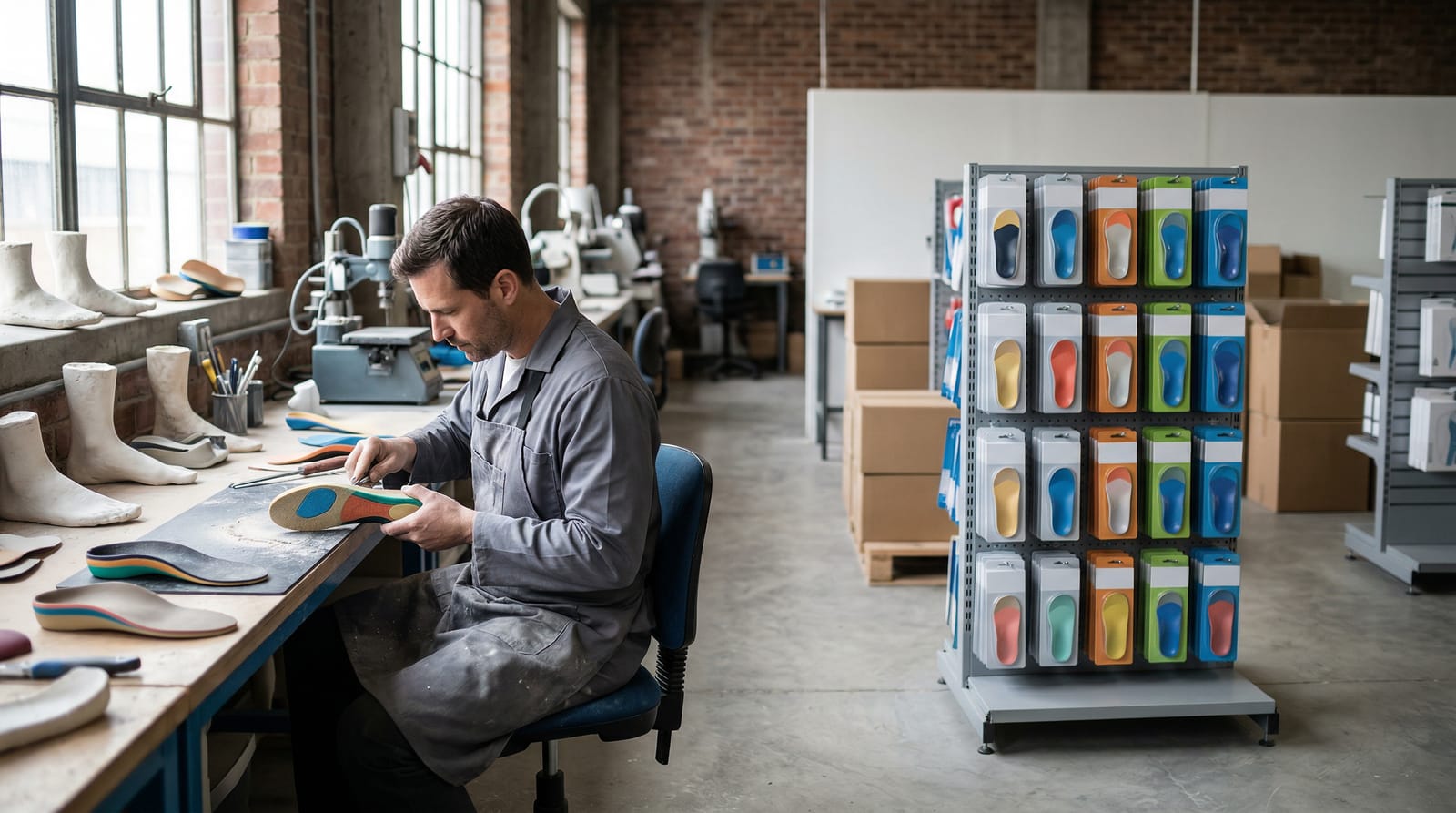
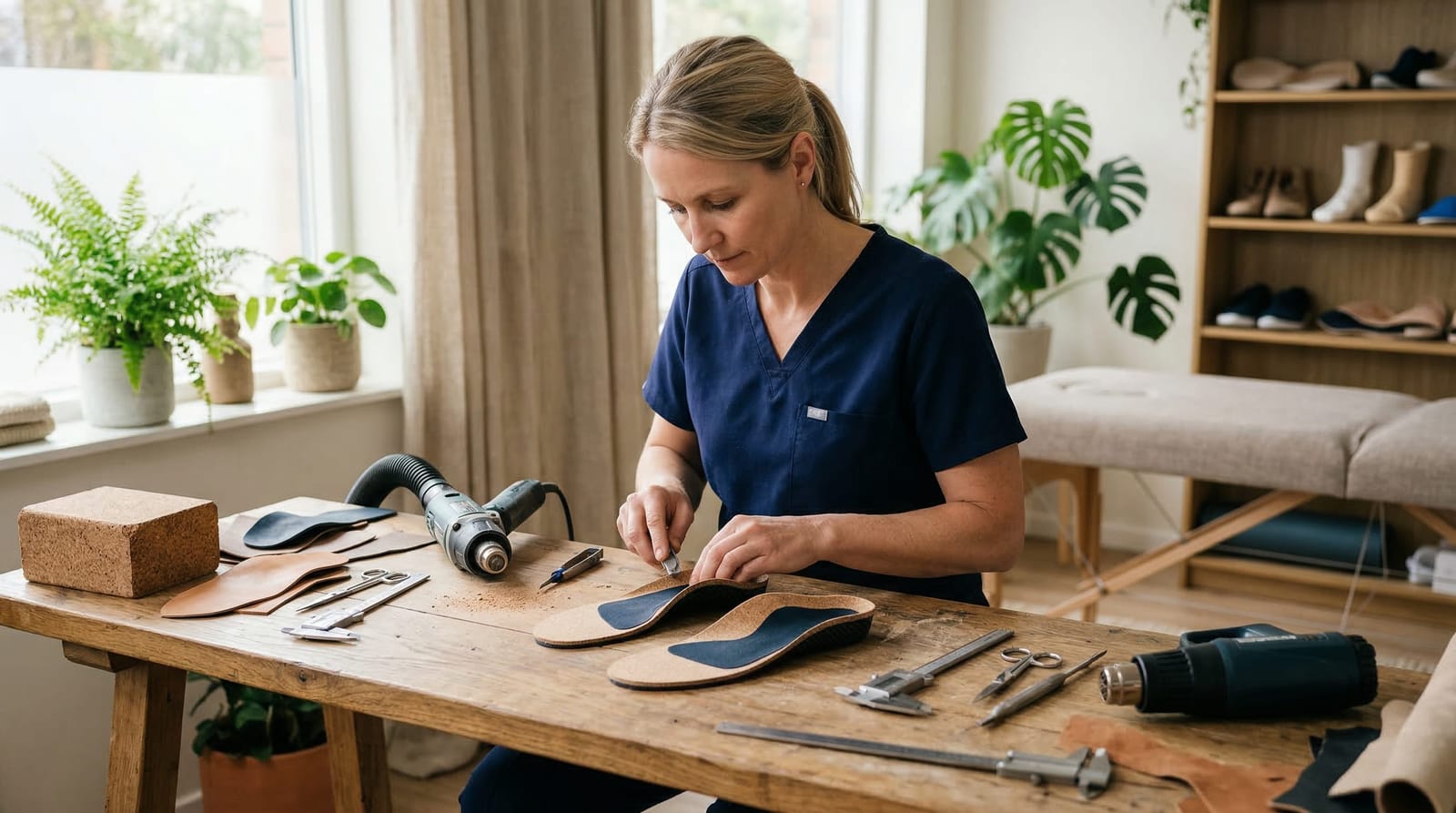
The actual fabrication process represents where skilled craftsmanship meets advanced manufacturing technology, fully demonstrating how are custom orthotics made through precision techniques. Understanding how are custom orthotics made during this phase reveals the attention to detail required for optimal therapeutic results.
Traditional Vacuum Forming Techniques
Vacuum forming remains a widely-used manufacturing method that clearly illustrates how are custom orthotics made using established techniques. The process involves several precise steps that ensure consistent quality:
- Heating thermoplastic material to 300-400°F for optimal malleability and forming properties
- Positioning the heated material over the positive foot mold with precise alignment
- Applying vacuum pressure (15-20 inches of mercury) for exact contouring
- Controlled cooling process to maintain shape integrity and dimensional accuracy
- Precision trimming and finishing to final specifications per prescription
This method typically requires 45-60 minutes per orthotic pair and produces devices with consistent thickness and structural properties. The consistency demonstrates how are custom orthotics made with reliable manufacturing standards throughout the entire surface area.
Advanced 3D Printing and CNC Milling
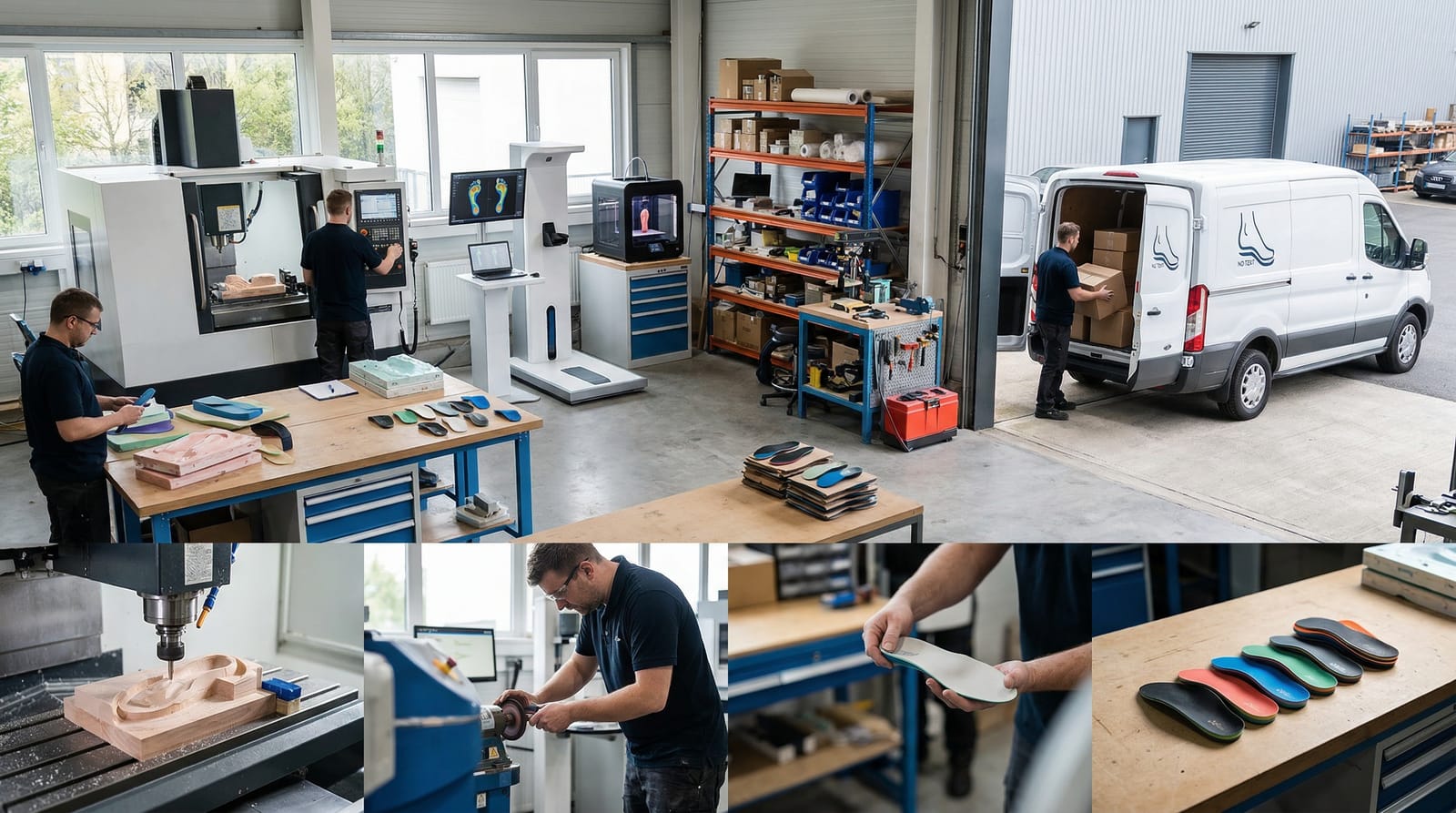
Modern manufacturing increasingly utilizes 3D printing and computer numerical control (CNC) milling, representing the cutting edge of how are custom orthotics made today. These technologies offer enhanced precision and customization capabilities that advance traditional manufacturing methods.
3D Printing Benefits: Layer-by-layer construction allows for complex internal structures and variable density zones impossible with traditional methods. Advanced 3D printers can create orthotics with resolution as fine as 0.1mm, showcasing how are custom orthotics made with unprecedented precision and incorporating multiple materials in a single device.
CNC Milling Accuracy: Computer-controlled milling machines achieve tolerances within ±0.05mm, ensuring consistent reproduction of prescribed modifications. This precision particularly benefits patients requiring exact specifications, demonstrating how are custom orthotics made to achieve optimal biomechanical function through computerized accuracy.
Quality Control: How Are Custom Orthotics Made to Meet Exacting Standards
The final stages of custom orthotic creation involve rigorous quality control measures and precise fitting procedures that ensure how are custom orthotics made meets therapeutic standards. These processes guarantee optimal outcomes and patient satisfaction. At Prodigy Chiro Care & Spinal Decompression, we emphasize this critical final phase that completes how are custom orthotics made properly.
Manufacturing Quality Assurance
Professional orthotic laboratories implement comprehensive quality control protocols that demonstrate how are custom orthotics made to exacting standards:
- Dimensional accuracy verification using precision measuring tools to confirm specifications
- Material integrity testing for stress points and potential failure areas
- Surface finish inspection for comfort and long-term durability
- Comparison with original prescription specifications to ensure compliance
- Final visual inspection by certified technicians before patient delivery
Quality standards require that finished orthotics meet dimensional tolerances within 2mm of prescribed specifications. Surface irregularities cannot exceed 0.5mm, ensuring patient comfort and therapeutic effectiveness while demonstrating how are custom orthotics made to professional standards.
Initial Fitting and Adjustment Process
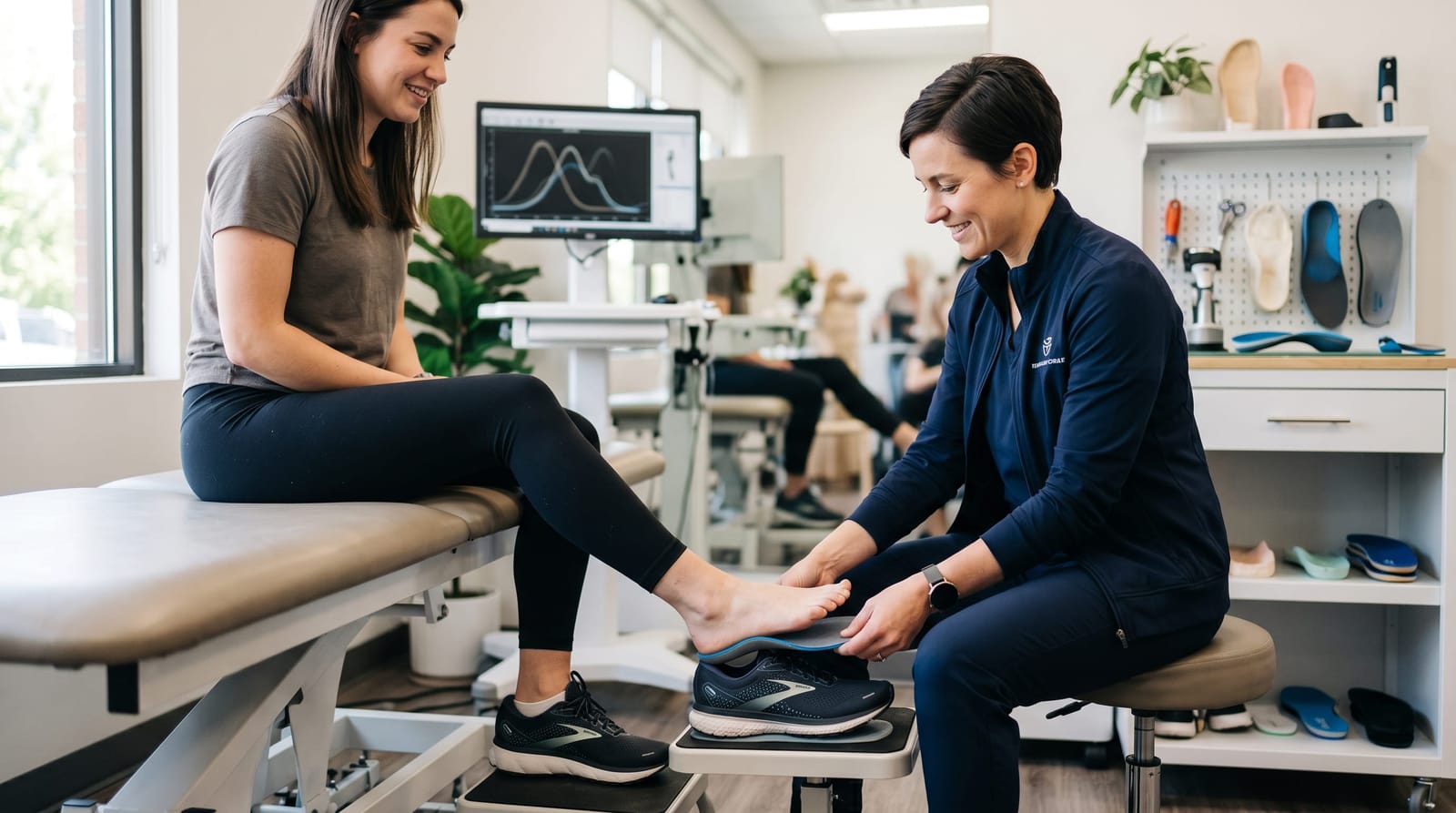
The fitting appointment represents the culmination of how are custom orthotics made and delivered to patients. Healthcare providers evaluate orthotic function through specific assessments that validate the manufacturing process:
Static Assessment: This involves checking foot positioning, arch support contact, and overall comfort while standing. Proper fitting should provide immediate improvement in foot alignment without causing pressure points, demonstrating how are custom orthotics made to provide immediate therapeutic benefit.
Dynamic Evaluation: This involves observing gait changes and biomechanical improvements during walking activities. Studies show that properly fitted custom orthotics can reduce excessive pronation by 60-80% and improve overall gait efficiency by 15-25%, validating how are custom orthotics made for functional improvement.
Timeline and Expectations: How Are Custom Orthotics Made From Assessment to Delivery
Understanding the complete timeline of how are custom orthotics made helps set realistic expectations for the entire process. The manufacturing journey typically follows this schedule that demonstrates how are custom orthotics made systematically:
Week 1: Initial assessment, foot impressions, and design development form the foundation of how are custom orthotics made. This phase involves detailed biomechanical analysis and prescription development that guides all subsequent manufacturing steps.
Week 2-3: Manufacturing, quality control, and final preparations represent the core of how are custom orthotics made. Multiple quality checks ensure precision and therapeutic effectiveness throughout the fabrication process.
Final Fitting: Delivery, fitting, and initial adjustments complete how are custom orthotics made by ensuring optimal function and providing patient education on proper use and adaptation protocols.
Factors Affecting Manufacturing Time
Several factors can influence how long the process takes when considering how are custom orthotics made for individual patients. Complex biomechanical corrections may require additional design time and specialized manufacturing techniques. Advanced materials or manufacturing methods may extend production schedules while maintaining quality standards that define how are custom orthotics made properly.
Long-term Considerations and Maintenance of Custom Orthotics
Understanding how are custom orthotics made extends beyond the initial manufacturing process to include durability expectations and long-term care requirements. The sophisticated manufacturing process influences adaptation protocols and patient education requirements for successful integration into daily activities.
Most custom orthotics provide effective therapy for 2-3 years with proper care, depending on usage patterns and activity levels. This longevity demonstrates how are custom orthotics made for lasting therapeutic value. Regular follow-up appointments help monitor orthotic performance and allow for adjustments as your needs change over time.
The precision involved in how are custom orthotics made ensures continued therapeutic benefit from your investment. Proper maintenance and periodic evaluation support long-term therapeutic goals effectively while maximizing the value of understanding how are custom orthotics made professionally.
Conclusion: The Precision Behind How Custom Orthotics Are Made
The comprehensive process of how are custom orthotics made involves sophisticated assessment techniques, precise manufacturing methods, and skilled craftsmanship that typically takes 2-3 weeks from initial evaluation to final fitting. This detailed approach ensures that each custom orthotic addresses your specific biomechanical needs using scientifically-based design principles and advanced manufacturing technologies that define how are custom orthotics made properly.
Understanding how are custom orthotics made helps explain why custom devices provide superior therapeutic outcomes compared to over-the-counter alternatives. The precision involved in how are custom orthotics made directly translates to better patient outcomes and justifies the additional time and investment required for personalized foot care solutions.
At Prodigy Chiro Care & Spinal Decompression, we guide patients through every step of understanding how are custom orthotics made. Our commitment to explaining how are custom orthotics made ensures optimal results for your specific biomechanical needs and therapeutic goals.
Ready to begin your custom orthotic journey and learn firsthand how are custom orthotics made for your specific needs? Schedule a comprehensive biomechanical assessment with our qualified healthcare providers who can determine if custom orthotics are appropriate for your foot care needs and postural correction goals.