Cold Laser Therapy for Shoulder Pain and Thoracic Outlet Syndrome
Shoulder pain is one of the most common reasons people seek chiropractic care, and thoracic outlet syndrome, a condition involving compressed nerves or blood vessels between the collarbone and first rib, can make everyday activities genuinely frustrating. If you've already explored what cold laser therapy is and how it works for pain in general, you may now be wondering: does it actually help with these specific conditions? This post takes a closer look at cold laser therapy effectiveness for shoulder pain and thoracic outlet syndrome, so you can walk into a conversation with your care team feeling informed.
Understanding Shoulder Pain and Thoracic Outlet Syndrome
Shoulder pain can stem from a variety of sources: rotator cuff strain, bursitis, impingement, frozen shoulder, or referred pain from the neck and upper back. Thoracic outlet syndrome (TOS) is a somewhat different animal. It occurs when the nerves, arteries, or veins passing through the thoracic outlet (the space between your collarbone and first rib) become compressed. This can cause pain, numbness, tingling, or weakness that radiates into the shoulder, arm, or hand.
What makes TOS particularly challenging is that its symptoms often overlap with other conditions, including cervical nerve compression and carpal tunnel syndrome. It's not uncommon for someone dealing with TOS to also experience issues further down the arm, and if that sounds familiar, it may be worth reading about is carpal tunnel reversible with cold laser therapy, since some of the same underlying mechanisms are involved.
Both shoulder pain and TOS share a common thread: they involve soft tissue inflammation, nerve irritation, and reduced circulation, all areas where cold laser therapy has demonstrated meaningful support in clinical research.
How Cold Laser Therapy Works on Shoulder Tissue
Cold laser therapy, also called low-level laser therapy (LLLT) or photobiomodulation, uses specific wavelengths of light, typically between 600 and 1000 nanometers, to penetrate soft tissue and stimulate cellular repair processes. It doesn't cut, heat, or damage tissue. Instead, it works at the cellular level to encourage your body's natural healing responses.
For shoulder conditions specifically, the therapy targets a few key biological processes:
- Reduced inflammation: Cold laser light modulates inflammatory mediators in the tissue, helping to decrease localized swelling around structures like the bursa, rotator cuff tendons, and joint capsule.
- Improved circulation: The light energy encourages vasodilation, the widening of blood vessels, which improves oxygen and nutrient delivery to injured or overworked shoulder tissue.
- Pain relief through nerve modulation: The therapy can influence how nerve fibers transmit pain signals, which is particularly relevant for both shoulder impingement and the nerve-related discomfort of thoracic outlet syndrome.
- Accelerated tissue repair: At the cellular level, photobiomodulation supports the production of ATP (adenosine triphosphate), the energy currency cells use to repair and regenerate.
A meta-analysis published in The Lancet found that low-level laser therapy reduced pain by 70% compared to placebo controls in patients with chronic neck and shoulder pain: a meaningful data point that reflects the kind of outcomes researchers have been tracking in this area. These aren't dramatic miracle claims: they reflect a consistent pattern of measurable improvement across multiple studies.
Cold Laser Therapy Effectiveness for Thoracic Outlet Syndrome
Thoracic outlet syndrome presents a unique treatment challenge because it involves both structural compression and neurological symptoms. Traditional approaches often include physical therapy, postural correction, and manual techniques, and cold laser therapy tends to complement these well as part of a broader care plan.
When it comes to cold laser therapy effectiveness for TOS specifically, the focus is on two areas: reducing soft tissue inflammation around the thoracic outlet itself, and supporting the nerve tissue that may be irritated due to compression. Research into photobiomodulation's effects on nerve health shows promise: studies have noted that laser therapy can support peripheral nerve regeneration and reduce neural inflammation, which speaks directly to the nerve-compression component of TOS.
Postural factors often play a significant role in TOS. Forward head posture, tight pectoral muscles, and elevated first ribs can all contribute to the compression. When cold laser therapy is used alongside chiropractic adjustments and soft tissue work targeting the scalene muscles, pectoralis minor, and thoracic spine, patients often find that their overall function and comfort improve more steadily than with a single-modality approach.
It's worth noting that TOS varies significantly from person to person: neurogenic TOS (nerve-related) is more common and typically responds differently than vascular TOS. A thorough assessment is always the starting point before any care plan is established.
What to Expect During Cold Laser Sessions for Shoulder and TOS Conditions
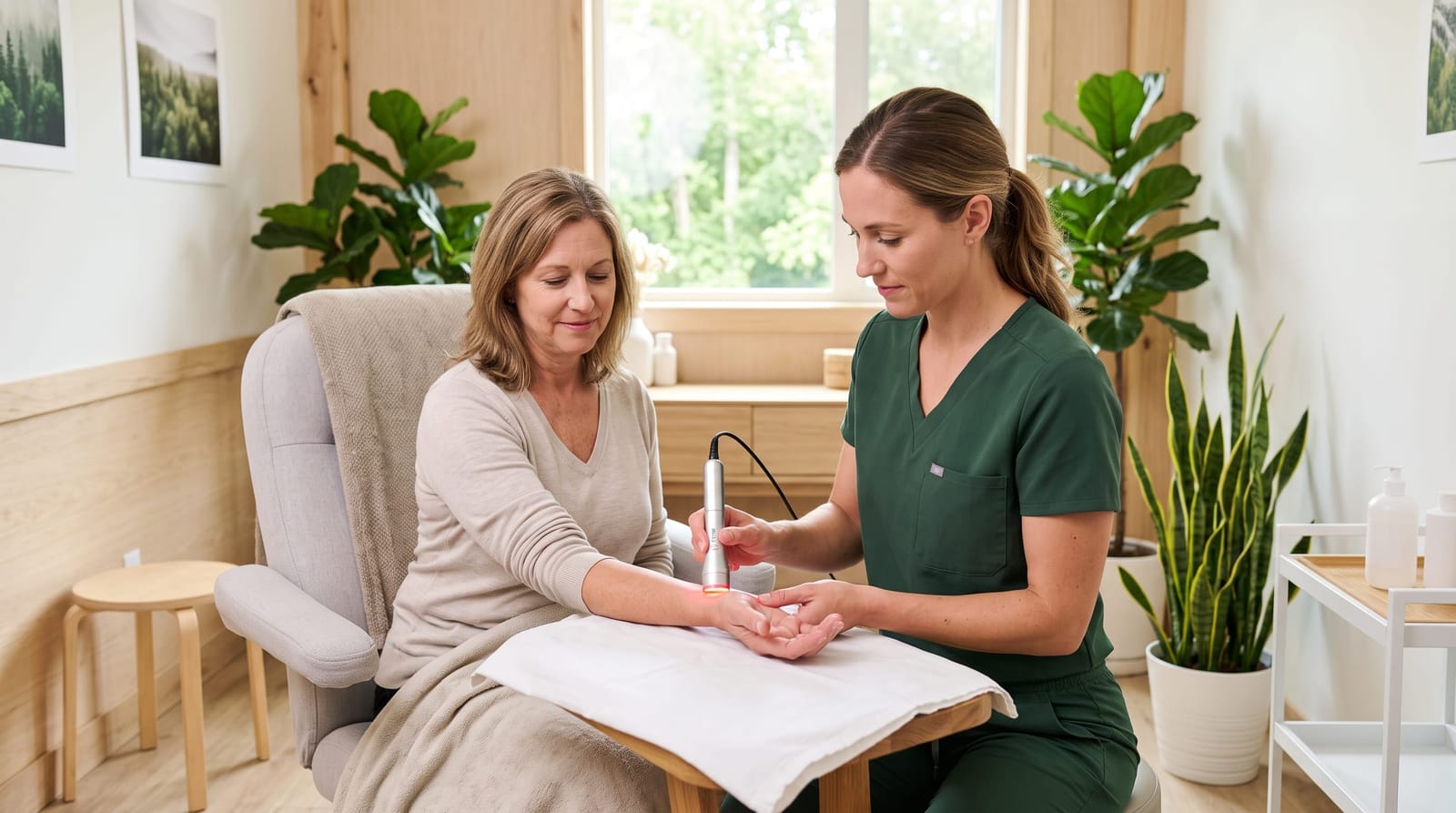
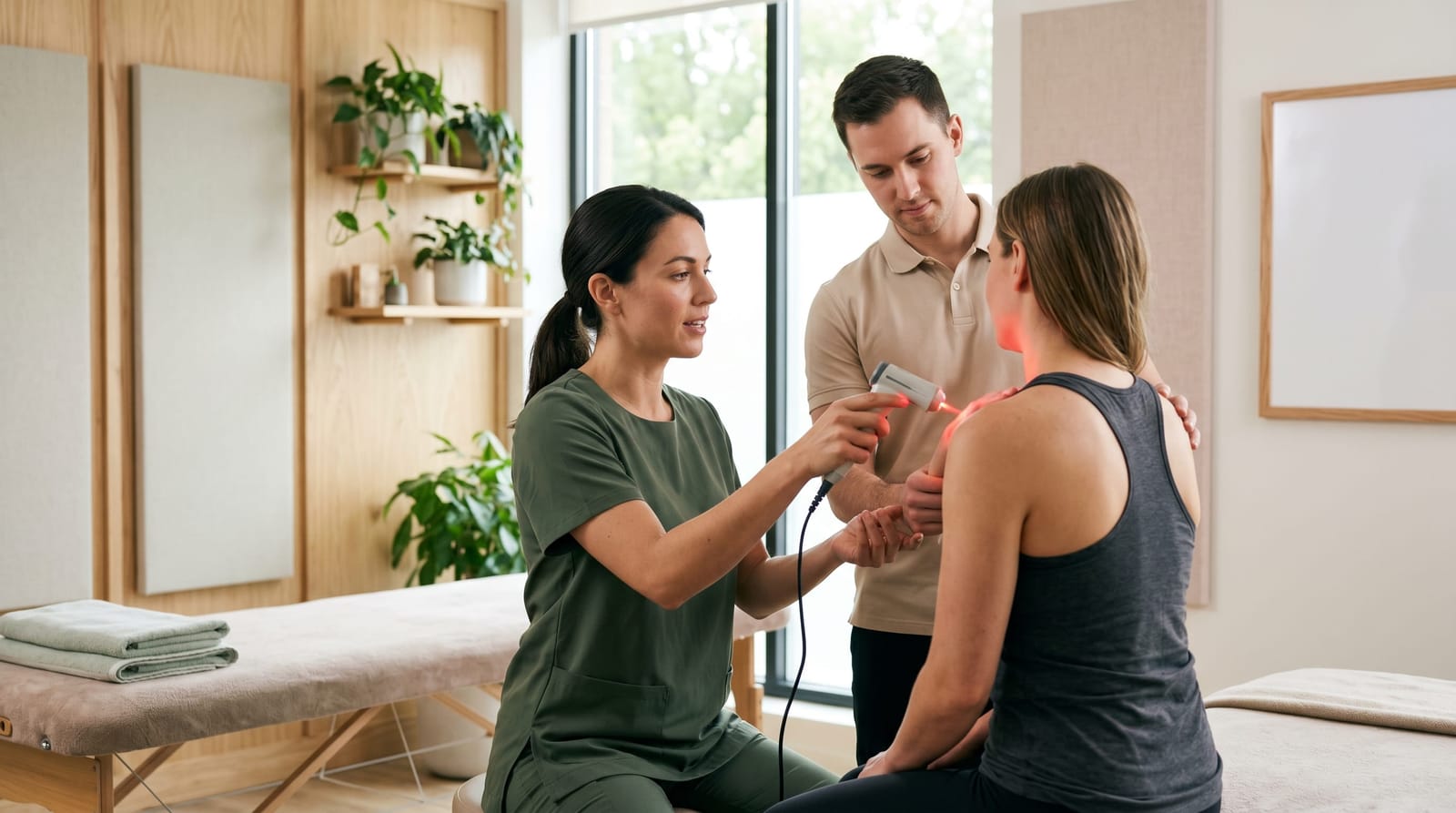
Cold laser therapy sessions are non-invasive and generally well-tolerated. For shoulder pain and TOS, the practitioner will typically position the laser device over the areas of concern: this might include the shoulder joint, the upper trapezius, the anterior chest near the clavicle, and sometimes the cervical spine depending on where symptoms are originating.
Sessions typically last between 5 and 20 minutes depending on the area being treated and the device being used. You won't feel heat, vibration, or any significant sensation: many people describe it as a gentle warmth at most. There is no recovery time, and most people resume their normal activities immediately.
Research on treatment frequency suggests that a series of sessions, often between 6 and 12, scheduled across several weeks, tends to yield more meaningful results than a single treatment. A review published in PubMed noted that consistent application of low-level laser therapy over multiple sessions was associated with significantly better outcomes for chronic musculoskeletal pain compared to shorter treatment courses. Your care team will work with you to determine a schedule that fits your situation.
Is Cold Laser Therapy Right for Your Shoulder or TOS Condition?
Cold laser therapy is generally considered a low-risk, supportive option for people dealing with shoulder pain and thoracic outlet syndrome symptoms. It's not a replacement for a comprehensive evaluation, and it works best as part of a coordinated care approach that might also include chiropractic care, corrective exercise, and postural rehabilitation.
People who tend to benefit most include those dealing with:
- Chronic shoulder aching or stiffness that hasn't fully responded to rest alone
- Rotator cuff irritation or bursitis
- Neurogenic TOS symptoms including arm tingling, numbness, or radiating discomfort
- Shoulder tension related to posture or repetitive work tasks
- Recovery support following soft tissue injury to the shoulder complex
Cold laser therapy is not appropriate in all circumstances, for example, it is not used over active cancer sites, during pregnancy in certain areas, or directly over the eyes. A qualified provider will review your health history before recommending it.
Frequently Asked Questions
How many cold laser sessions does it typically take to notice a difference in shoulder pain?
Many people begin to notice some improvement within 3 to 6 sessions, though individual responses vary considerably depending on the severity and duration of the condition. For chronic or complex cases like thoracic outlet syndrome, a longer series of sessions spread over several weeks tends to produce more sustained results. Your provider can give you a clearer expectation after an initial assessment.
Can cold laser therapy help if my shoulder pain is related to nerve involvement?
Research does support cold laser therapy's ability to support nerve tissue health and reduce neural inflammation. For conditions like thoracic outlet syndrome where nerve compression plays a role, laser therapy is often included as one component of a broader care plan that addresses both the soft tissue and structural contributors to the condition.
Is cold laser therapy painful for shoulder conditions?
Cold laser therapy is non-invasive and typically painless. Most people feel little to nothing during a session: occasionally a mild, gentle warmth. There are no needles, no tissue manipulation, and no recovery period required. It's generally considered one of the more comfortable therapeutic modalities available.
Does cold laser therapy address the root cause of thoracic outlet syndrome?
Cold laser therapy helps manage inflammation, support nerve tissue health, and reduce pain, but it works best alongside approaches that address the structural and postural factors contributing to TOS. Think of it as a supportive tool within a broader care plan rather than a standalone solution for an underlying structural issue.
Bringing It Together
Cold laser therapy effectiveness for shoulder pain and thoracic outlet syndrome is backed by a growing body of research supporting its role in reducing inflammation, supporting nerve health, and encouraging tissue repair. While it isn't a cure-all, it offers a non-invasive, well-tolerated option that fits naturally into a comprehensive chiropractic and wellness care plan. If you've been managing shoulder discomfort or TOS symptoms and haven't yet explored what cold laser therapy might offer, it's a conversation worth having with your care team at Prodigy Chiro Care.