Cold Laser Therapy for Repetitive Strain Injuries: Athletes and Office Workers

Repetitive strain injuries are remarkably common. Studies suggest that RSIs account for more than 50% of all sports-related injuries and are among the top reasons office workers miss work each year. If you've been dealing with nagging wrist pain, a sore elbow, or persistent shoulder aches, you already know how much these conditions can slow you down. This post focuses specifically on repetitive strain injury treatment using cold laser therapy, who it helps, how it works, and what you can realistically expect from care at a West LA wellness practice.
What Repetitive Strain Injuries Have in Common
Repetitive strain injuries, often called RSIs, are a broad group of conditions. They develop when tissues in the muscles, tendons, or nerves become irritated or inflamed through repeated motion or sustained posture. RSIs don't usually start with one dramatic moment. They build gradually, often going unnoticed until the discomfort becomes hard to ignore.
Common RSIs include:
- Tennis elbow (lateral epicondylitis)
- Carpal tunnel syndrome
- Rotator cuff tendinitis
- Trigger finger
- De Quervain's tenosynovitis (thumb tendon irritation)
- Golfer's elbow (medial epicondylitis)
What ties these conditions together is inflammation and tissue stress. The affected area doesn't get adequate recovery time between repeated movements. Over time, small amounts of tissue damage accumulate. Both athletes and office workers experience this, just through very different activities.
A tennis player putting repetitive load on the elbow and a graphic designer clicking a mouse for eight hours are dealing with a similar underlying problem. The activity differs, but the tissue response is often the same. This shared mechanism is exactly why a single repetitive strain injury treatment approach, like cold laser therapy, can address such a wide range of RSI presentations.
How Cold Laser Therapy Supports RSI Recovery
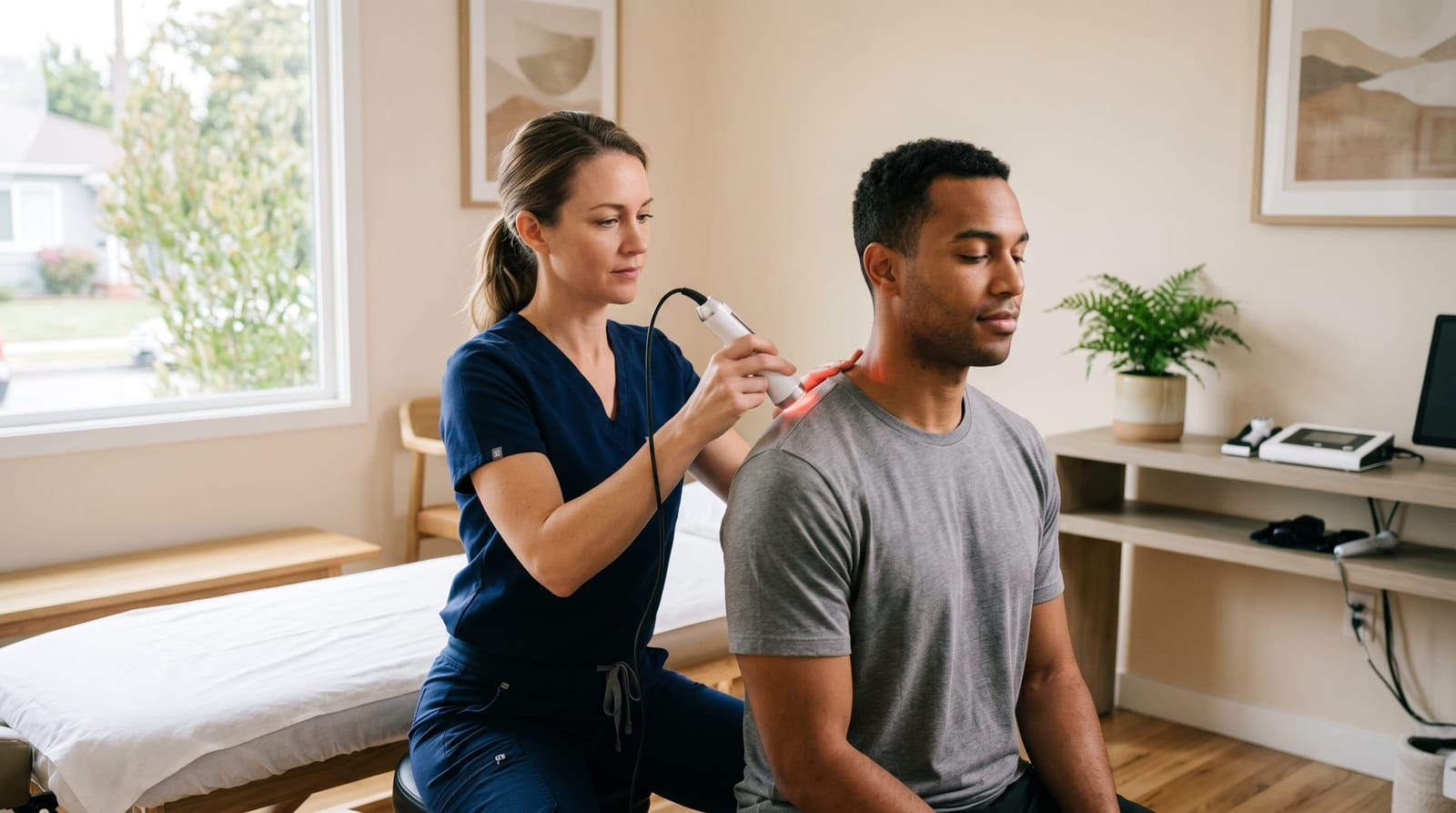
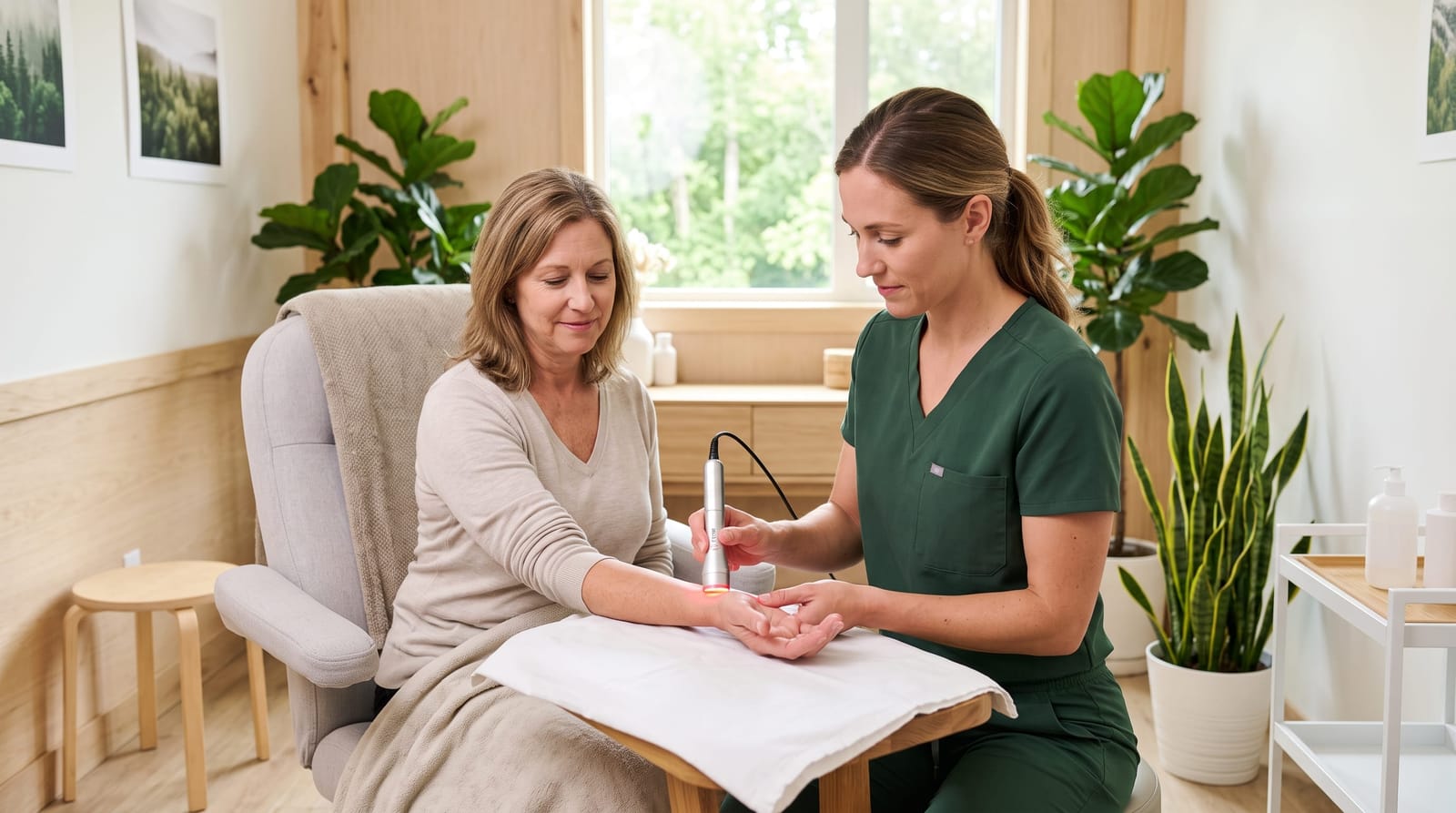
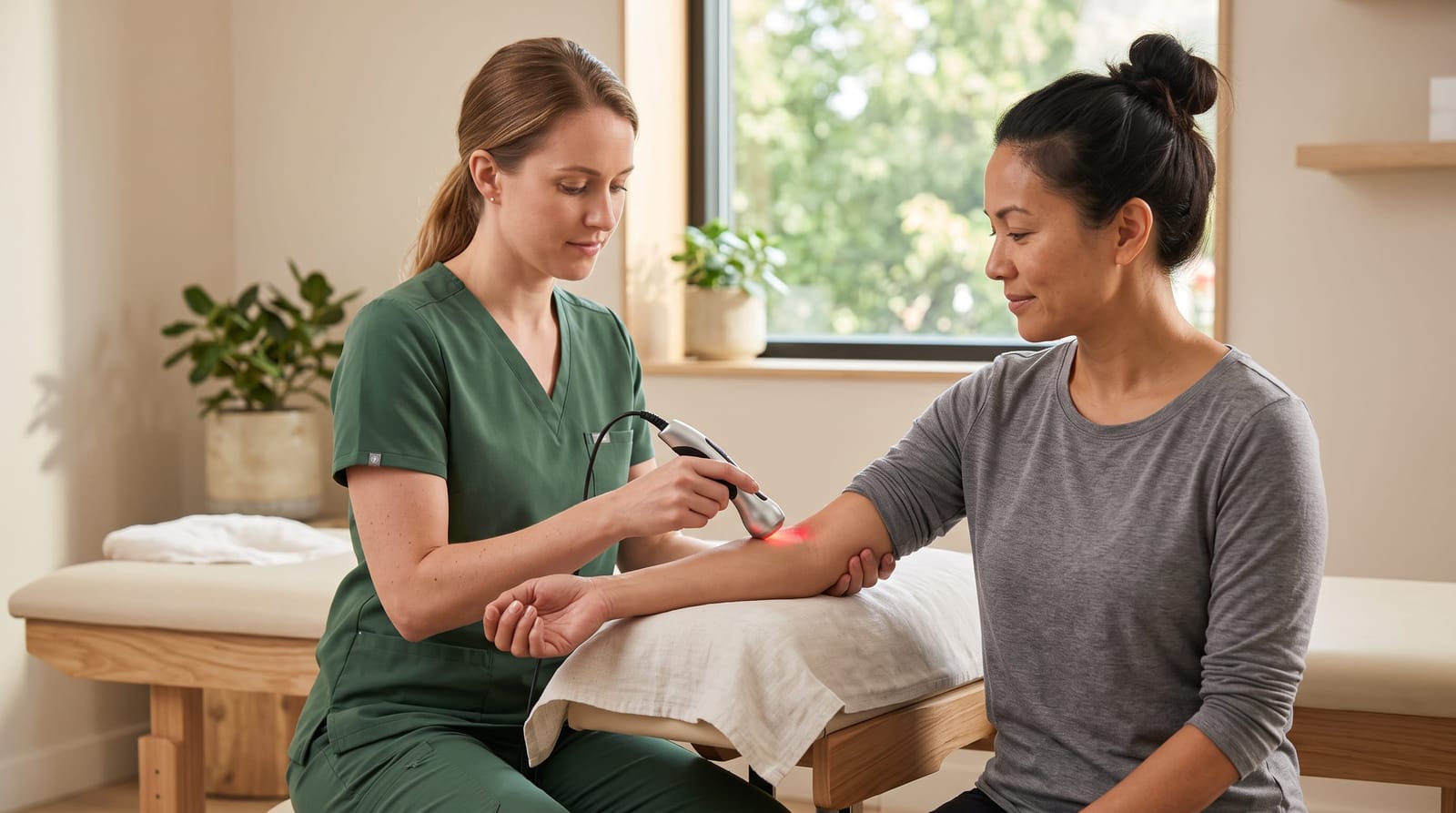
Cold laser therapy, also called low-level laser therapy (LLLT) or photobiomodulation, uses specific wavelengths of light to interact with cells in the affected tissue. The light penetrates the skin without heat or discomfort. At the cellular level, it helps stimulate energy production, reduce inflammatory signaling, and support the tissue repair process.
In simple terms: the therapy encourages your body's own healing response to work more efficiently. It doesn't force a specific outcome: it supports the process that's already happening.
For RSIs specifically, cold laser therapy has shown promise in several areas:
- Reducing localized inflammation in tendons and surrounding soft tissue
- Improving circulation to areas with limited blood flow, such as tendons
- Supporting collagen synthesis, which matters for tendon repair
- Decreasing discomfort during the recovery period without medication
A 2014 review published in the Journal of Athletic Training found that low-level laser therapy produced meaningful improvements in pain and function for lateral epicondylitis (tennis elbow), one of the most common RSIs. Research on carpal tunnel syndrome has also shown that LLLT can reduce nerve-related discomfort and improve grip strength in some patients.
Cold laser therapy works best as part of a broader repetitive strain injury treatment plan, not as a standalone fix. Most patients see the strongest results when laser therapy is combined with soft tissue work, corrective exercises, and ergonomic or activity adjustments.
RSIs in Athletes vs. Office Workers: Different Demands, Similar Needs
The Athlete Perspective
Athletes in West LA, whether recreational or competitive, often push through early signs of RSI. That tendency to train through discomfort can extend recovery timelines significantly. Common athletic RSIs include tennis elbow from racket sports, shoulder tendinitis from swimming or overhead lifting, and wrist strain from gymnastics or rock climbing.
For athletes, the priority is getting back to training without making the injury worse. Cold laser therapy fits well into this goal. Sessions are typically short, often 5 to 15 minutes per area, and carry no downtime. Many athletes continue modified training while undergoing a course of laser therapy.
One important note: cold laser therapy is not appropriate as a reason to continue aggravating activity. The therapy supports healing, but the underlying strain still needs to be addressed. A practitioner familiar with sports-related RSIs can help you identify what activity modifications are needed alongside treatment.
The Office Worker Perspective
Office workers, especially those in tech-forward environments like West LA, are increasingly affected by RSIs of the wrist, forearm, and shoulder. Research suggests that up to 1 in 3 office workers will experience a significant upper-extremity RSI at some point in their career. Hours of keyboarding, mouse use, and screen time create sustained, low-level tissue stress that is easy to overlook until it becomes disruptive.
For office workers, repetitive strain injury treatment needs to address not just the tissue injury but also the daily environment contributing to it. Cold laser therapy can help calm the inflamed tissue. But pairing it with ergonomic guidance, keyboard position, monitor height, chair setup, is essential to long-term recovery. Without those adjustments, the same patterns will continue to strain the same structures.
What a Typical RSI Treatment Plan Looks Like
At Prodigy Chiro Care, repetitive strain injury treatment is never a one-size-fits-all protocol. Assessment comes first. A practitioner will review your history, examine the affected area, and identify contributing factors: posture, movement patterns, workstation setup, and activity load.
A care plan for an RSI involving cold laser therapy might look something like this:
- Initial assessment: Identifying the specific structures involved and severity of the issue
- Cold laser therapy sessions: Typically scheduled 2 to 3 times per week for an initial period of 4 to 6 weeks
- Soft tissue therapy: Manual techniques to address muscle tightness and improve circulation
- Corrective exercises: Targeted strengthening and flexibility work to support tendon and muscle recovery
- Activity and ergonomic guidance: Practical recommendations to reduce the repetitive load causing the injury
Progress is tracked throughout. Some patients notice reduced discomfort within the first few sessions. Others need more time, particularly with chronic RSIs that have been present for months or longer. Patience matters: RSIs develop over time, and meaningful recovery often follows a similar timeline.
Frequently Asked Questions
How many cold laser therapy sessions are typically needed for a repetitive strain injury?
Most RSI cases benefit from an initial course of 8 to 12 sessions, delivered over 4 to 6 weeks. Acute injuries that are addressed early often respond faster. Chronic RSIs, those present for several months, may require a longer treatment period. Your provider will reassess progress regularly and adjust accordingly.
Is cold laser therapy painful or uncomfortable?
No. Cold laser therapy is a gentle, non-invasive treatment. Most patients feel nothing during the session, or occasionally a mild warmth over the treated area. There is no heat, no needles, and no recovery time needed afterward. You can typically return to your regular activities immediately following each session.
Can cold laser therapy replace rest for a repetitive strain injury?
Not entirely. Rest, or at minimum, modified activity, remains one of the most important parts of repetitive strain injury treatment. Cold laser therapy supports the healing process, but continuing to stress the injured tissue will work against recovery. Your practitioner will help you identify what activities to modify and by how much, so you're not sidelined longer than necessary.
Do I need a referral to receive cold laser therapy for an RSI?
In most cases, no referral is required to see a chiropractor or wellness provider for RSI evaluation and treatment. If you're in the West LA area and dealing with a repetitive strain injury, you can schedule a consultation directly to discuss whether cold laser therapy is appropriate for your specific situation.
Supporting Your Recovery from Repetitive Strain
Repetitive strain injuries are frustrating, but they are also very treatable, especially when addressed early with the right combination of care. Cold laser therapy offers a non-invasive, low-risk option that supports tissue healing and helps reduce discomfort as part of a broader repetitive strain injury treatment plan. Whether you're an athlete managing a training-related tendon issue or an office worker dealing with wrist and forearm pain, personalized care makes a meaningful difference. To explore how cold laser therapy fits into a complete approach to pain relief and recovery, visit our overview of cold laser therapy for pain relief and which conditions respond best.