Workplace Ergonomic Assessment: How Your Footwear and Orthotics Fit the Picture
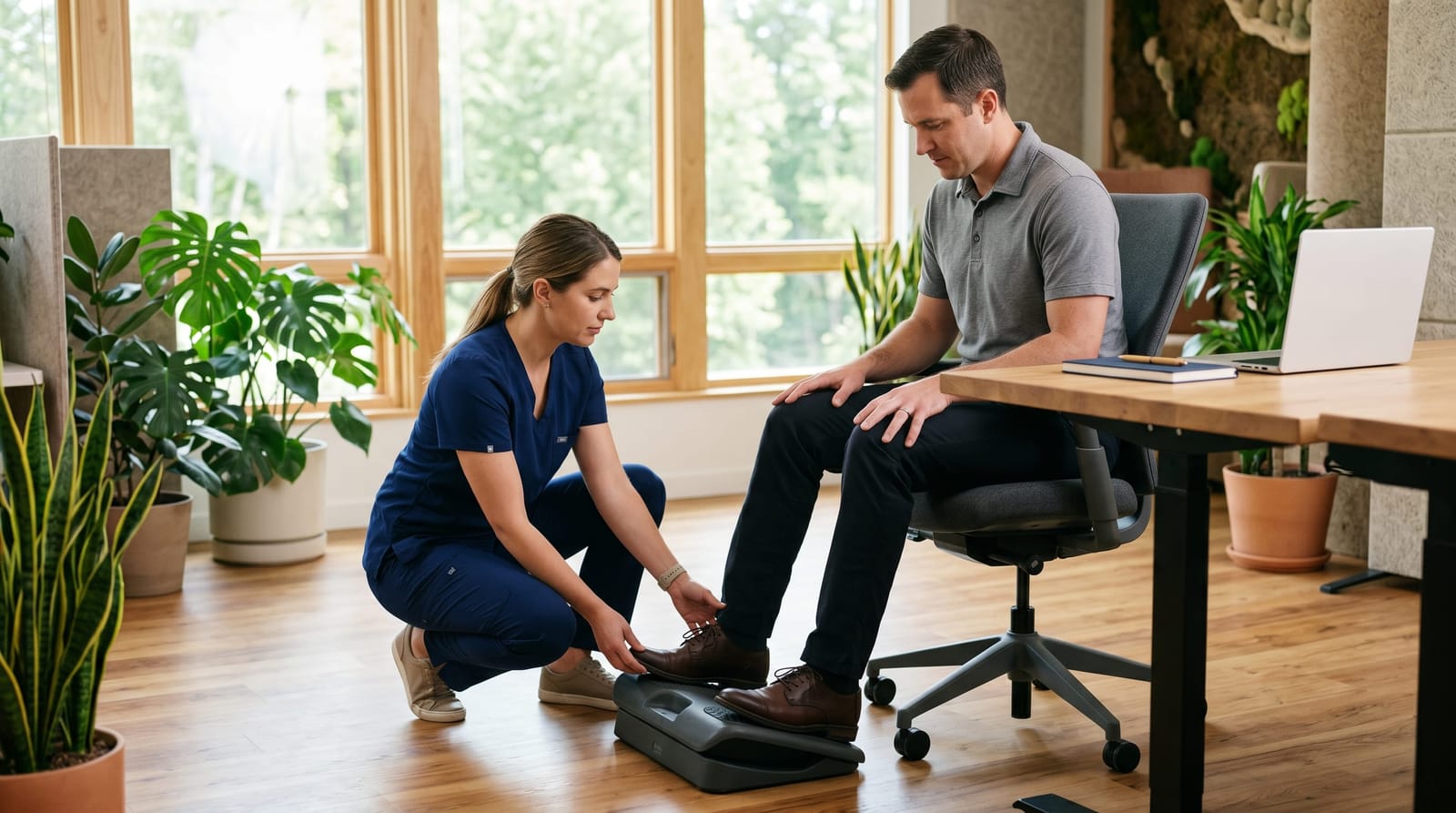
If you've been dealing with foot discomfort, lower back tension, or fatigue that seems tied to your workday, you're not alone, and you're asking exactly the right questions. A workplace ergonomic assessment looks at the full picture of how your body interacts with your environment throughout the day. What many people don't realize is that footwear and custom orthotics are a meaningful part of that picture. This post explores how a comprehensive ergonomic approach connects with foot support, posture, and the kind of personalized care we provide at Prodigy Chiro Care in West Los Angeles.
What Is a Workplace Ergonomic Assessment?
A workplace ergonomic assessment, sometimes called an ergonomic risk assessment, is a structured evaluation of your work environment and how your body moves within it. The goal is to identify conditions that may contribute to musculoskeletal discomfort over time, and to find practical ways to reduce those risks before they become larger concerns.
According to the Bureau of Labor Statistics, musculoskeletal disorders account for nearly 30% of all worker injury and illness cases requiring days away from work. That's a significant number, and it points to how much the physical demands of work can affect the body over time.
A thorough assessment typically follows five core steps:
- Reviewing existing health and safety data from the workplace
- Selecting appropriate evaluation tools (such as checklists, the NIOSH Lifting Equation, or the Rapid Office Strain Assessment)
- Evaluating the physical work environment: surfaces, workstation heights, lighting, and layout
- Observing how employees interact with their tasks, equipment, and posture throughout the day
- Implementing changes and following up to assess improvement
What's interesting, and often overlooked, is that step three and four almost always involve the floor and the feet. How long are you standing? What surface are you on? What shoes are you wearing? These factors play a direct role in how forces travel up through your ankles, knees, hips, and spine.
Why Footwear Belongs in Any Workplace Ergonomic Assessment
Ergonomics is about how your whole body adapts to its environment, and your feet are the foundation of that adaptation. Research has shown that workers who stand for more than 4 hours per day face a meaningfully higher risk of lower limb discomfort and postural fatigue. Yet footwear is frequently left out of formal workplace ergonomic assessments.
Consider a few common scenarios:
- A retail worker standing on hard concrete floors for 6-8 hours per shift
- A dental hygienist or surgeon who stands in a fixed, slightly flexed posture for extended periods
- An office worker whose feet don't fully contact the floor due to desk height or chair setup
- A warehouse employee walking on uneven surfaces and lifting throughout the day
In each of these situations, the footwear being worn, and what's inside it, can either support or undermine the rest of the ergonomic setup. A well-positioned monitor and adjustable chair lose some of their benefit if the feet aren't properly supported and the resulting ground reaction forces are sending stress upward through the lower body.
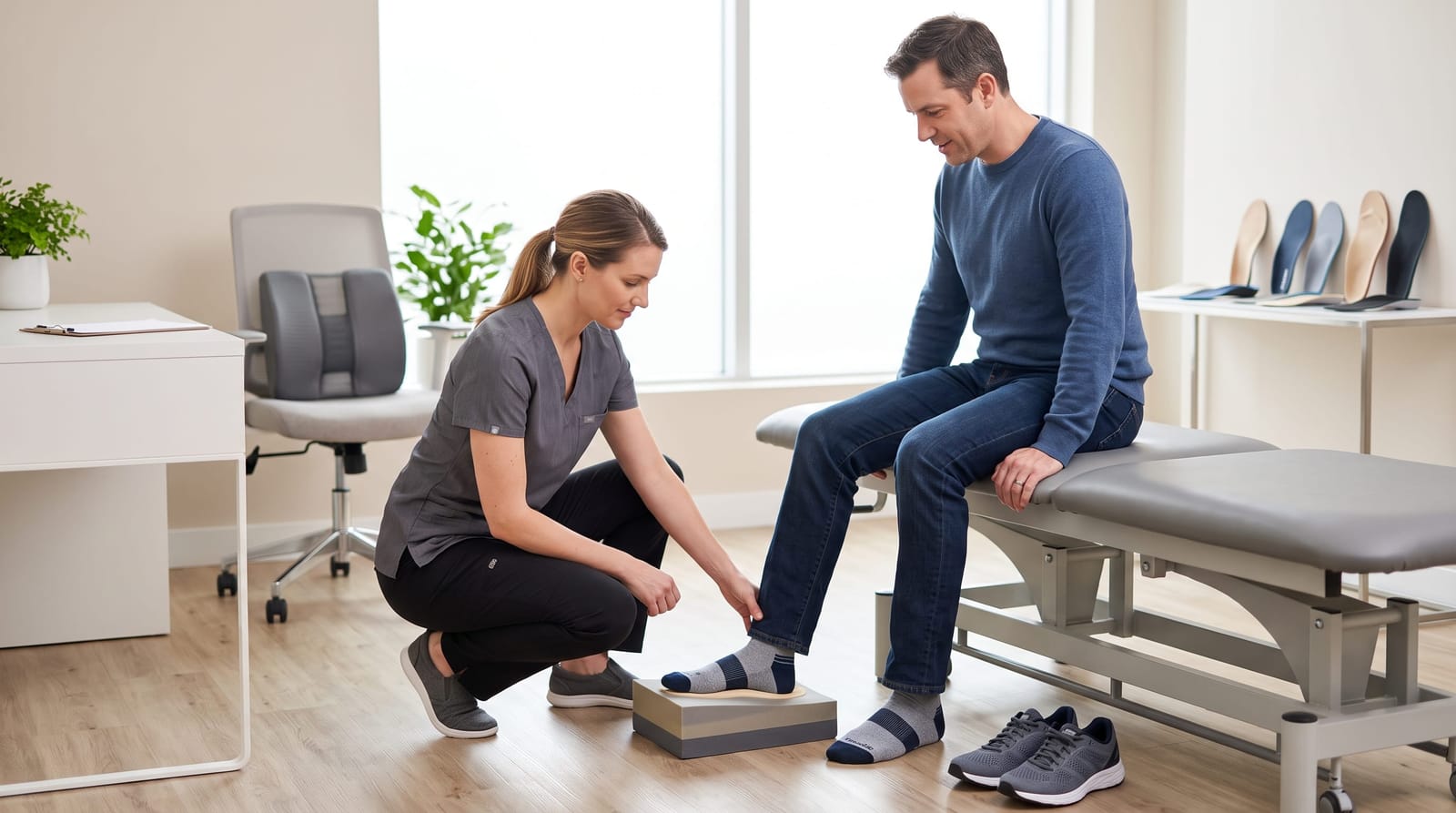
This is one reason why a workplace ergonomic assessment, when done thoroughly, should include consideration of arch support, heel cushioning, and whether custom orthotics might help a specific individual's foot mechanics.
Where Custom Orthotics Enter the Conversation
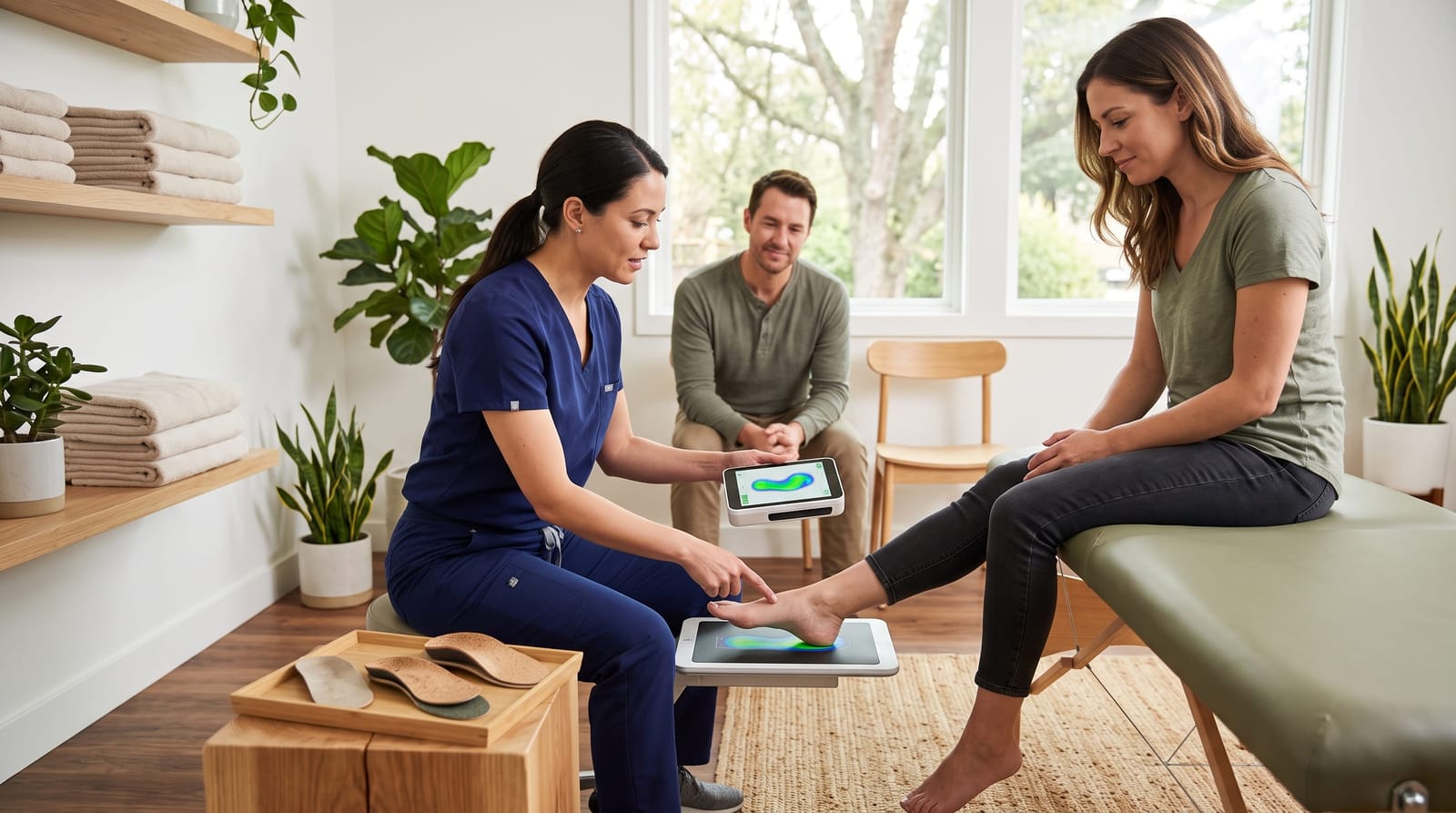
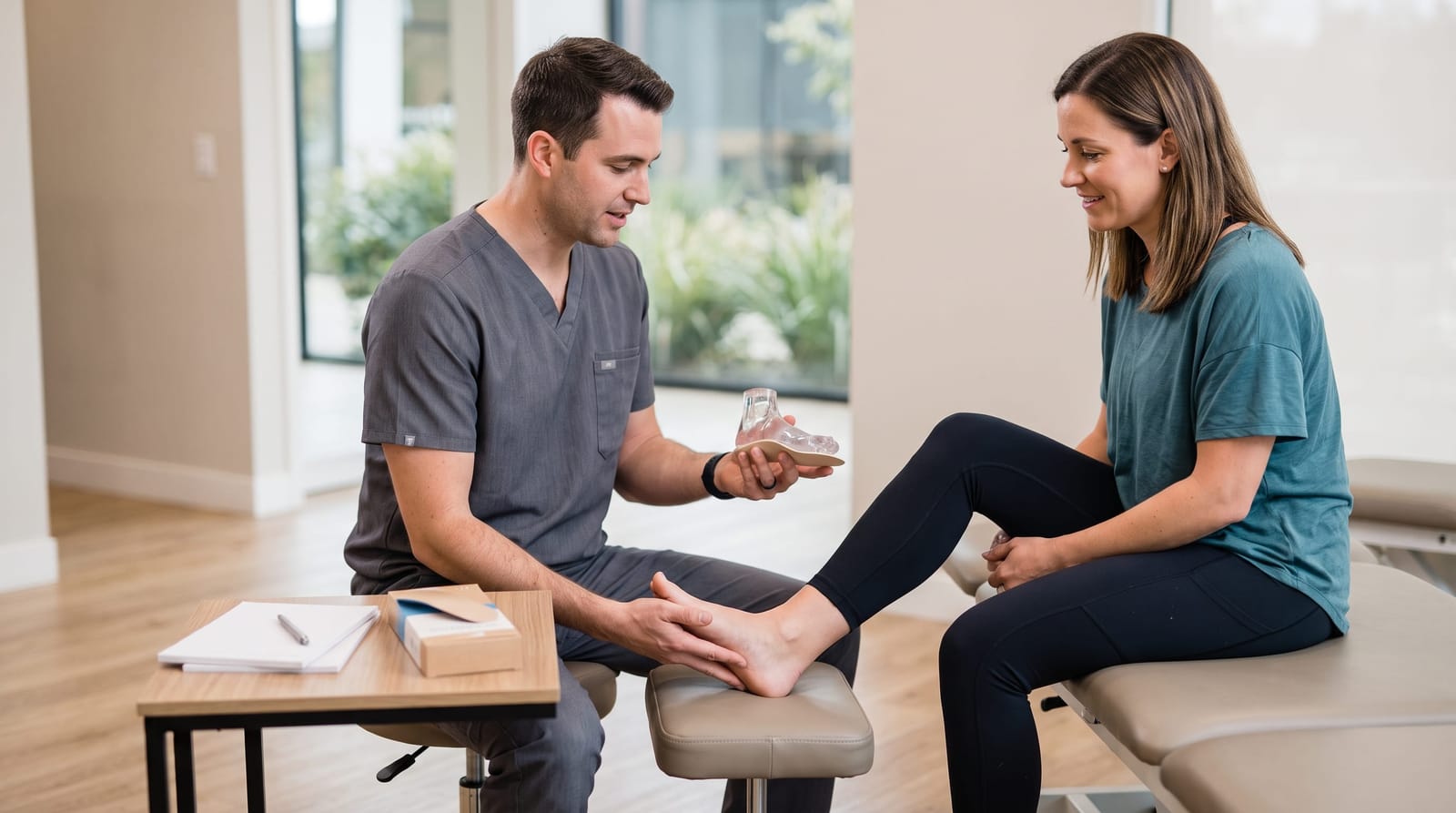
Custom orthotics are foot inserts designed from a mold or digital scan of an individual's foot. Unlike over-the-counter insoles, they're designed to account for a person's specific arch height, gait pattern, weight distribution, and the activities they perform throughout their day.
When a workplace ergonomic assessment reveals that someone is spending 5+ hours daily on their feet, or identifies recurring discomfort patterns in the lower back, knees, or feet, custom orthotics may be worth exploring as part of the solution.
A 2017 systematic review published in the journal Ergonomics found that custom foot orthoses were associated with reductions in musculoskeletal discomfort among workers in physically demanding occupations. While results vary based on individual factors and work conditions, the evidence suggests that addressing the foot-floor interface can support overall comfort and movement quality.
Custom orthotics don't replace other ergonomic improvements, better anti-fatigue mats, appropriate footwear, adjusted workstation heights, but they can complement those changes in a way that generic insoles often can't. The reason is personalization: a custom orthotic accounts for your specific foot structure, not just the average foot.
If you're curious about how orthotics connect to posture more broadly, our post on custom orthotics fix posture explores the relationship between foot support, spinal alignment, and movement patterns in more detail.
How Chiropractic Care Supports a Comprehensive Ergonomic Approach
A workplace ergonomic assessment identifies environmental and postural risk factors, but it doesn't address what's already happening in the body. If someone has been working in an ergonomically compromised position for months or years, there may be accumulated tension, reduced joint mobility, or altered movement patterns that need more direct attention.
This is where chiropractic care fits naturally into the picture. At Prodigy Chiro Care, we look at posture, spinal mobility, gait mechanics, and how all of these connect to a patient's daily work demands. Rather than treating symptoms in isolation, the goal is to understand the full chain, from how the foot contacts the ground, to how that influences the knee and hip, to how it ultimately affects the spine and shoulders.
Studies suggest that integrated care approaches, combining ergonomic modification, manual therapy, and supportive devices like orthotics, tend to produce better outcomes for workplace-related musculoskeletal complaints than any single intervention alone. A 2019 review in the Journal of Occupational Rehabilitation noted that multimodal interventions are particularly effective for addressing persistent lower back and lower limb discomfort in occupational settings.
Our approach at Prodigy Chiro Care aligns with this philosophy: assess comprehensively, address what's present in the body, and support long-term wellness with tools like custom orthotics when appropriate.
Practical Steps for Workers Who Want to Start Now
You don't need to wait for a formal company-wide workplace ergonomic assessment to start paying attention to your own ergonomic setup. Here are some practical starting points:
- Notice your footwear: Are you wearing shoes with adequate arch support and cushioning for the demands of your workday? Worn-down soles or flat footbeds can quietly contribute to postural strain.
- Check your standing surface: Anti-fatigue mats can reduce fatigue by as much as 50% in prolonged standing jobs, according to some ergonomic studies. Combine this with good footwear for a meaningful difference.
- Observe your posture at key moments: How do you stand while waiting, working at a counter, or sitting at a desk? Small habitual postures add up to significant cumulative load over a workweek.
- Consider a professional evaluation: A chiropractor with experience in biomechanics and orthotics can assess your foot mechanics, gait, and posture together: offering a more complete picture than a workstation checklist alone.
- Ask about custom orthotics: If you have flat feet, high arches, or specific lower body discomfort patterns, a custom orthotic assessment may reveal whether your foot structure is contributing to your workplace symptoms.
Frequently Asked Questions
What does a workplace ergonomic assessment actually include?
A workplace ergonomic assessment evaluates the physical environment, workstation setup, and how an employee's body interacts with their tasks over the course of a workday. It typically uses structured tools, such as checklists, posture evaluation frameworks like the Rapid Office Strain Assessment (ROSA), or the NIOSH Lifting Equation for manual handling tasks, to identify conditions that may contribute to musculoskeletal strain. Ideally, it includes a review of footwear and floor surfaces, though this element is frequently overlooked in standard assessments.
Can custom orthotics really make a difference in a work setting?
For many people, yes: particularly those who spend extended time on their feet or have specific foot mechanics that aren't well-served by standard footwear. Custom orthotics are designed around an individual's specific foot structure and activity demands, which means they can offer support that generic insoles don't provide. The degree of benefit varies by person, foot type, and occupation, which is why a professional evaluation is an important first step before investing in them.
Do I need a formal workplace ergonomic assessment, or can I self-assess?
Self-assessment tools exist and can be a useful starting point: Yale University's Environmental Health and Safety office, for example, provides a free Office Ergonomics Self-Assessment. These tools help you identify obvious risk factors. However, a professional assessment, whether through your employer or a healthcare provider familiar with occupational biomechanics, can identify subtler issues, particularly those involving posture, gait, and foot mechanics, that a checklist alone might miss.
How does chiropractic care connect to ergonomic health at work?
Chiropractic care can address what's happening inside the body as a result of ergonomic challenges, including reduced spinal mobility, postural compensation patterns, and muscle tension that builds up from repetitive or sustained positions. When combined with ergonomic modifications and supportive tools like custom orthotics, chiropractic care contributes to a more complete approach to workplace wellness rather than focusing only on symptom relief.
Putting It All Together
A workplace ergonomic assessment is a valuable tool for understanding how your work environment may be affecting your body, but its full potential is realized when it includes every link in the chain, including your feet. Custom orthotics, appropriate footwear, and chiropractic care each play a role in supporting how your body moves and adapts throughout the workday. At Prodigy Chiro Care in West Los Angeles, we're here to help you evaluate that full picture and find approaches that support your comfort, mobility, and long-term wellness: one workday at a time.