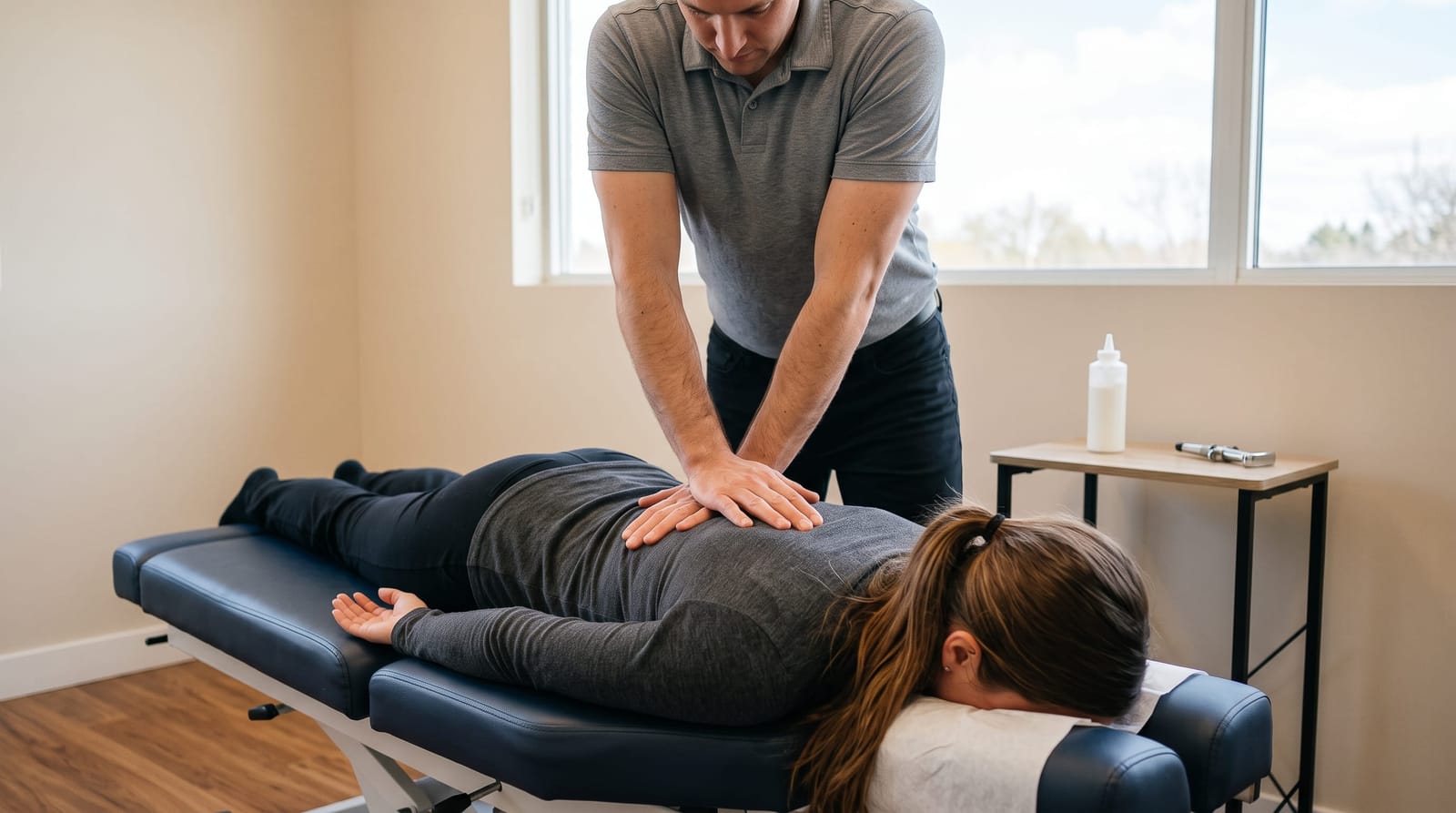
Spinal Decompression for Sciatica: How Many Sessions Will You Need?

There is no single spinal decompression session count that applies to everyone with sciatica. The initial estimate depends on the clinical assessment, whether decompression is appropriate, and how symptoms and everyday function change during care. A useful plan explains not just the proposed total, but also how often appointments would occur and when that estimate will be reviewed.
This article provides general education. Your own suitability and session needs require an individual assessment by our chiropractic team.
What Counts as a Spinal Decompression Session?
At Prodigy Chiro Care & Spinal Decompression in Santa Monica, we offer nonsurgical spinal decompression using a computerized table. The table applies a controlled distraction force, meaning a gentle pulling force between the vertebrae, or bones of the spine. This table-based service is different from spinal decompression surgery.
A decompression session is also different from a chiropractic adjustment. We offer chiropractic manipulation, cold laser therapy, and custom orthotics as separate services, not as different names for decompression.
This distinction matters when reviewing a proposed course of care. A total number of office visits does not necessarily tell you how many decompression sessions are included. A clear breakdown identifies which visits involve decompression and which involve other services.
What Influences the Proposed Number of Sessions?
Sciatica commonly describes pain that travels from the lower back or buttock into the leg. That symptom pattern alone cannot determine which treatment is appropriate or how many appointments it would involve.
Several parts of a clinical assessment help explain a proposed plan:
- Clinical findings: Symptoms and examination findings inform whether decompression belongs in the plan. The word “sciatica” is not enough to calculate a visit total.
- Symptom history: When symptoms began, how they have changed, and whether similar episodes have occurred provide context. Longer-lasting symptoms do not automatically mean a longer course of care.
- Effects on daily activities: Difficulty sitting through a meeting, walking comfortably, or sleeping provides information beyond a pain rating.
- Health history and previous care: Other health considerations and responses to earlier treatment contribute to the assessment of suitability. They are not a formula for adding sessions.
- Response during care: Treatment comfort, changes between visits, and differences in everyday function provide information for reassessment.
These factors help explain why two people with sciatica may receive different proposed schedules. A more intense episode does not translate directly into a specific number of visits.
A Session Total Needs a Schedule and a Review Point
The number of sessions is only one part of the time commitment. Two plans with the same total can look quite different on a calendar if appointments are spaced differently.
A useful treatment-plan discussion separates three details:
- Estimated total: How many decompression sessions are initially proposed.
- Visit frequency: How those appointments would be distributed over time.
- Reassessment point: When the response to care and the remaining plan will be reviewed.
A reassessment point is not a predicted recovery date. It is an opportunity to compare the starting symptoms and activity limitations with what has changed and reconsider the plan.
Questions that help clarify the estimate include:
- What findings explain the proposed number of decompression sessions?
- Which changes in symptoms or daily activities will be reviewed?
- When will the initial estimate be reassessed?
- What would prompt a discussion about changing or ending the course?
How Is Progress Reviewed?
A session estimate is not a timetable for relief. An immediate sensation after treatment and a change that continues between visits are different observations.
For example, less discomfort just after an appointment describes the period immediately following treatment. Greater comfort during a daily commute describes everyday function outside the office. Neither observation, by itself, determines how many sessions remain.
A progress discussion can address:
- Symptom pattern: Whether the location, frequency, or intensity of discomfort has changed.
- Everyday function: Whether sitting, walking, sleeping, or usual activities feel different.
- Duration of change: Whether a difference is brief or continues between appointments.
- Treatment comfort: How the positioning and pulling sensation feel during the session.
Symptoms can fluctuate, so one easier or harder day is not enough to judge treatment effectiveness. A clinical review considers the overall pattern, including no meaningful change or new symptoms. Completing the scheduled visits is not, on its own, a measure of success.
Frequently Asked Questions
Will spinal decompression hurt?
Our computerized table creates a distraction force intended to be comfortable, though the sensation can vary from person to person. A pretreatment discussion can cover positioning, what the pulling sensation may feel like, and how to communicate discomfort during a session.
Is time on the table the same as appointment length?
No. Table time and total appointment time are different measures. An appointment that includes an assessment or another service involves more than decompression alone. For work, transportation, or family scheduling, the useful detail is the full appointment length rather than only the time spent on the table.
Do adjustments or cold laser therapy count as decompression sessions?
No. These are separate services, even when they occur during the same office visit. For example, a visit that includes both decompression and chiropractic manipulation includes one decompression session, not two. A service-by-service breakdown makes the proposed total easier to understand.