Postural Re-Education: How Orthotics, Chiropractic and Movement Work Together
Many people searching for ways to improve their posture focus on a single solution: better shoes, a different chair, or a set of stretching exercises. But posture is a whole-body conversation, and lasting change tends to happen when multiple parts of that conversation are addressed at the same time. If you've been wondering whether custom orthotics can fix posture, the honest answer is: they're a meaningful piece of the puzzle, and they tend to work best when paired with chiropractic care and purposeful movement. Here's how those three elements fit together.
Why Posture Problems Rarely Have a Single Cause
Posture reflects the cumulative habits, compensations, and structural patterns your body has developed over years. When your feet pronate inward, your ankles shift, your knees rotate slightly, your hips tilt, and your spine adjusts accordingly, often without you noticing any of it happening. By the time postural issues become noticeable (rounded shoulders, a forward head position, lower back tension), the underlying patterns have usually been in place for a long time.
This is why addressing posture from the ground up makes practical sense. The foot is literally the foundation of your upright posture. If that foundation is misaligned, whether due to flat arches, overpronation, or uneven weight distribution: the structures above it are working harder than they need to. Over time, those compensations can contribute to tension and discomfort in the knees, hips, and spine.
The good news is that the body is remarkably adaptable. With the right support and consistent input, it can learn new patterns. That's what postural re-education is all about, not forcing the body into a rigid "correct" position, but gently guiding it toward better alignment through layers of consistent, complementary support.
What Custom Orthotics Actually Contribute to Posture
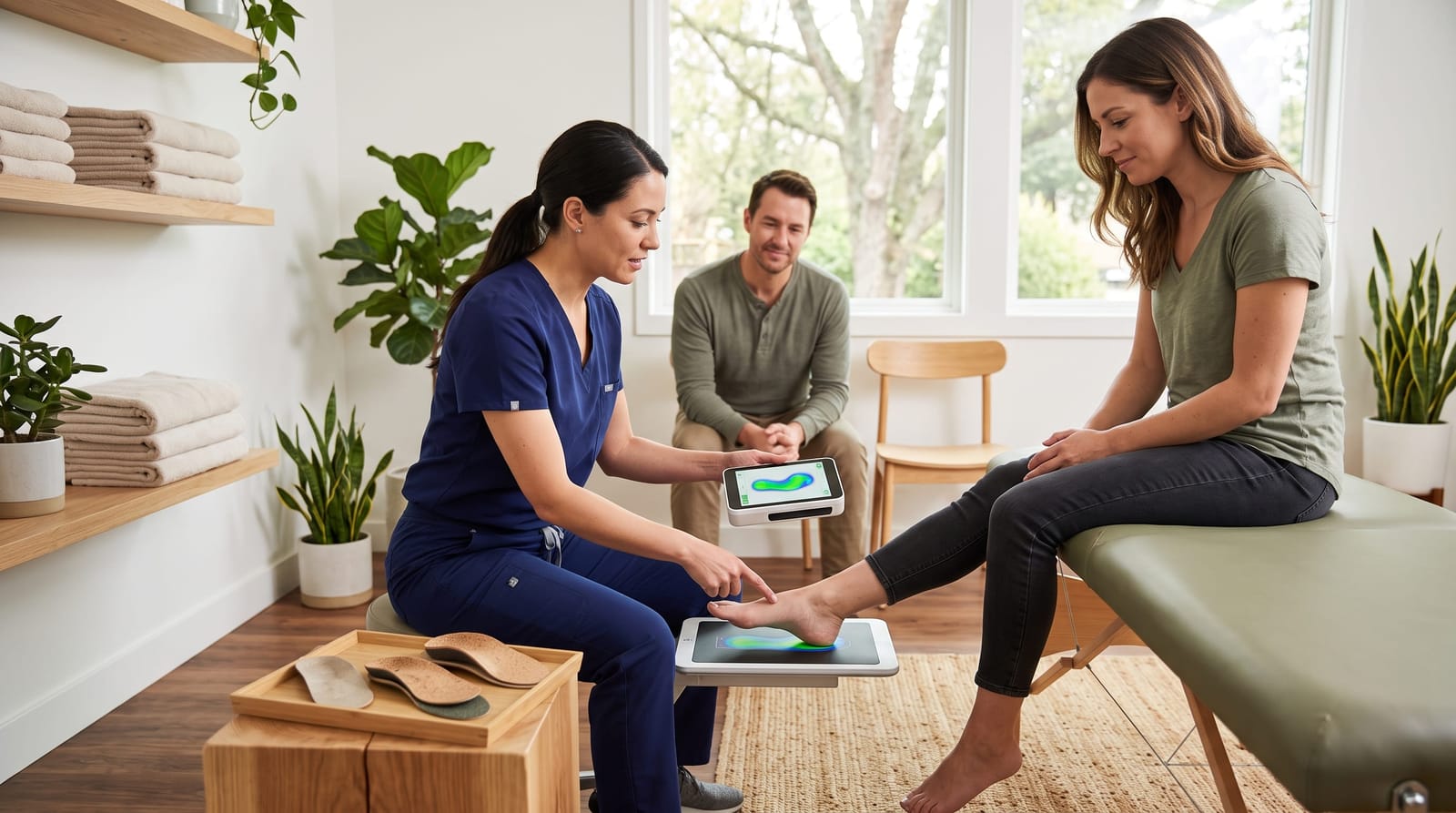
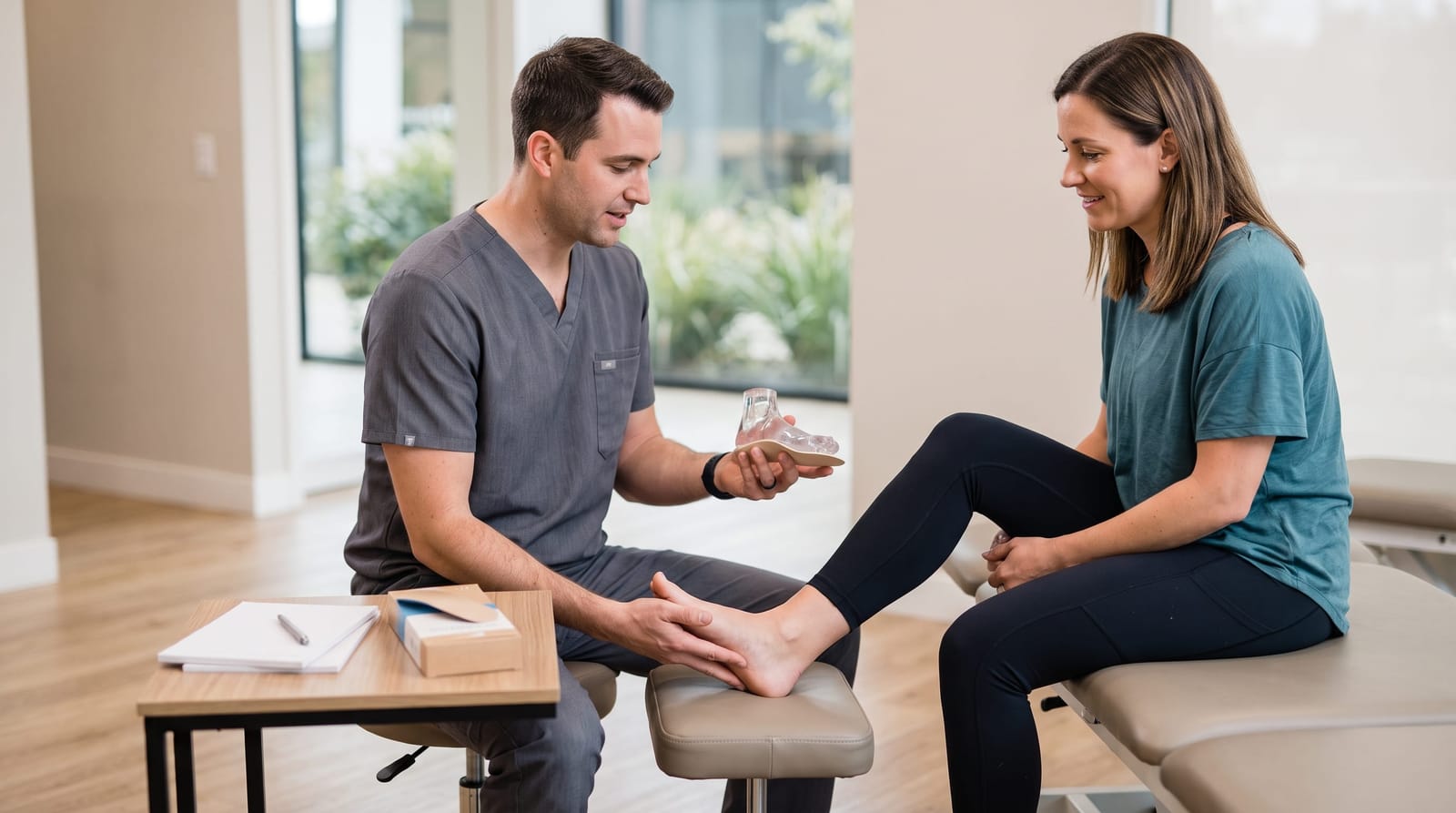
Custom orthotics are shoe inserts made from precise measurements of your feet. Unlike over-the-counter insoles, they're designed specifically for your foot structure and gait pattern. Their role in posture support comes from providing a more stable, balanced foundation for every step you take.
When your feet are better supported and your weight is distributed more evenly, your ankles and knees tend to track in a more neutral position. This can reduce the rotational forces that travel upward through the hips and into the lumbar spine. Many people notice that standing for extended periods feels less fatiguing once their foot alignment is properly supported.
It's worth noting that orthotics aren't a passive fix: they do their best work when your body is actively responding to the improved alignment they provide. Wearing them consistently is important, but so is pairing them with care that addresses the compensatory patterns that have already developed in the joints and muscles higher up the kinetic chain. That's where chiropractic care becomes relevant.
How Chiropractic Care Supports Postural Correction
Chiropractic manipulation works with the joints of the spine and pelvis, helping restore more natural mobility to areas that have become restricted or misaligned. When postural habits have been in place for years, certain spinal segments often lose their full range of motion: a pattern sometimes described as joint fixation. Chiropractic adjustments aim to address these restrictions and encourage the joints to move more freely.
From a postural standpoint, this matters because even well-supported feet can only do so much if the pelvis is tilted or the thoracic spine is stiff. Chiropractic care helps address what's happening in the middle of the kinetic chain, the pelvis, lumbar spine, and thoracic region, which are often where postural compensation patterns show up most clearly.
When orthotics and chiropractic care are used together, they address posture from two directions at once: the orthotics work from the ground up, and the chiropractic adjustments work from the spine outward. Many patients find that their body responds to this combined approach more noticeably than to either element alone, though individual results always vary depending on the person's unique history and patterns.
Postural Re-Education: The Movement Layer That Makes It Stick
Structural support and joint mobility are two-thirds of the equation. The third element, and arguably the one that turns short-term improvements into lasting change, is movement. Specifically, the targeted exercises and postural habits that help your nervous system learn and reinforce better alignment patterns.
Postural re-education exercises aren't about intense workouts. They're typically focused on:
- Strengthening the deep stabilizing muscles of the core and pelvis that support an upright spine
- Improving hip mobility and glute activation, which play a significant role in pelvic alignment
- Stretching chronically shortened muscles (like hip flexors or chest muscles) that pull posture out of balance
- Building body awareness around how you stand, sit, and move throughout the day
When your joints are moving well (thanks to chiropractic care) and your feet are better supported (thanks to orthotics), these exercises tend to be more effective, because your body isn't fighting as many structural obstacles. Over time, the new alignment patterns become more habitual, which is the goal of re-education: making better posture feel natural rather than effortful.
It's also worth considering how your daily environment shapes posture. If you spend long hours at a workstation, your footwear and orthotics are only part of the picture: how your desk, screen, and chair are arranged also plays a meaningful role. A workplace ergonomic assessment that examines how your footwear and orthotics fit the overall picture can help connect these dots and make your postural work more consistent throughout the day.
What an Integrated Approach Looks Like in Practice
At Prodigy Chiro Care, postural work typically involves a layered process rather than a single intervention. When a patient comes in with concerns about posture, alignment, or related discomfort, the approach generally includes:
- A thorough assessment of foot mechanics, spinal alignment, and movement patterns to understand where the underlying contributors are
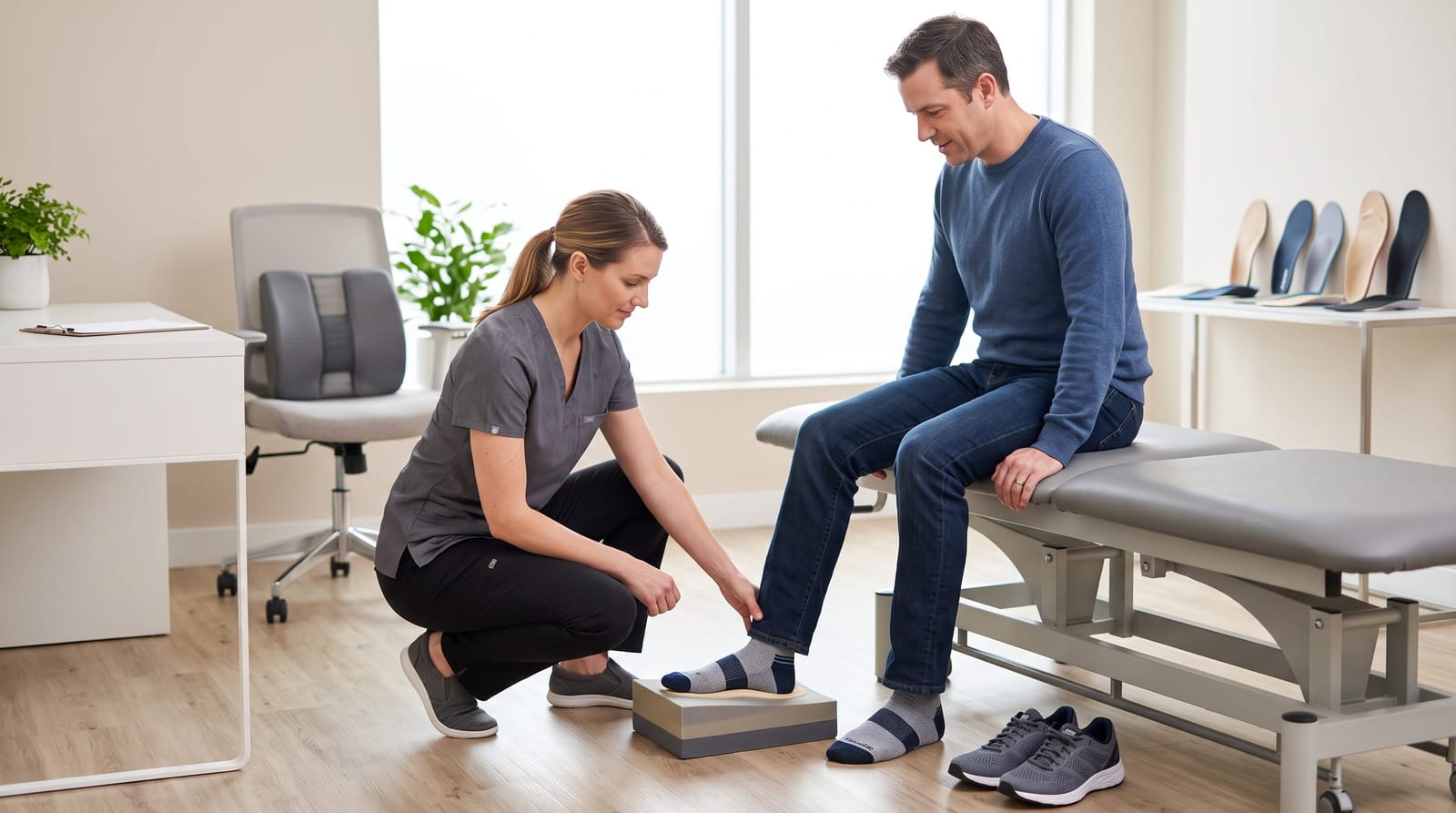
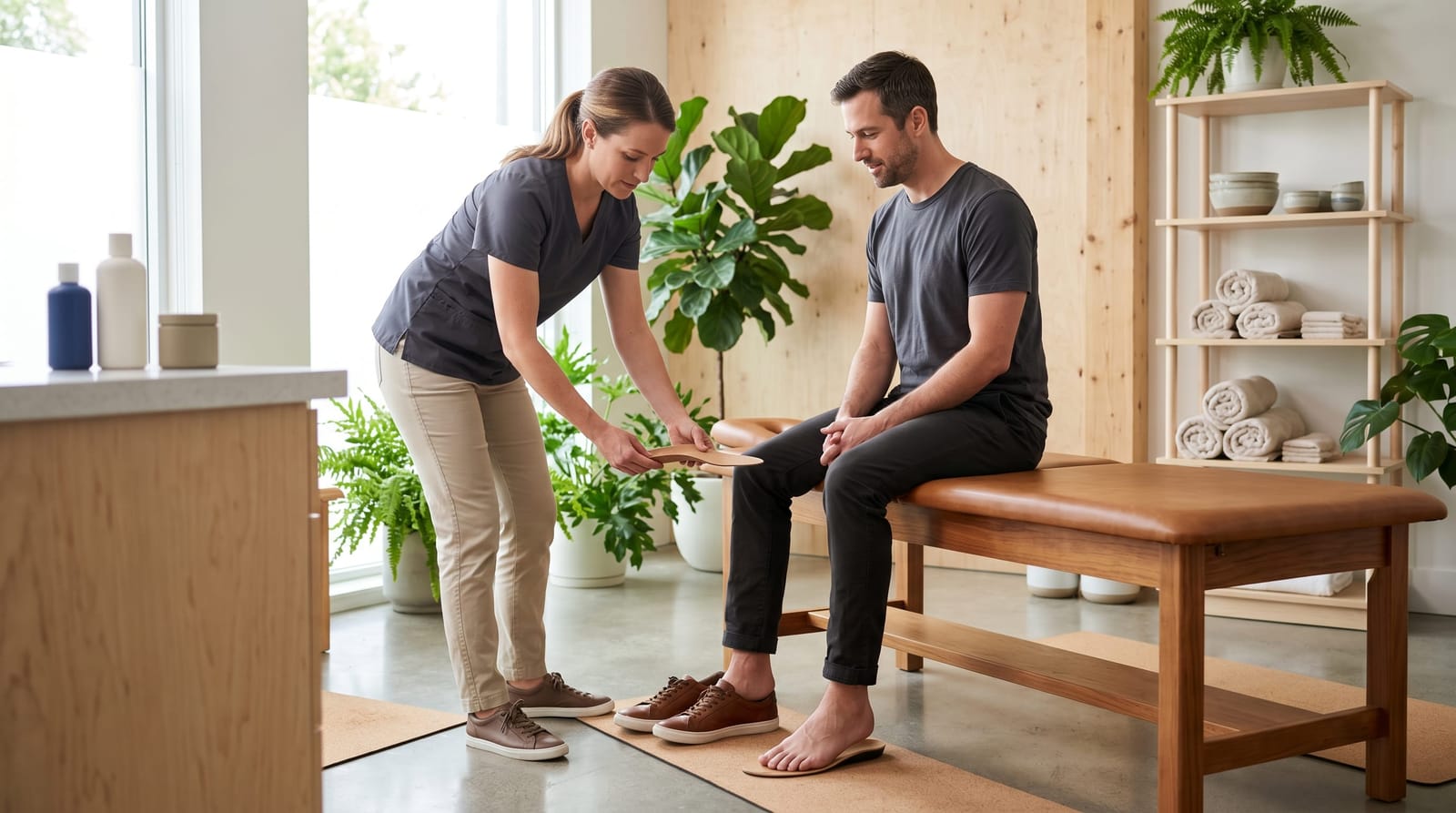
- Custom orthotic fitting, if foot alignment is identified as a contributing factor, using detailed measurements to create inserts matched to the individual's structure
- Chiropractic care targeting the specific spinal and pelvic regions where mobility has been compromised by long-standing postural habits
- Postural exercise guidance tailored to the individual's patterns, not a generic stretch sheet, but targeted recommendations that complement what the orthotics and adjustments are doing
- Ongoing check-ins to adjust the plan as the body responds and habits shift
This kind of integrated care takes into account that every patient brings a different history, body type, and lifestyle to the table. Someone who stands on hard floors all day has different postural demands than someone who works remotely at a home desk. The approach adapts accordingly.
Frequently Asked Questions
Can custom orthotics fix posture on their own?
Custom orthotics can meaningfully support postural improvement by addressing foot alignment and creating a more balanced foundation. However, they work best as part of a broader approach that includes spinal care and movement habits. If compensatory patterns have developed in the hips, pelvis, or spine, addressing only the feet may produce limited results on its own.
How long does it take to see postural improvements with orthotics and chiropractic care?
This varies depending on how long postural patterns have been in place, individual body mechanics, and how consistently the care plan is followed. Some people notice changes in comfort and body awareness within a few weeks; more significant postural shifts often emerge over several months of consistent care. There's no universal timeline, and results differ from person to person.
Do I need to wear orthotics all the time for them to help with posture?
Consistent use tends to produce better results than occasional wear, since orthotics are providing postural input with every step. That said, the specific recommendation will depend on your individual situation: your provider can guide you on appropriate usage based on your foot mechanics and daily activity level.
Is postural re-education appropriate for all ages?
Postural care and movement-based re-education can be appropriate across a wide range of ages and activity levels. The specific exercises and intensity are always adapted to the individual. If you have concerns about whether a particular approach is suitable given your health history, discussing this directly with your care provider is the best first step.
Bringing It All Together
Custom orthotics can play a genuine role in supporting better posture, but posture is a whole-body pattern, and lasting improvement tends to come from addressing it on multiple levels at once. When foot support, spinal mobility, and targeted movement work are coordinated as part of a single care plan, the results are typically more meaningful and more durable than any one element alone. If you've been wondering whether orthotics could be part of your postural improvement journey, that question is worth exploring alongside the broader picture of how your body moves and aligns. That's exactly the kind of conversation we're here for at Prodigy Chiro Care.