Plantar Fasciitis Without Surgery: How Custom Orthotics and Chiropractic Compare

Plantar fasciitis is one of the most common causes of heel pain, and one of the most frustrating. If you've been limping through your mornings or dreading your first steps after sitting, you're not alone. The good news is that surgery is rarely necessary. Most people find meaningful relief through conservative care. This post breaks down your non-surgical options, including custom orthotics for plantar fasciitis, chiropractic treatment, and cold laser therapy, so you can make a confident, informed decision about your path forward.
What Is Plantar Fasciitis and Why Does It Linger?
The plantar fascia is a thick band of tissue that runs along the bottom of your foot. It connects your heel bone to your toes and acts as a natural shock absorber. When this tissue becomes irritated or overstressed, it causes the sharp, stabbing heel pain that characterizes plantar fasciitis.
The condition tends to linger for a few key reasons:
- Your feet bear your full body weight with every step
- The tissue is slow to heal because of limited blood flow
- Underlying issues, like poor foot mechanics or tight calves, often go unaddressed
- Generic insoles don't correct the root cause for most people
This is why a single solution rarely works on its own. Effective relief usually requires addressing both the symptoms and the structural factors driving them. That's where a combined approach becomes especially valuable.
How Custom Orthotics for Plantar Fasciitis Actually Help
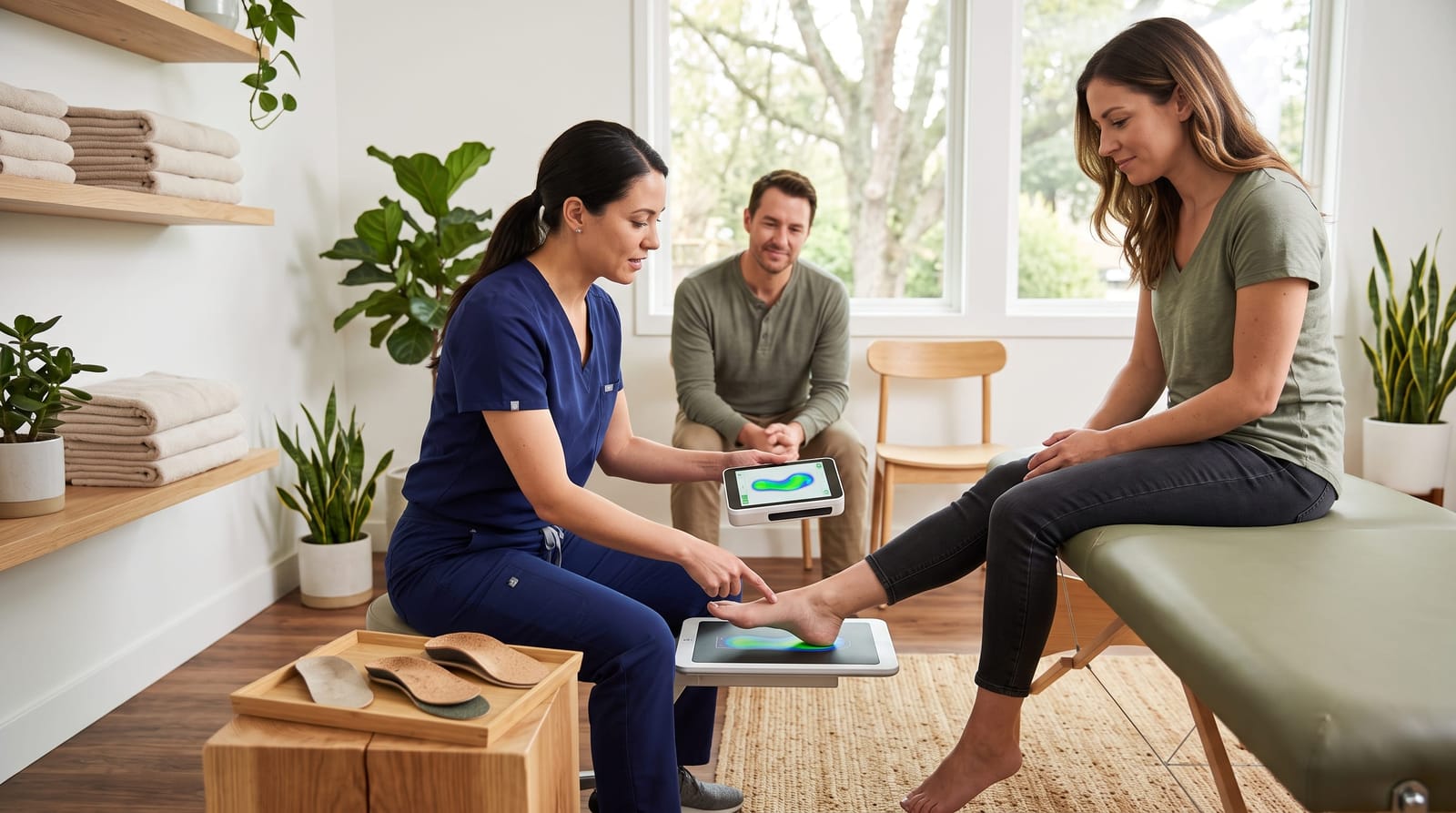
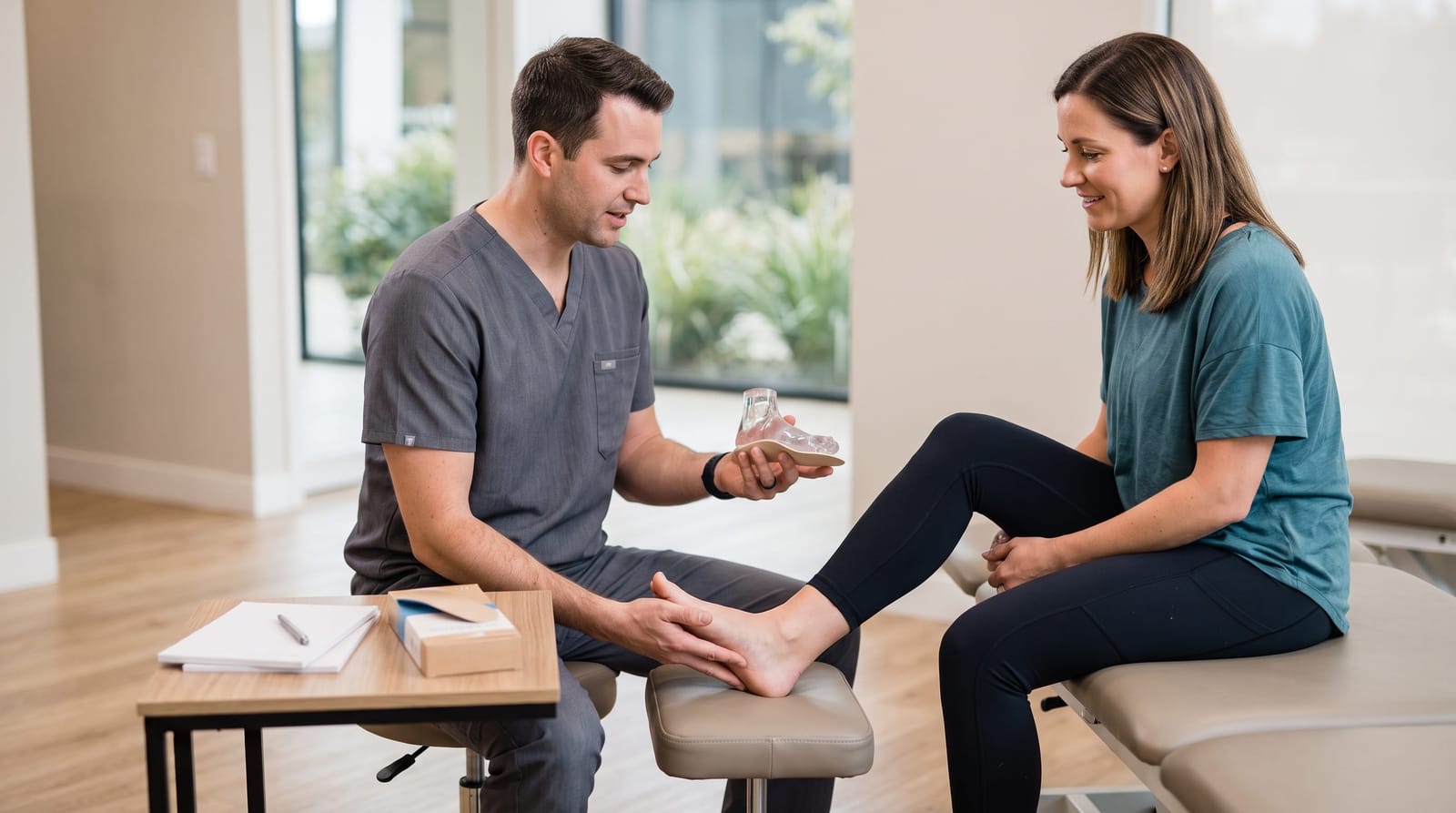
Custom orthotics for plantar fasciitis work differently than the insoles you'd pick up at a pharmacy. They are designed specifically for your foot: its shape, arch height, gait pattern, and activity level.
Here's what that means in practice:
- Arch support is personalized. A custom orthotic supports your arch at exactly the right position. This reduces the pulling and tension on the plantar fascia with every step.
- Heel cushioning is targeted. The device distributes pressure away from the most inflamed areas of your heel, making daily movement more comfortable.
- Gait correction happens naturally. If overpronation (rolling inward) or supination (rolling outward) is contributing to your symptoms, custom orthotics can guide your foot into a more neutral position.
Research consistently shows that custom orthotics outperform generic inserts for plantar fasciitis relief. Many patients report noticeable improvement within a few weeks of consistent use. The key word is "consistent": orthotics work best when worn regularly throughout the day, not just during exercise.
One important note: orthotics address how your foot functions. They don't resolve muscle tightness, spinal alignment issues, or soft tissue inflammation on their own. That's where chiropractic care adds a meaningful layer of support.
What Chiropractic Care Contributes to Plantar Fasciitis Recovery
Chiropractic care takes a whole-body view of plantar fasciitis. Your chiropractor isn't just looking at your heel: they're evaluating how your entire lower kinetic chain is functioning.
Foot pain often has contributing factors higher up in the body:
- Tight calf muscles and Achilles tendons that increase strain on the plantar fascia
- Hip or knee misalignment that shifts how weight is distributed through the foot
- Spinal imbalances that affect your gait and posture over time
Chiropractic adjustments and soft tissue therapies can help address these upstream contributors. By improving alignment and reducing muscular tension, chiropractic care supports the environment your foot needs to heal. It also complements the structural corrections that custom orthotics provide.
The combination matters. Custom orthotics improve how your foot moves. Chiropractic care helps improve how your whole body moves. Together, they create a more complete recovery approach than either option alone.
The Role of Cold Laser Therapy in Speeding Up Recovery
Cold laser therapy: also called low-level laser therapy (LLLT): is a non-invasive treatment that delivers specific wavelengths of light into damaged tissue. It's painless, drug-free, and often described by patients as a warming or tingling sensation during treatment.
For plantar fasciitis, cold laser therapy offers a few notable benefits:
- Reduced inflammation. The light energy helps calm the inflammatory response in the plantar fascia tissue.
- Accelerated tissue repair. Cellular activity increases in the treated area, which may support faster healing of the irritated fascia.
- Pain relief without medication. Many patients experience a reduction in discomfort following a series of treatments.
Cold laser therapy works well as a complement to both orthotics and chiropractic care. While orthotics and chiropractic address structure and mechanics, cold laser supports the healing process at the tissue level. When all three are used together, patients often experience more well-rounded and lasting results.
Comparing Your Non-Surgical Options at a Glance
Here's a simple breakdown to help you think through how these approaches compare:
- Custom orthotics for plantar fasciitis: Correct foot mechanics, reduce strain on the fascia, and provide lasting structural support. Best used daily and long-term.
- Chiropractic care: Addresses whole-body alignment and muscular contributors. Helps resolve issues that orthotics alone cannot reach.
- Cold laser therapy: Targets tissue-level inflammation and supports faster recovery. Non-invasive and drug-free.
- Stretching and physical therapy exercises: Loosen the calf muscles and plantar fascia. Most effective when paired with structural support.
- Rest and ice: Helpful for managing acute flare-ups but rarely sufficient on their own for long-term relief.
Surgery for plantar fasciitis is typically only considered after conservative care has been tried consistently for six months or more. Most patients improve well before that point with the right combination of treatments. If you're on your feet all day for work, whether at a standing desk or during a long commute, you may also find value in exploring how custom orthotics support work professionals dealing with daily foot strain, since the demands of your lifestyle directly affect your recovery timeline.
Frequently Asked Questions
How long does it take for custom orthotics to help plantar fasciitis?
Most people begin to notice improvement within two to four weeks of wearing custom orthotics consistently. Full relief may take longer, especially if the condition has been present for several months. Wearing your orthotics throughout the day, not just during activity, tends to produce the best results.
Can I use custom orthotics alongside other plantar fasciitis treatments?
Yes, and this is often recommended. Custom orthotics work well alongside chiropractic care, cold laser therapy, stretching routines, and physical therapy. These approaches address different aspects of the condition, so combining them is often more effective than relying on a single treatment.
Are custom orthotics better than store-bought insoles for plantar fasciitis?
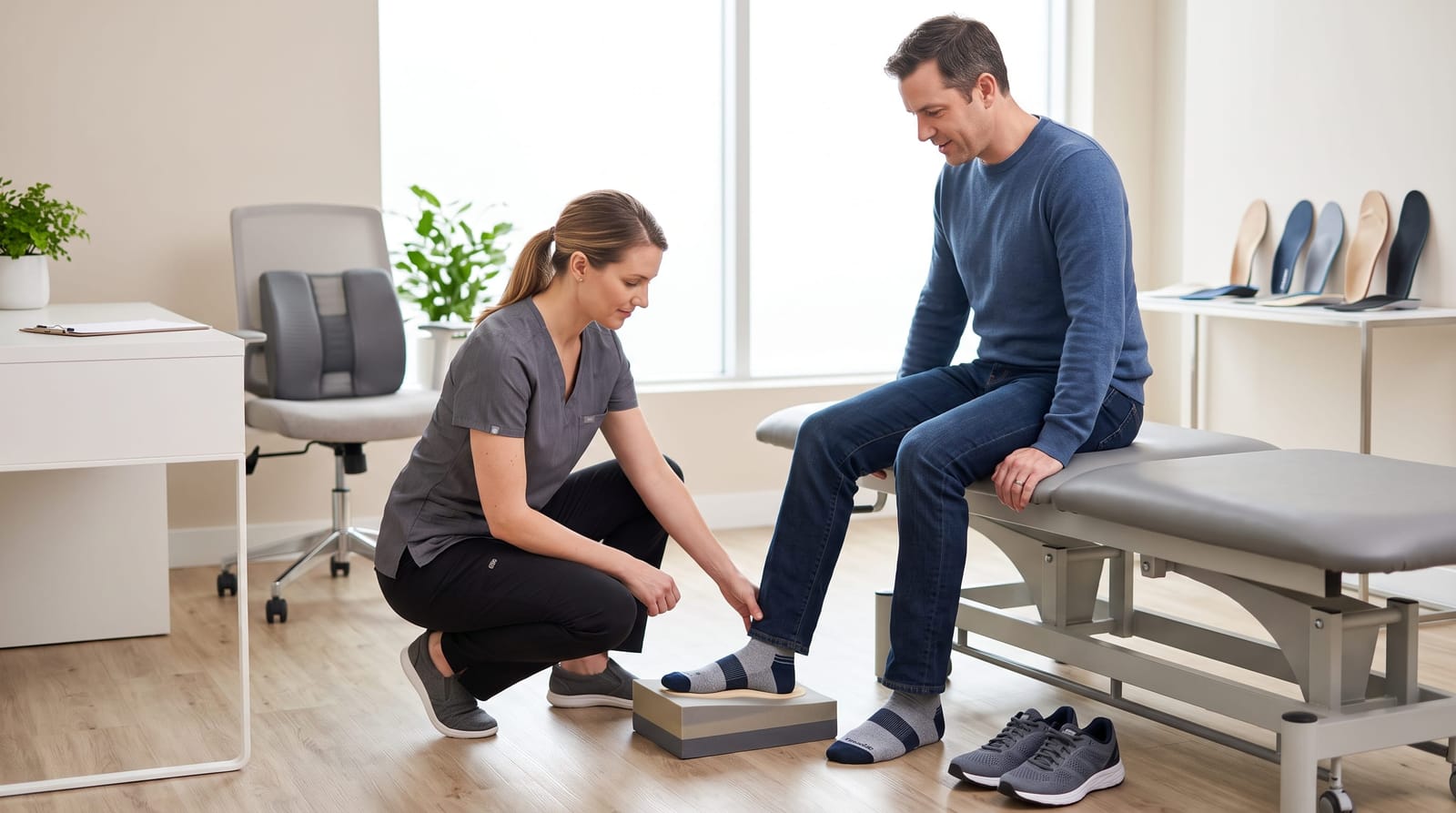
For most plantar fasciitis cases, yes. Generic insoles provide general cushioning but don't account for your specific foot structure, arch height, or gait pattern. Custom orthotics are designed from a mold or scan of your foot, which means the support is precisely placed where you need it most.
Is chiropractic care safe for plantar fasciitis?
Chiropractic care is generally considered safe and appropriate for plantar fasciitis when provided by a licensed practitioner. Your chiropractor will assess your full history before recommending any treatment, and care is always tailored to your individual needs and comfort level.
A Thoughtful Path Forward
Plantar fasciitis doesn't have to mean surgery, or months of simply waiting it out. Custom orthotics for plantar fasciitis, combined with chiropractic care and cold laser therapy, offer a well-rounded, non-invasive approach that addresses both symptoms and underlying causes. If you've been managing heel pain and wondering what your next step should be, a comprehensive evaluation is a great place to start. Understanding your foot mechanics, alignment, and lifestyle factors can make all the difference in building a recovery plan that actually works for you.