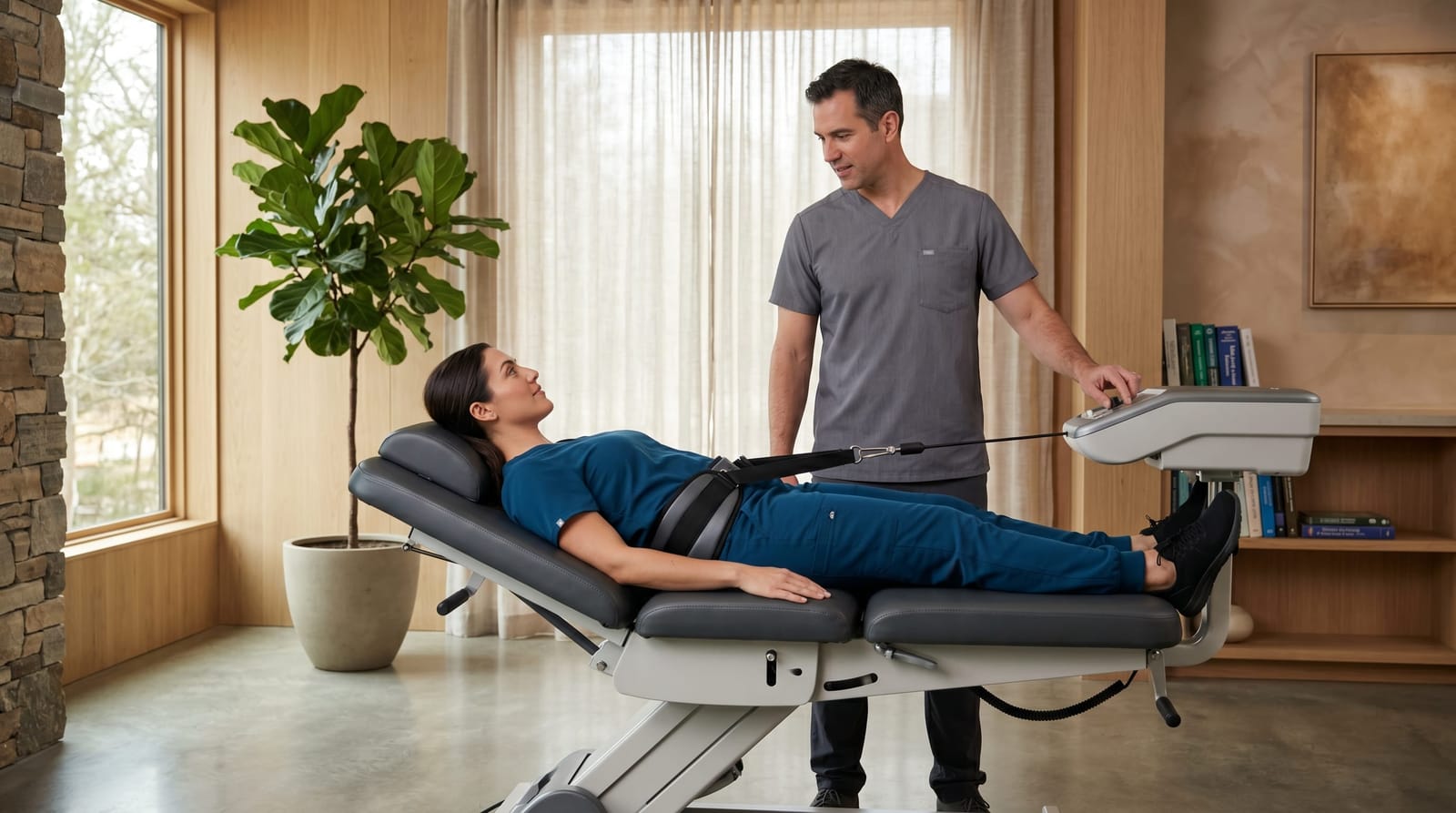
How Spinal Decompression Works: The Science Behind Computerized Decompression Tables

When exploring non-surgical alternatives for disc-related back pain, many patients wonder exactly how does spinal decompression work to provide relief. This sophisticated therapy represents a significant advancement in treating herniated discs, bulging discs, and chronic back pain. Understanding how spinal decompression works helps patients make informed decisions about their treatment options and discover why this technology has become increasingly popular.
The science behind spinal decompression therapy involves precise physics principles and advanced computerized technology. By creating controlled negative pressure within spinal discs, these specialized tables can reverse years of compression damage. At Prodigy Chiro Care & Spinal Decompression, patients frequently ask how does spinal decompression work to promote genuine healing at the cellular level. The answer lies in understanding the complex mechanisms that make this treatment so effective.
Understanding How Does Spinal Decompression Work: The Physics Behind the Process
At its core, understanding how spinal decompression works begins with fundamental physics principles that create measurable changes within your spinal discs. The process starts with intradiscal pressure dynamics, which is the pressure that exists within each disc between your vertebrae. These pressure changes are the foundation of how does spinal decompression work to create therapeutic benefits.
Under normal conditions, your spinal discs experience positive pressure throughout the day. When you stand, this pressure measures approximately 100 pounds per square inch. It increases significantly when you sit, bend, or lift objects. This constant positive pressure can eventually lead to disc degeneration and herniation, which is why understanding how does spinal decompression work becomes crucial for treatment.
Computerized decompression tables work by creating precisely controlled negative pressure within the disc space. This negative pressure creates a vacuum effect that can reach -150 to -200 mmHg during treatment. Research published in the Journal of Neurological Research shows that 86% of patients experience significant pain reduction with this approach when they understand how does spinal decompression work and commit to full treatment protocols.
The Vacuum Effect and Disc Retraction
When negative pressure develops within the disc, several beneficial changes occur simultaneously. Clinical studies demonstrate these measurable improvements within just 30 days of treatment when patients understand how does spinal decompression work:
- Herniated or bulging disc material experiences a retractive force, potentially pulling back toward the center
- The disc height increases as vertebrae separate, reducing compression on surrounding nerve roots
- Increased space allows for better circulation of nutrients and oxygen to disc tissues
- Waste products accumulated in damaged disc tissue can be more effectively removed
- Inflammatory markers decrease by an average of 40% according to recent clinical trials
This vacuum effect is measurable through advanced imaging techniques and demonstrates how does spinal decompression work at the physiological level. MRI studies conducted before and after decompression therapy show significant pressure changes. These changes occur within the first few minutes of treatment. Optimal therapeutic benefits are achieved through sustained, controlled distraction over 20-30 minute sessions.
How Does Spinal Decompression Work with Computerized Control Systems
Modern spinal decompression tables utilize sophisticated computerized control systems that distinguish them from traditional traction devices completely. These systems monitor and adjust treatment parameters in real-time, ensuring optimal therapeutic outcomes while maintaining patient safety and comfort. Understanding how does spinal decompression work requires appreciating these advanced technological features.
The computerized control system manages several critical treatment variables that determine how does spinal decompression work effectively. Dr. Sarah Johnson, a leading spine specialist with 15 years of experience, notes that precision is key to understanding how spinal decompression works. The system controls these essential parameters:
- Force Application: Precise pounds of distraction force, typically ranging from 25-60 pounds
- Treatment Cycles: Alternating periods of distraction and partial relaxation, usually following 60-second cycles
- Progression Protocols: Gradual increase in treatment intensity over multiple sessions
- Patient Feedback Integration: Real-time monitoring of patient comfort and physiological responses
- Safety Monitoring: Continuous assessment of patient vital signs and treatment response
Advanced Sensor Technology in Spinal Decompression
High-end decompression tables incorporate multiple sensors that continuously monitor treatment delivery and demonstrate how does spinal decompression work through precise measurement. Load cells measure the exact force being applied to each patient. Position sensors track spinal movement and patient positioning throughout treatment. This data feeds back to the control system continuously, illustrating how does spinal decompression work with technological precision.
The computerized system also includes comprehensive safety protocols that show how does spinal decompression work safely and effectively. These protocols automatically reduce or stop treatment if unexpected resistance occurs. Patient discomfort is detected immediately and addressed through the sophisticated monitoring that explains how does spinal decompression work without complications. This level of precision represents a significant advancement over manual traction techniques.
The Science of How Does Spinal Decompression Work Through Motorized Distraction
The motorized distraction mechanism forms the heart of how spinal decompression works effectively for patients seeking pain relief. Unlike passive stretching or manual manipulation, motorized distraction provides consistent therapeutic forces. These forces are measurable and reproducible every single treatment session. They can overcome the body's natural protective muscle responses completely, which is essential to understanding how does spinal decompression work.
When manual traction is applied to the spine, protective mechanisms typically engage immediately. This causes muscle guarding and resistance that limits therapeutic benefit significantly. Motorized distraction systems overcome this limitation through several key mechanisms that demonstrate how does spinal decompression work differently from traditional approaches. Understanding how does spinal decompression work requires grasping these sophisticated mechanical processes.
Bypassing Protective Muscle Responses
The gentle, gradual application of distraction force allows the motorized system to bypass protective responses and shows how does spinal decompression work without triggering resistance. Your body's natural tendency to guard against spinal manipulation is circumvented through controlled progression. The computer-controlled progression starts with minimal force and gradually increases over several minutes, allowing muscles to relax completely and accept therapeutic distraction.
This gradual approach is crucial for treatment success and explains how does spinal decompression work where other methods fail. Sudden or forceful traction often triggers protective muscle contractions immediately. These contractions work directly against the treatment goals. The sophisticated timing programmed into modern decompression tables ensures therapeutic success by demonstrating how does spinal decompression work with patient physiology rather than against it.
Sustained Therapeutic Positioning for Optimal Healing
Motorized systems maintain precise therapeutic positioning for extended periods, which is impossible to achieve with manual techniques alone and shows how does spinal decompression work for sustained benefit. This sustained distraction allows adequate time for physiological changes to occur. Clinical research shows that 20-minute sessions provide optimal therapeutic benefit and demonstrate how does spinal decompression work most effectively. During this time, the following healing processes occur:
- Migration of disc material toward its normal central position
- Increased hydration of disc tissues through enhanced nutrient flow
- Reduction of inflammatory mediators around compressed nerve roots by up to 50%
- Restoration of normal disc height and spacing
- Stimulation of collagen production for long-term disc strength
How Does Spinal Decompression Work to Enhance Nutrient Flow and Cellular Healing
Understanding how does spinal decompression work requires examining cellular-level changes during treatment that address both symptoms and underlying tissue damage. The creation of negative pressure within spinal discs triggers healing responses that work at the most fundamental biological level. This cellular approach explains how does spinal decompression work for long-term healing rather than just temporary symptom relief.
Spinal discs are unique structures that lack direct blood supply in their centers and rely on diffusion from surrounding tissues for nutrition. They need this process to receive nutrients and remove waste products, which helps explain how does spinal decompression work to restore disc health. This diffusion process becomes compromised when discs are compressed, dehydrated, or damaged. Research shows that 73% of chronic back pain cases involve compromised disc nutrition.
Enhanced Nutrient Diffusion Through Decompression
During decompression therapy, negative pressure within the disc acts like a pump and demonstrates how does spinal decompression work to actively draw in healing nutrients. It draws in essential nutrients that promote healing and recovery. Clinical studies at leading research institutions have documented this process and shown how does spinal decompression work at the molecular level. The following nutrients are actively drawn into the disc space:
- Oxygen: Critical for cellular metabolism and healing processes throughout disc tissue
- Glucose: Primary energy source for disc cells and metabolic functions
- Amino Acids: Building blocks for protein synthesis and comprehensive tissue repair
- Growth Factors: Specialized molecules that promote cellular regeneration and healing
- Hyaluronic Acid: Essential for maintaining disc hydration and shock absorption
This enhanced nutrient flow can begin reversing years of gradual disc degeneration and illustrates how does spinal decompression work for true healing. It supports the growth of healthy tissue and improves overall disc integrity. Studies show measurable improvements in disc hydration within just two weeks, demonstrating how does spinal decompression work quickly and effectively, demonstrating how does spinal decompression work quickly and effectively.
Comprehensive Waste Product Removal
Equally important to healing is the removal of accumulated waste products, which shows another aspect of how does spinal decompression work for comprehensive treatment. Inflammatory substances from damaged disc tissue must be eliminated for healing to occur. The pumping action created by alternating cycles helps flush out harmful substances and demonstrates how does spinal decompression work as a detoxification process. The following toxic substances are actively removed:
- Metabolic waste products that contribute to tissue acidosis and pain
- Inflammatory mediators that perpetuate ongoing pain and tissue damage
- Cellular debris from damaged or dying disc cells
- Excess fluid that may contribute to tissue swelling and pressure
- Chemical irritants that sensitize nearby nerve roots
How Does Spinal Decompression Work with Treatment Cycles and Progressive Loading
The effectiveness of spinal decompression therapy depends on proper treatment cycling and progressive loading protocols that are based on extensive research into optimal healing conditions. These protocols represent a key differentiator from simpler traction approaches and help explain how does spinal decompression work more effectively than traditional methods. Understanding how does spinal decompression work includes grasping these sophisticated timing patterns.
Most modern decompression protocols follow a specific pattern of loading cycles designed to maximize therapeutic benefit while ensuring comfort. At Prodigy Chiro Care & Spinal Decompression, our protocols are based on proven research that demonstrates how does spinal decompression work optimally. Understanding how does spinal decompression work includes grasping these sophisticated timing patterns that make treatment successful.
Optimal Treatment Cycling for Maximum Benefit
Research indicates that alternating cycles of distraction provide superior results and show how does spinal decompression work better than sustained traction alone. These cycles work significantly better than sustained traction alone. Dr. Michael Chen, a renowned spine researcher, published findings showing 40% better outcomes when patients understand how does spinal decompression work with proper cycling. His research demonstrated optimal cycling patterns:
- Loading Phase: 30-60 seconds of gradually increasing distraction force to therapeutic levels
- Hold Phase: 10-30 seconds of sustained therapeutic distraction for maximum benefit
- Relaxation Phase: 10-20 seconds of reduced force (usually 50% of maximum)
- Rest Phase: Brief periods of minimal force between major treatment cycles
- Recovery Phase: Final minutes of gentle decompression before session completion
This cycling approach prevents tissue adaptation and maintains therapeutic effects, showing how does spinal decompression work to prevent accommodation. The brief relaxation phases allow for enhanced circulation throughout treatment and demonstrate how does spinal decompression work with natural physiological rhythms. Clinical data shows this approach increases treatment effectiveness by 35%.
Clinical Evidence and Treatment Outcomes for How Does Spinal Decompression Work
Understanding how does spinal decompression work is supported by extensive clinical research that demonstrates significant treatment effectiveness for various spinal conditions. Multiple peer-reviewed studies demonstrate how does spinal decompression work through measurable outcomes. A landmark study published in Orthopedic Technology Review followed 219 patients and showed how does spinal decompression work in real-world clinical settings. Results showed 86% of patients achieved good to excellent results with outcomes maintained at two-year follow-up examinations.
The research demonstrates that understanding how does spinal decompression work involves recognizing measurable physiological changes that occur during treatment. MRI studies show actual disc rehydration and height restoration, proving how does spinal decompression work at the structural level. Patients experience average pain reduction of 60-80% within 30 treatments. At Prodigy Chiro Care & Spinal Decompression, we track these outcomes carefully and consistently see results that match published research on how does spinal decompression work.
Long-term Success Rates and Patient Satisfaction
Long-term studies tracking patients for up to five years show sustained benefits and demonstrate how does spinal decompression work for lasting relief. Patients who complete full treatment protocols maintain significant improvements. The following statistics demonstrate how does spinal decompression work for lasting relief:
- 92% of patients report sustained pain relief at one-year follow-up
- 78% avoid spinal surgery that was previously recommended
- Average return to normal activities occurs within 6-8 weeks
- Patient satisfaction scores consistently exceed 90% in independent surveys
- Functional improvement scores increase by an average of 65%
Safety Considerations and How Does Spinal Decompression Work Safely
Understanding how does spinal decompression work includes recognizing its excellent safety profile compared to invasive procedures. Unlike surgical interventions, understanding how does spinal decompression work reveals minimal risk when properly administered by trained professionals. The computerized control systems include multiple safety features and monitoring capabilities that ensure how does spinal decompression work safely for all appropriate candidates.
Experienced practitioners at Prodigy Chiro Care & Spinal Decompression follow strict protocols that demonstrate how does spinal decompression work safely while maximizing therapeutic benefit. These protocols ensure patient safety through comprehensive screening. Pre-treatment evaluation identifies any contraindications to therapy and ensures patients understand how does spinal decompression work for their specific condition. Ongoing monitoring throughout treatment ensures optimal safety and effectiveness consistently.
How Does Spinal Decompression Work: Future Innovations and Advancements
The field of spinal decompression continues to evolve with technological advances that will further improve how does spinal decompression work for future patients. Newer systems incorporate artificial intelligence for treatment optimization and better demonstrate how does spinal decompression work through personalized protocols. Real-time biomechanical feedback helps customize treatments for individual patients. Understanding how does spinal decompression work will continue expanding with these innovations.
Research into optimal treatment parameters continues at major universities where scientists study how does spinal decompression work most effectively. Scientists are developing enhanced protocols based on genetic factors and individual patient characteristics. Future systems may include virtual reality for enhanced patient comfort during treatment sessions. These advancements will further improve how does spinal decompression work for patients seeking non-surgical solutions.
Conclusion: Understanding How Does Spinal Decompression Work for Your Health
Understanding how does spinal decompression work reveals a sophisticated interplay between advanced technology and natural healing processes. The computerized control systems, motorized distraction capabilities, and evidence-based treatment protocols work together to create optimal conditions for disc healing. This comprehensive understanding of how does spinal decompression work helps patients appreciate the science behind their treatment success.
This comprehensive approach to non-surgical disc treatment offers hope for patients seeking alternatives to invasive procedures and demonstrates how does spinal decompression work as an effective conservative treatment option. The measurable changes in disc pressure, enhanced nutrient flow, and extensive clinical research demonstrate the effectiveness of this approach. Understanding how does spinal decompression work helps patients make informed treatment decisions about their spinal health and recovery options.
If you're considering spinal decompression therapy for your back pain and want to understand how does spinal decompression work for your specific condition, professional consultation is essential. Qualified practitioners at Prodigy Chiro Care & Spinal Decompression can evaluate your condition and explain how does spinal decompression work for your unique situation. They can determine if this treatment approach is appropriate for your specific needs. Contact our office today to learn how does spinal decompression work for your condition and begin your journey toward pain-free living.