Herniated Disc vs Bulging Disc: Complete Guide to Understanding, Managing & Recovering From Disc Problems
You wake up one morning with radiating pain down your leg. Or maybe your lower back has been aching for weeks and someone mentions you might have a "disc problem." The first question most people ask is: do I have a herniated disc or a bulging disc, and does it really matter?
It matters more than you might think. The difference between a herniated disc vs bulging disc affects how your symptoms feel, how quickly you may recover, and which care approaches are most appropriate for your situation. Yet many people spend months confused about their diagnosis, unsure what their imaging report actually means or what to do next.
Here is the encouraging news. Research consistently shows that the vast majority of people with disc problems, both herniated and bulging, improve without surgery. According to a study published in the New England Journal of Medicine, approximately 90% of patients with herniated disc symptoms experience significant improvement within 6 to 12 weeks with conservative care. That is a genuinely hopeful statistic.
This guide covers everything you need to understand about the herniated disc vs bulging disc distinction. You will learn what each condition actually is, how symptoms differ, what recovery can look like, and what non-surgical options are available, including advanced spinal decompression therapy. Whether you were recently diagnosed or have been managing disc discomfort for years, you will leave with a clearer, calmer picture of your path forward.
Understanding Spinal Disc Anatomy: What These Structures Actually Do
Before exploring the herniated disc vs bulging disc difference, it helps to understand what a spinal disc is in the first place. Most people know discs exist, but fewer understand how elegantly they are designed, or how much work they quietly do every day.
The Structure of a Spinal Disc
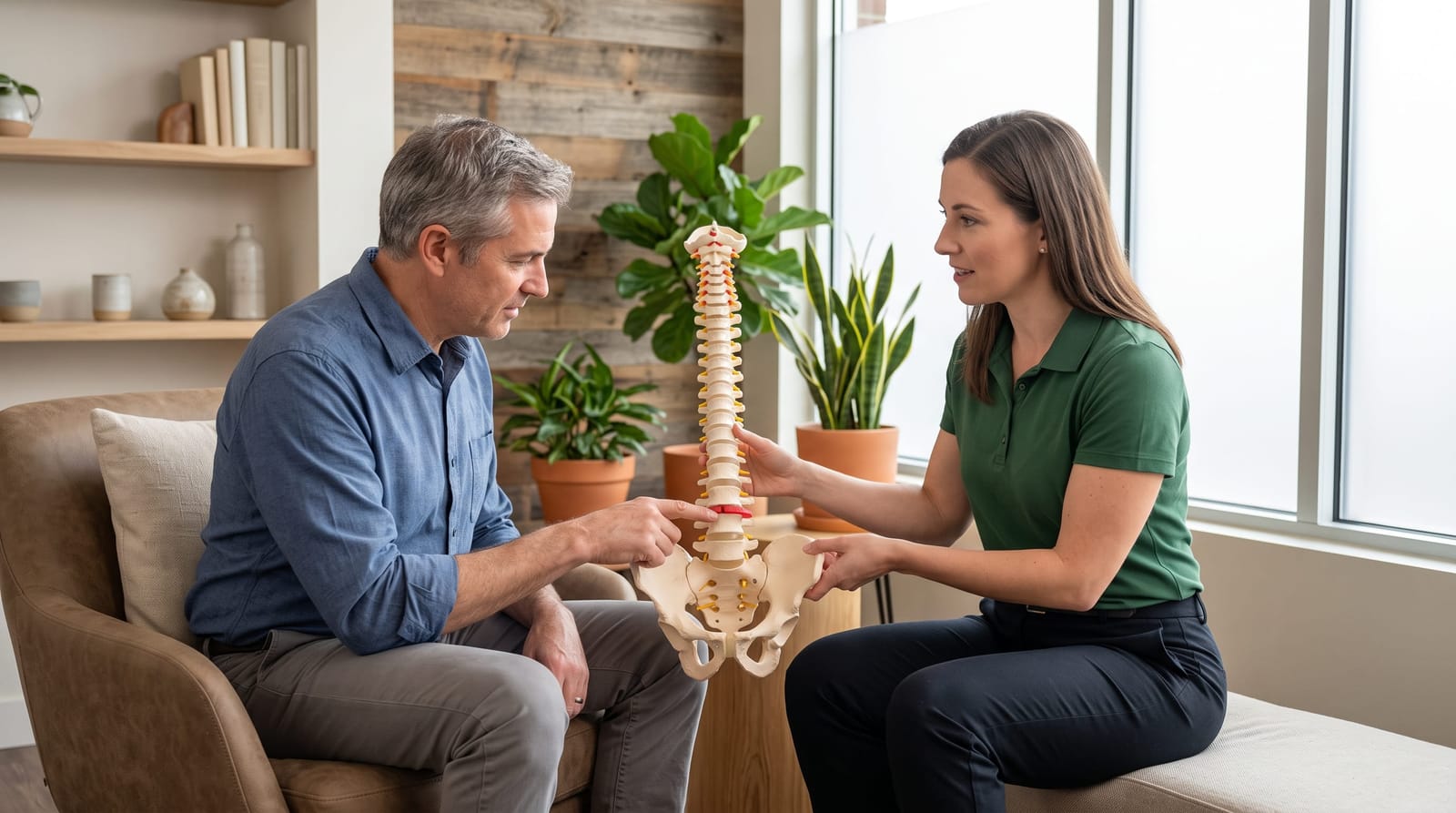
Your spine has 23 intervertebral discs. Each one sits between two vertebrae and acts as a cushion, shock absorber, and spacer. Think of each disc like a jelly donut. The tough outer ring: called the annulus fibrosus: is made of layered fibrocartilage. The soft, gel-like center: called the nucleus pulposus: provides the cushioning effect.
These discs allow your spine to bend, twist, and absorb the forces of daily movement. They also maintain the spacing between vertebrae, which keeps nerve roots from getting compressed. When a disc is healthy, the whole system works smoothly. When a disc changes shape or loses integrity, nearby nerves can become irritated.
Where Disc Problems Most Commonly Occur
Disc problems can develop anywhere along the spine. However, the lumbar spine (lower back) and cervical spine (neck) are the most common locations. This is because these areas carry the most load and allow the most movement. The lumbar region, particularly the L4-L5 and L5-S1 levels, is involved in the majority of disc-related cases.
Discs naturally change over time. Starting as early as your 30s, discs begin losing water content. This makes them slightly less flexible and more susceptible to stress. By age 50, most adults show some degree of disc degeneration on imaging, even if they have no symptoms at all. Understanding this helps put disc problems in perspective. They are common, they are manageable, and they do not automatically mean a lifetime of pain.
Approximately 2% to 3% of the general population experiences a symptomatic disc herniation each year, according to research published in the European Spine Journal. The condition is most prevalent in adults between 30 and 50 years of age.
Herniated Disc vs Bulging Disc: The Core Differences Explained
The herniated disc vs bulging disc distinction is one of the most frequently misunderstood topics in spine health. Many people use the terms interchangeably. They are actually two different conditions, though they exist on a spectrum of disc injury.
What Is a Bulging Disc?
A bulging disc occurs when the outer wall of the disc (the annulus fibrosus) remains intact but extends outward beyond its normal boundary. Imagine pressing down on a hamburger and watching the edges spread out. The filling stays inside: it just pushes outward uniformly.
With a bulging disc, no material has broken through the outer layer. The disc has simply changed shape under pressure or as a result of gradual wear. Because the outer layer is still intact, bulging discs often produce milder symptoms, or sometimes no symptoms at all. Many bulging discs are discovered incidentally during imaging performed for other reasons.
Bulging discs tend to affect a wider portion of the disc circumference: typically more than 25% of the disc's outer edge. They are more commonly associated with age-related disc degeneration and are considered a less severe form of disc change.
What Is a Herniated Disc?
A herniated disc involves a rupture or tear in the outer annulus fibrosus. The gel-like nucleus pulposus material breaks through this outer layer and protrudes outward. This is why herniated discs are sometimes called "ruptured discs" or "slipped discs" in casual conversation.
Because herniated disc material can press more directly on a spinal nerve root, herniated discs tend to cause more intense, localized symptoms. A herniation in the lumbar spine may trigger sharp radiating pain down one or both legs: a condition commonly referred to as sciatica. A cervical herniation may send pain or tingling into the arms and hands.
Herniations typically affect a smaller, more concentrated portion of the disc. They represent a more significant structural change than a bulge. However, "more significant" does not automatically mean "worse outcome." Many herniated discs respond very well to conservative, non-surgical care.
Key Differences at a Glance
- Outer layer integrity: Intact in a bulging disc; torn or ruptured in a herniated disc
- Material containment: Nucleus stays inside with a bulge; nucleus escapes with a herniation
- Affected area: Bulges affect a wider disc circumference; herniations are more localized
- Symptom severity: Bulges are often milder or asymptomatic; herniations frequently cause more acute symptoms
- Common cause: Bulges often result from gradual degeneration; herniations often follow acute strain or injury
Symptoms of Herniated and Bulging Discs: What You Might Experience
Understanding symptoms is one of the most practical aspects of the herniated disc vs bulging disc conversation. Symptoms vary depending on which disc is affected, whether a nerve root is involved, and how severe the disc change is.
Common Symptoms of a Bulging Disc
Many people with a bulging disc experience little to no discomfort. When symptoms do appear, they may include:
- Dull, aching pain in the lower back or neck
- Stiffness or reduced range of motion
- Mild discomfort that worsens with prolonged sitting or standing
- Occasional tingling or numbness if the bulge presses on nearby tissue
Because bulging discs tend not to rupture directly onto nerve roots, localized pain is more common than radiating pain. That said, a significant bulge can still create nerve pressure depending on its location and direction.
Common Symptoms of a Herniated Disc
Herniated discs are more likely to produce distinct, often sharp symptoms. These can include:
- Radiating pain that travels down the leg (lumbar herniation) or into the arm (cervical herniation)
- Burning or electric-shock sensations along the nerve path
- Numbness or tingling in the extremities
- Muscle weakness in the affected limb
- Pain that worsens with coughing, sneezing, or sitting
Sciatica, radiating pain from the lower back through the buttock and down the leg, affects an estimated 10% to 40% of adults at some point in their lives, with disc herniation being one of the most common contributing factors, according to research in the American Family Physician journal.
When to Seek Prompt Medical Attention
Most disc-related discomfort improves with time and appropriate care. However, certain symptoms call for prompt medical evaluation. These include loss of bladder or bowel control, progressive weakness in both legs, or sudden severe pain following trauma. These symptoms are not typical and deserve immediate professional assessment.
How Herniated and Bulging Discs Are Diagnosed
Getting an accurate diagnosis is the foundation of any effective care plan. The herniated disc vs bulging disc distinction becomes much clearer once proper evaluation is completed. Diagnosis typically involves two complementary components.
Physical Examination
A thorough physical examination remains one of the most important diagnostic tools. During an exam, a healthcare provider will assess posture, range of motion, muscle strength, and reflexes. They may also perform specific orthopedic tests, such as the straight leg raise, to identify nerve involvement. These tests help determine not just whether a disc problem exists, but where it is and what structures may be affected.
Physical findings often provide more clinically meaningful information than imaging alone. A significant portion of adults, studies suggest up to 64% of asymptomatic individuals, show disc changes on MRI without any pain or functional limitation. This is why imaging results must always be interpreted in the context of your actual symptoms.
Imaging Studies
When imaging is needed, MRI (magnetic resonance imaging) is the gold standard for visualizing soft tissue structures like discs. MRI can clearly show whether a disc is bulging or herniated, which level is involved, and how much nerve compression may be present.
X-rays are useful for evaluating bone alignment and disc spacing but do not show soft tissue detail. CT scans may be used in specific situations. Not every person with disc symptoms requires advanced imaging right away. Imaging is most valuable when symptoms are severe, persistent, or involve neurological changes.
At Prodigy Chiro Care in West Los Angeles, our evaluations combine detailed physical assessment with a thorough review of any available imaging. This approach helps create a complete picture of your spine, not just a number on a report.
Non-Surgical Treatment Options for Disc Problems
One of the most reassuring aspects of disc health is that the majority of people improve without surgical intervention. Research from the Spine Journal indicates that approximately 90% of lumbar disc herniations resolve or significantly improve with conservative management over time. A thoughtful, consistent non-surgical approach is a reasonable first step for most people.
Chiropractic Care
Chiropractic care focuses on restoring proper spinal alignment and joint mobility. For disc problems, gentle and specific adjustments can help reduce pressure on affected segments, improve range of motion, and support the body's natural recovery process. Chiropractors work with the spine holistically: addressing not just the disc level but related muscle tension, postural patterns, and movement habits that may be contributing to discomfort.
Multiple systematic reviews have found chiropractic manipulation to be a beneficial option for patients with acute and chronic low back pain, including disc-related pain. The key is an individualized approach tailored to your specific presentation.
Spinal Decompression Therapy
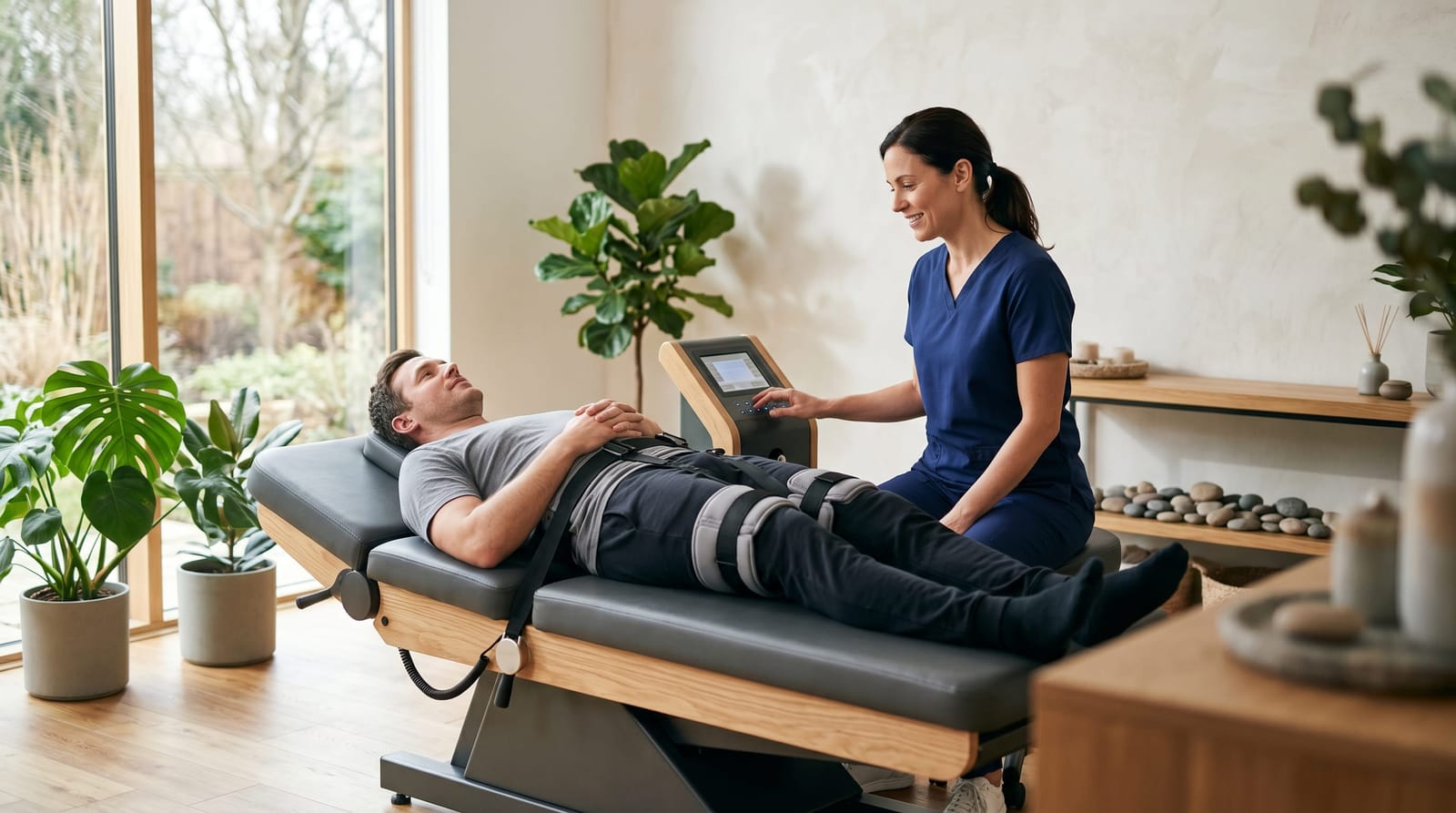
Spinal decompression therapy is one of the most advanced non-surgical options available for disc problems. It works by gently stretching the spine in a controlled, computerized manner. This creates negative intradiscal pressure, essentially a gentle vacuum effect, that can help retract herniated or bulging disc material and promote nutrient-rich fluid flow back into the disc.
At Prodigy Chiro Care, we utilize advanced computerized spinal decompression technology that precisely controls the angle, force, and duration of each session. This level of precision allows for targeted decompression of specific spinal levels: something that cannot be replicated with manual traction alone.
A study published in the Journal of Neurological Research found that 86% of participants with herniated discs reported significant pain reduction following a course of spinal decompression therapy. While individual results vary, many patients in our West Los Angeles practice find that spinal decompression offers meaningful relief when other conservative approaches have fallen short.
Physical Rehabilitation and Exercise
Targeted movement and rehabilitation exercises play an essential role in disc recovery. Specific exercises can strengthen the muscles that support the spine, improve flexibility, and reduce pressure on affected discs. However, not all exercises are appropriate for all disc conditions: some movements can temporarily aggravate symptoms.
Working with a knowledgeable provider to identify the right exercises for your specific disc level and symptom pattern is important. The goal is gradual, progressive rehabilitation rather than aggressive or high-impact training during an active flare.
Lifestyle and Postural Support
Small but consistent lifestyle adjustments can meaningfully support disc health. These include ergonomic workplace setup, mindful body mechanics during lifting and bending, maintaining a healthy weight to reduce spinal load, and prioritizing quality sleep with a supportive mattress. These are not glamorous interventions, but they are reliable ones.
Other Supportive Therapies
Additional modalities such as massage therapy, heat and cold application, and soft tissue work can complement a core care plan. These therapies help manage muscle tension around the affected disc, support circulation, and improve overall comfort during recovery.
Recovery From Disc Problems: What a Realistic Timeline Looks Like
One of the most common questions people have about the herniated disc vs bulging disc experience is: how long will this take to get better? The honest answer is that recovery timelines vary, and several factors influence them.
Factors That Influence Recovery
Recovery speed and outcomes are shaped by factors including:
- The type and severity of disc change (bulge vs. herniation vs. extrusion)
- Which spinal level is involved
- Whether nerve compression is present and to what degree
- The individual's overall health, activity level, and age
- How consistently care recommendations are followed
- Timing: earlier intervention is generally associated with better outcomes
General Recovery Expectations
Bulging discs often respond more quickly to conservative care than herniations, particularly when caught early. Many people with mild to moderate bulges notice meaningful improvement within 4 to 8 weeks of consistent care.
Herniated discs typically require more time. Research suggests that the body can naturally reabsorb herniated disc material over months. Studies have shown that 76% to 96% of lumbar disc herniations show at least partial reabsorption on follow-up MRI over a 12-month period: a remarkable demonstration of the body's capacity for healing.
It is worth noting that symptom improvement often outpaces structural resolution. Many people feel significantly better well before the disc has fully remodeled. This is why focusing on how you feel and function, rather than chasing a "perfect" MRI, is a more practical and encouraging measure of progress.
The care approach matters considerably. Patients who combine spinal decompression with chiropractic care, rehabilitation exercises, and consistent lifestyle support typically experience more reliable and lasting improvement than those relying on rest alone.
Managing Daily Life With a Herniated or Bulging Disc
Living with a disc problem does not mean putting your life on hold. With the right strategies, most people can continue working, staying active, and enjoying meaningful daily activities, even during recovery.
At Work
Prolonged sitting is one of the most common aggravating factors for lumbar disc problems. Research shows that intradiscal pressure is actually higher during sitting than standing or walking. If you work at a desk, taking brief movement breaks every 30 to 45 minutes can help reduce sustained disc pressure. An ergonomic chair with lumbar support, a monitor positioned at eye level, and a keyboard at elbow height all contribute to a spine-friendly workspace.
For those with physically demanding jobs, proper lifting mechanics are essential. Bending at the hips and knees, rather than rounding the lower back, significantly reduces disc load during lifting tasks.
During Exercise and Movement
Staying gently active supports recovery better than bed rest in most cases. Walking, swimming, and gentle stretching are typically well-tolerated even during acute disc flares. High-impact activities, heavy lifting, and deep forward-bending movements may need to be temporarily modified depending on your specific situation.
The goal is not to stop moving: it is to move wisely. Building a gradual return to full activity with guidance from your care provider leads to better long-term outcomes than either complete rest or pushing through significant pain.
Sleep and Rest Positions
Sleep quality matters significantly during disc recovery. Many people find that sleeping on their side with a pillow between the knees reduces lumbar stress. Back sleepers may benefit from a pillow under the knees. Sleeping on the stomach is generally less ideal for disc problems because it increases lumbar extension. A medium-firm mattress tends to offer the best combination of support and pressure relief for most people.
Advanced Spinal Decompression at Prodigy Chiro Care in West Los Angeles
For patients in the West Los Angeles area managing herniated or bulging disc discomfort, Prodigy Chiro Care offers a comprehensive, patient-centered approach built around advanced non-surgical technology.
Our computerized spinal decompression system is a key differentiator in how we address disc problems. Unlike older mechanical traction devices, our technology uses real-time feedback to adjust treatment parameters throughout each session. The system responds to muscle resistance, ensuring that each decompression cycle maintains the precise therapeutic range needed to gently reduce disc pressure without triggering protective muscle guarding.
This matters because the effectiveness of spinal decompression depends heavily on precision. The angle of pull, the amount of force, the cycling pattern, and the session duration all influence outcomes. Our computerized system allows us to customize all of these variables to your unique anatomy and disc level, whether you are dealing with a lumbar herniation at L4-L5, a cervical bulge, or a more complex multi-level presentation.
Spinal decompression at Prodigy Chiro Care does not exist in isolation. We integrate it with chiropractic adjustments, rehabilitation guidance, and ongoing patient education to support lasting improvement. Our approach is collaborative: we explain what we are doing and why, answer your questions, and adjust your plan as your condition evolves.
Patients come to us from throughout the West Los Angeles area, including families dealing with new disc diagnoses and individuals who have struggled with disc discomfort for years without finding satisfying relief. Our focus is always on helping each person improve their quality of life, reduce discomfort, and build a healthier relationship with their spine over the long term.
Deep Dive: Explore More About Disc Recovery and Management
This guide provides a strong foundation for understanding the herniated disc vs bulging disc distinction. But every aspect of living with and recovering from disc problems deserves its own focused exploration. The following resources dive deeper into specific topics within this cluster.
Recovery Timelines
If you are wondering how long your symptoms might last and what factors influence that timeline, our detailed breakdown of how long herniated disc pain last explores recovery expectations across different care approaches, from conservative self-management to structured chiropractic programs.
Staying Active While Managing a Disc Problem
Work, daily responsibilities, and life do not pause because of a disc issue. Our guide on working with herniated disc conditions offers practical strategies for protecting your spine at the office, during physical activity, and throughout daily routines without putting your recovery at risk.
Exercise: What Helps vs. What Hurts
Movement is medicine, but only the right movement. Understanding the best exercises herniated disc patients can safely perform (and which ones to temporarily avoid) is one of the most practical things you can do to support your recovery and prevent re-injury.
L4-L5 Disc Problems Specifically
The L4-L5 spinal level is the most commonly affected disc location for lumbar problems. If you have been told you have an issue at this specific level, our focused guide on L4 L5 herniated disc treatment covers what this diagnosis means, what symptoms to expect, and which care approaches are most relevant.
Can a Disc Heal Without Surgery?
This is the question most people with a disc diagnosis want answered. Our evidence-based exploration of whether a herniated disc heal without surgery is possible reviews the research honestly and explains the conditions under which non-surgical recovery is realistic and well-supported by clinical evidence.
Moving Forward: You Have More Options Than You Think
Understanding the difference between a herniated disc vs bulging disc is the first step toward making confident, informed decisions about your spine health. Both conditions are real, both can be uncomfortable, and both respond well to thoughtful, non-surgical care in the majority of cases.
The key takeaways from this guide are straightforward. A bulging disc involves an intact but outwardly extended disc. A herniated disc involves a tear with material escaping the outer layer. Symptoms differ in character and intensity. And for both conditions, recovery without surgery is not just possible: it is the norm for most patients.
Modern non-surgical approaches, particularly advanced computerized spinal decompression combined with chiropractic care and rehabilitation, give patients in the West Los Angeles area access to effective, personalized support without hospital visits or lengthy downtime.
If you are living with disc-related discomfort and want to explore what a targeted, patient-centered approach might look like for your specific situation, Prodigy Chiro Care is here to help. Our team is committed to providing thorough evaluations, clear explanations, and compassionate care focused on helping you feel better and move better over the long term.
Ready to take the next step? Contact Prodigy Chiro Care in West Los Angeles today to schedule a consultation and learn whether our advanced spinal decompression program may be a fit for your recovery journey.