Custom Orthotics and Posture: How Foot Alignment Affects Your Entire Spine
When most professionals think about improving their posture, they focus on their shoulders, neck, or lower back: rarely their feet. But your feet are the literal foundation of your entire body, and when that foundation is even slightly off, the effects travel upward through every joint and muscle in your spine. If you've been exploring posture correction as part of your broader spinal health strategy, understanding how custom orthotics fix posture from the ground up is one of the most practical pieces of the puzzle. This post breaks down the biomechanics, the benefits, and what to realistically expect.
The Kinetic Chain: Why Your Feet Control Your Spine
Your body functions as one connected system: what movement specialists call the kinetic chain. Every joint, from your ankles to your skull, influences the joints above and below it. When your feet are properly aligned, the chain moves efficiently. When they're not, compensations ripple upward.
Consider overpronation: a common condition where the arch of the foot collapses inward during standing or walking. Research suggests that overpronation affects approximately 20 to 30 percent of the general population, and among office professionals who spend hours seated and then standing in hard-floored environments, that number trends higher. When the arch collapses, the ankle rolls inward, which causes the tibia (shin bone) to rotate internally. That rotation shifts the knee inward, tilts the pelvis forward, compresses the lumbar vertebrae, and ultimately pushes the head forward: contributing to the exact tech neck and rounded-shoulder posture that's so common in West Los Angeles desk workers.
This isn't a minor mechanical detail. Studies show that even a 3-degree change in foot alignment can alter hip and lumbar loading patterns measurably. That's why addressing posture from the feet up, rather than only from the spine down, produces more complete, lasting results.
What Custom Orthotics Actually Do (and Why Generic Insoles Fall Short)
A custom orthotic is a precision-crafted support device made from a detailed scan or mold of your specific foot. It is not the gel insert you find at a pharmacy. The difference matters significantly when the goal is to custom orthotics fix posture imbalances rather than simply cushion an achy heel.
Generic insoles are manufactured to average foot shapes and provide generalized cushioning. Custom orthotics, by contrast, are designed to:
- Correct your individual structural imbalances, including supination, overpronation, or leg-length discrepancies
- Redistribute pressure evenly across the entire foot surface
- Provide targeted support under the arch, heel, and forefoot based on your gait pattern
- Reduce compensatory tension in the calves, hamstrings, and hip flexors
A 2018 clinical study published in the Journal of Physical Therapy Science found that participants using custom foot orthotics showed significant improvements in static postural alignment after just 8 weeks of consistent use compared to a control group. Separately, research from the Journal of the American Podiatric Medical Association found that custom orthotics reduced lower back discomfort in 68 percent of participants who had no prior spinal treatment: a compelling indicator of how directly foot alignment influences spinal comfort.
How Custom Orthotics Support a Complete Posture Correction Program
Custom orthotics are most effective when they're integrated into a broader posture correction plan rather than used in isolation. Think of them as one essential layer of a multi-layered approach.
Here's how that integration typically works in a chiropractic-guided program:
- Postural assessment: A thorough evaluation identifies where misalignments are occurring in the kinetic chain: feet, pelvis, thoracic spine, cervical spine, and head position.
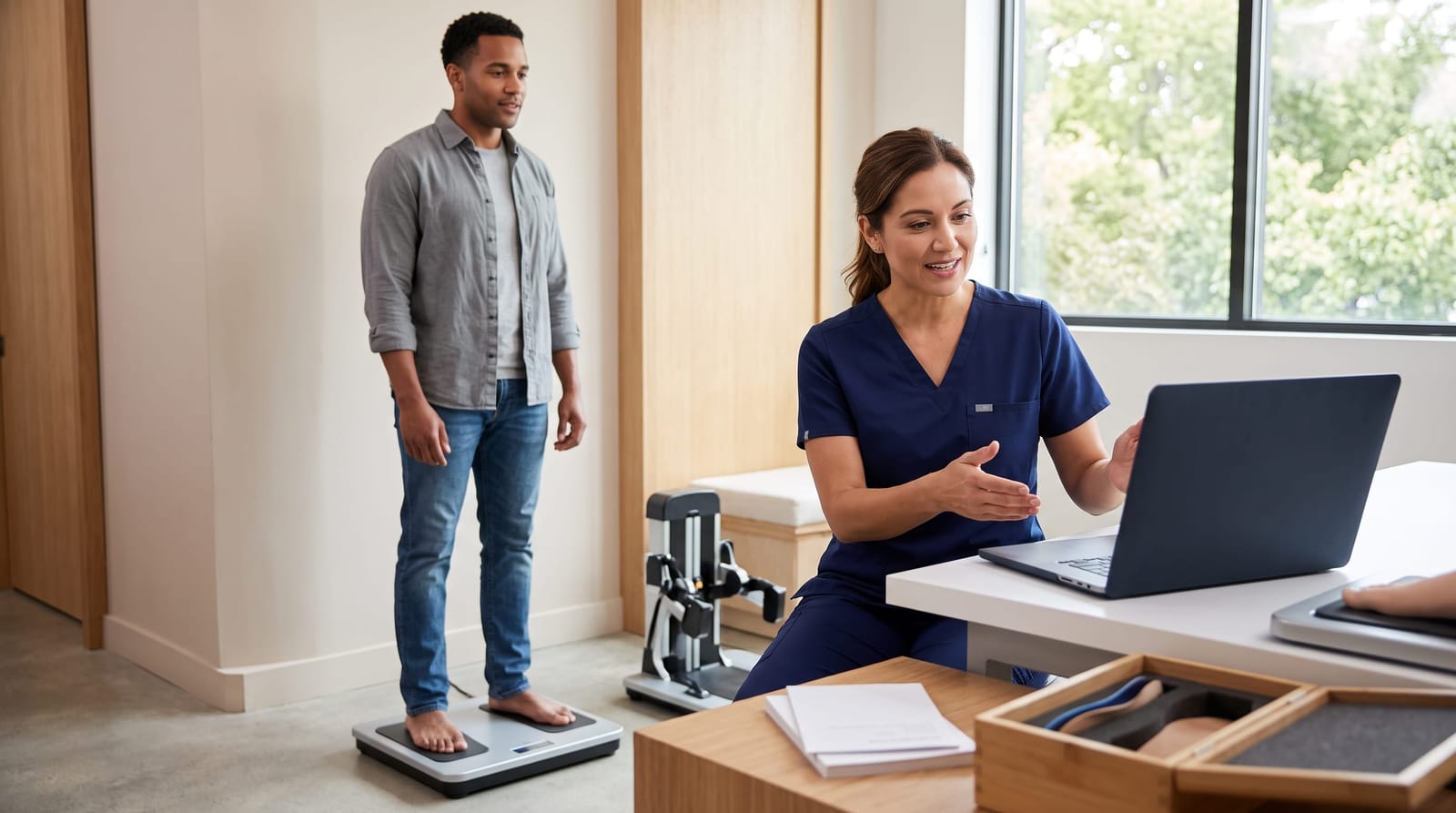
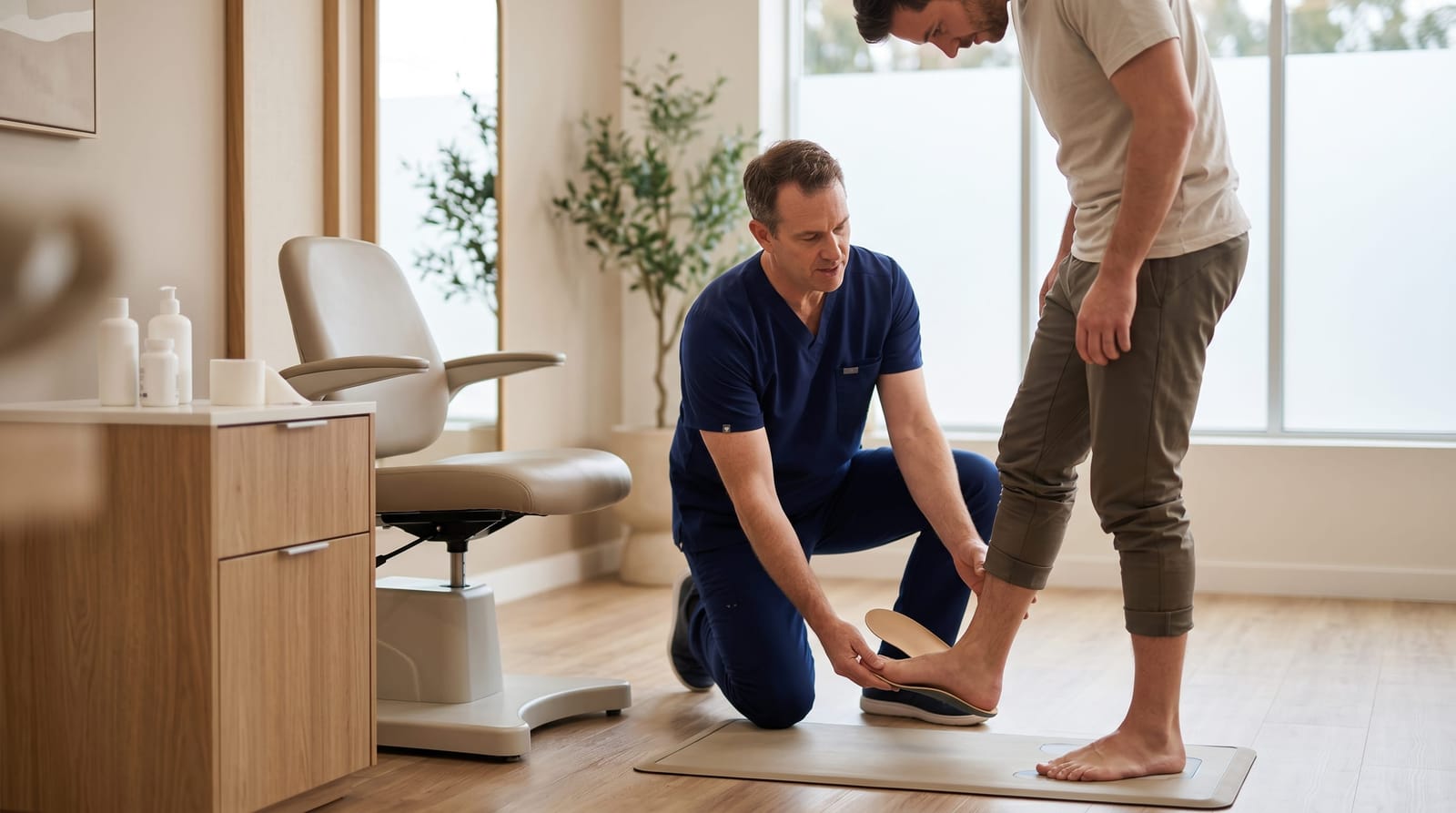
- Foot scan and orthotic fitting: A 3D scan or plaster mold captures your foot's unique contours, and orthotics are fabricated to address your specific imbalances.
- Chiropractic adjustments: Spinal manipulation addresses the joints and vertebral segments that have been compensating for poor foot alignment over time, restoring mobility and reducing tension.
- Postural rehabilitation exercises: Targeted exercises strengthen the muscles that support improved alignment: particularly the core, glutes, and posterior chain.
- Ergonomic modifications: Desk setup, footwear, and movement habits are reviewed to support the structural corrections being made.
If you're curious about the overall timeline for this kind of program, how many chiropractic visits postural correction takes depends on the severity of the imbalances, but most professionals begin noticing meaningful changes within 4 to 8 weeks of consistent care and orthotic use.
Specific Postural Benefits Professionals Notice with Custom Orthotics
For professionals spending 8 or more hours per day at a desk, the postural benefits of well-fitted custom orthotics tend to show up in several interconnected ways:
Reduced Lower Back Fatigue
When the feet are properly supported, the pelvis sits in a more neutral position. This reduces the anterior pelvic tilt that's extremely common in people who sit for long periods, which in turn reduces the excessive lumbar curve that strains the lower back muscles and discs throughout the day.
Improved Standing and Walking Posture
Many professionals notice that after wearing custom orthotics consistently, they stand taller and more naturally without consciously trying. This happens because the corrected foot alignment reduces the compensatory muscle tension that was pulling the body out of balance.
Less Tension in the Neck and Shoulders
This connection surprises many patients. But when the lumbar spine is stacked more efficiently, the thoracic and cervical spine follow. Forward head posture, which adds an estimated 10 pounds of load to the cervical spine for every inch the head moves forward, often improves when the foundation supporting the entire spine becomes more stable.
Better Balance and Reduced Fatigue
Postural compensation is energetically expensive. Your muscles work harder to maintain upright balance when your foundation is uneven. Custom orthotics reduce the constant micro-corrections your body makes throughout the day, which translates to noticeably less physical fatigue by the end of a long workday.
Frequently Asked Questions
Can custom orthotics really fix posture, or do they just help with foot pain?
Custom orthotics do far more than address foot discomfort. Because of the kinetic chain connection between your feet and your spine, correcting foot alignment directly influences how your ankles, knees, hips, and lower back function. When used as part of a comprehensive posture correction program that includes chiropractic care and targeted exercise, custom orthotics fix posture imbalances by giving the entire body a more stable and properly aligned foundation to work from.
How long does it take to see postural changes from custom orthotics?
Most people begin to notice improved comfort and balance within the first 2 to 4 weeks of consistent wear. Meaningful postural changes, reduced forward head position, less lower back tension, improved standing alignment, typically become more apparent between 6 and 12 weeks, especially when orthotics are combined with chiropractic adjustments and postural rehabilitation. The more long-standing the imbalance, the more gradual the correction.
Are custom orthotics worth it compared to store-bought insoles?
For general comfort, store-bought insoles may provide temporary relief. But if the goal is to genuinely correct postural imbalances throughout the kinetic chain, custom orthotics are significantly more effective because they're built specifically for your foot structure and gait pattern. Generic insoles are designed for average feet, not yours. For professionals dealing with recurring lower back discomfort, knee tension, or chronic postural issues, custom orthotics represent a meaningful long-term investment in spinal health.
Do I need to see a chiropractor to get custom orthotics?
While custom orthotics can be obtained through various healthcare providers, getting them through a chiropractic practice that also performs a full postural and spinal assessment ensures that the orthotics are designed as part of a coordinated care plan. A chiropractor can assess not just your feet, but how foot imbalances are affecting your entire kinetic chain, and create a program that addresses all the contributing factors together.
Building Posture Correction from the Ground Up
For professionals in West Los Angeles managing the physical demands of long workdays, custom orthotics are one of the most underappreciated tools in a complete posture correction strategy. By stabilizing the foundation of your kinetic chain, they support better alignment from your feet all the way to your cervical spine: reducing the compensatory strain that builds up over years of sedentary work. When integrated with chiropractic care, targeted exercise, and ergonomic awareness, custom orthotics help create the kind of durable structural improvement that keeps you comfortable, mobile, and performing at your best.