Conditions Treated with Spinal Decompression: From Herniated Discs to Sciatica
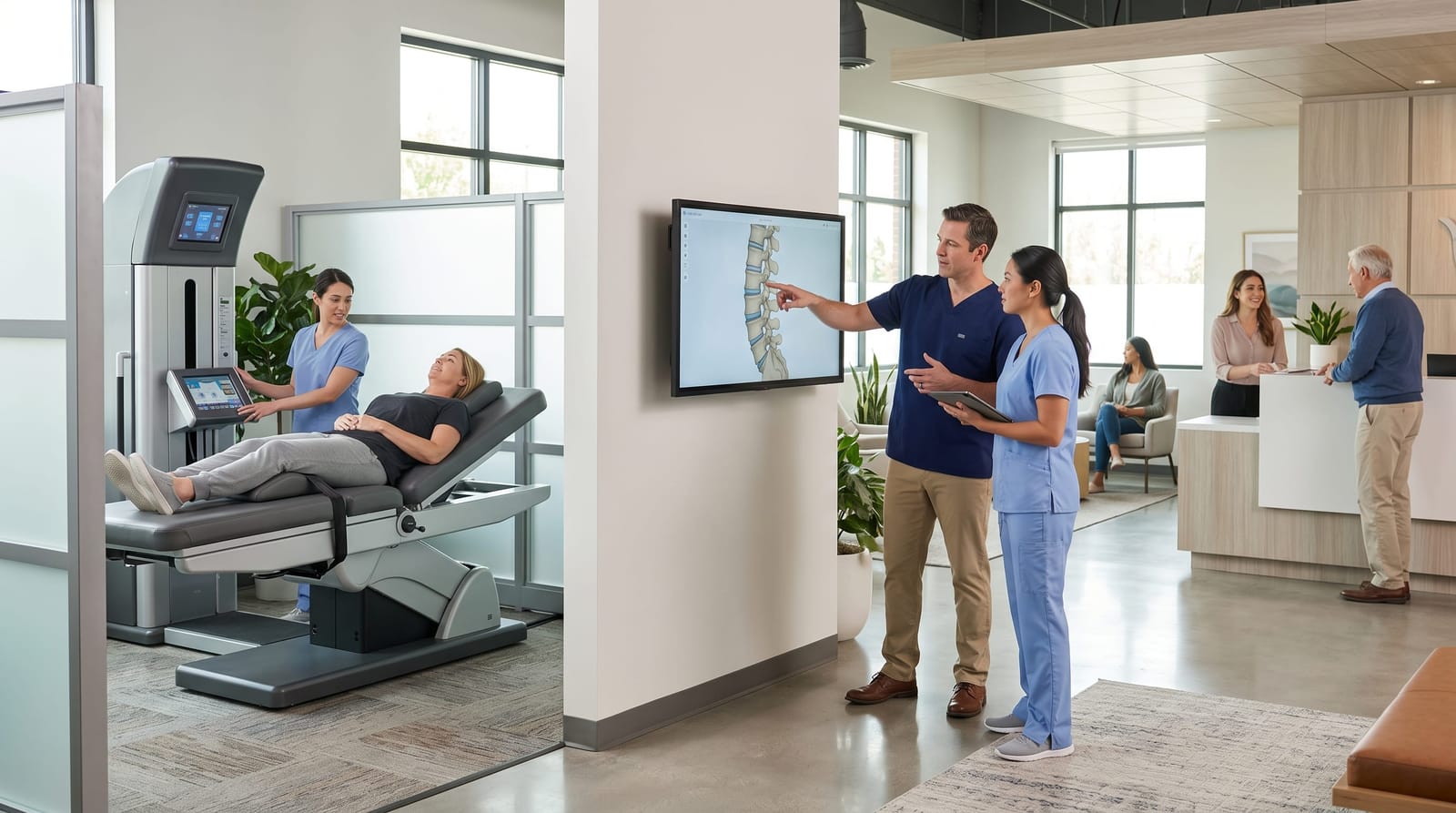
Chronic back pain affects over 65 million Americans every year. For many, it becomes a daily battle that limits work, sleep, and everyday activities. Understanding your treatment options is the first step toward real relief. Spinal decompression conditions treated through non-surgical therapy span a wide range of serious spinal disorders. At Prodigy Chiro Care & Spinal Decompression, our clinical team has helped hundreds of patients avoid surgery and reclaim their quality of life. This guide covers the most common spinal decompression conditions treated, how the therapy works for each one, and what outcomes patients can realistically expect.
What Is Spinal Decompression Therapy and Which Conditions Does It Treat?
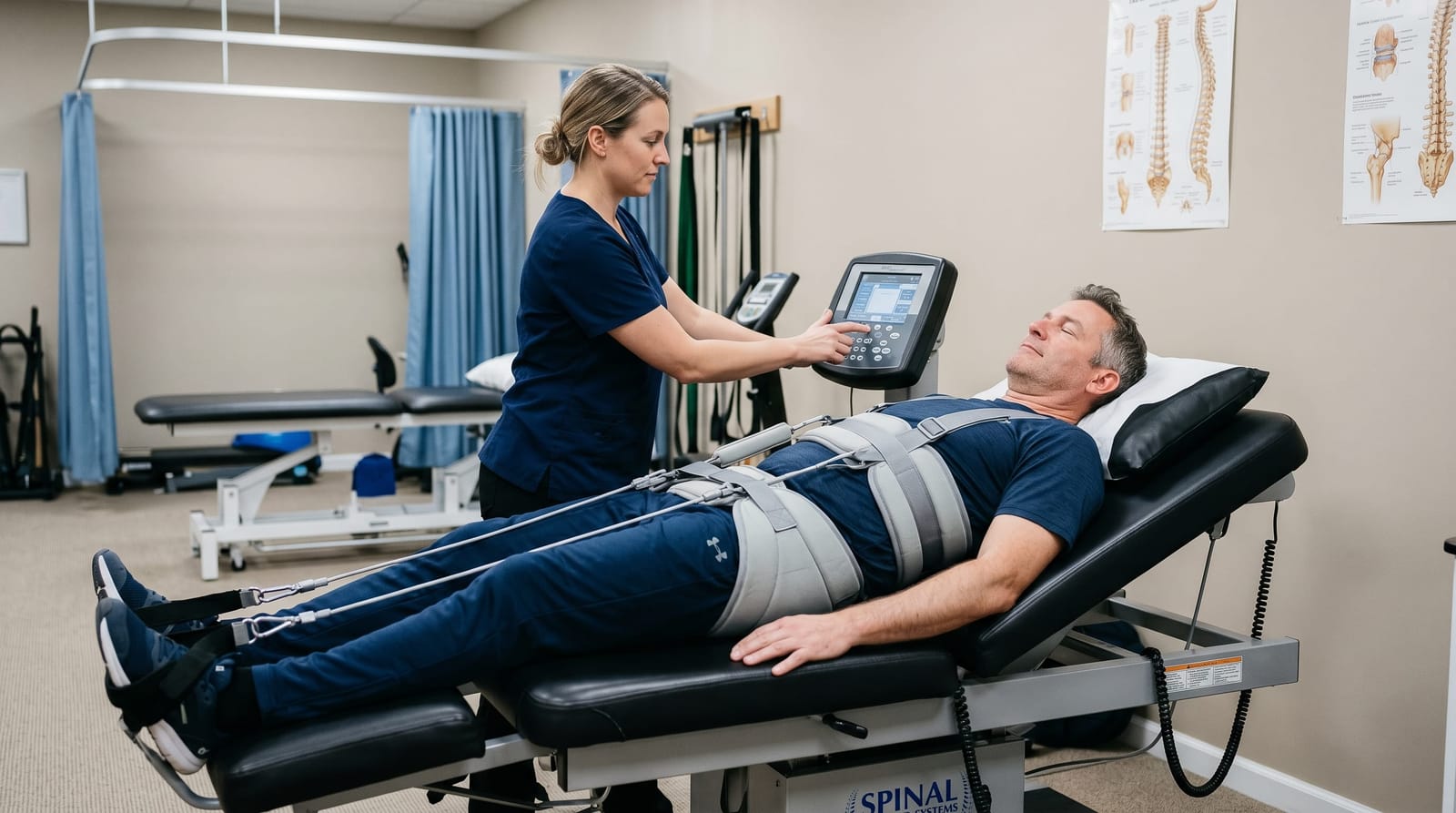
Spinal decompression is a computer-guided, non-surgical treatment. It gently stretches the spine using a motorized traction table. This stretching creates negative pressure inside spinal discs. That negative pressure draws herniated material back inward, improves nutrient flow, and reduces nerve compression. The result is measurable relief for a broad range of spinal conditions.
The spinal decompression conditions treated through this method include some of the most common and debilitating diagnoses in modern healthcare. These include herniated discs, bulging discs, sciatica, degenerative disc disease, spinal stenosis, and facet joint syndrome. Each condition responds differently to treatment. However, the core mechanism remains the same: reduce pressure, restore disc health, and relieve nerve irritation.
At Prodigy Chiro Care & Spinal Decompression, every patient receives a thorough evaluation before beginning care. Our doctors use digital X-rays, orthopedic testing, and detailed health histories to confirm which spinal decompression conditions treated through our protocols are the right fit for each individual. This personalized approach consistently produces better outcomes than one-size-fits-all treatment plans.
Herniated and Bulging Discs: The Most Common Spinal Decompression Conditions Treated
Herniated and bulging discs are the most frequently seen spinal decompression conditions treated in clinical settings. Studies estimate that disc herniations affect roughly 2% of adults annually. Many cases go undiagnosed because symptoms vary widely. Some patients experience severe radiating pain. Others feel only a dull ache or localized stiffness.
A herniated disc occurs when the soft inner nucleus of a spinal disc pushes through its tougher outer ring. A bulging disc, by contrast, remains intact but expands beyond its normal boundary. Both conditions compress nearby nerve roots and cause pain, numbness, tingling, or weakness in the arms or legs.
How Decompression Therapy Heals Disc Injuries
Spinal decompression creates negative intradiscal pressure ranging from -150 to -200 mmHg during each treatment session. This vacuum effect encourages herniated disc material to retract away from irritated nerves. It also promotes the re-absorption of fluids, oxygen, and nutrients into the damaged disc.
The key therapeutic mechanisms include:
- Reduction of intradiscal pressure by 40-50% during active traction cycles
- Increased disc hydration through improved nutrient diffusion
- Gradual retraction of herniated disc material away from nerve roots
- Enhanced oxygen delivery to accelerate tissue repair
- Reduced inflammation in surrounding soft tissues
- Improved structural support from strengthened paraspinal muscles
Clinical research published in peer-reviewed journals shows that 86% of herniated disc patients report significant pain reduction after completing a full course of spinal decompression therapy. At Prodigy Chiro Care & Spinal Decompression, our outcomes mirror this data. Most disc patients notice measurable improvement within the first two to three weeks of care.
Cervical Disc Herniations: A Frequently Overlooked Condition
Most people associate disc problems with the lower back. However, cervical disc herniations in the neck are equally serious. They can cause pain that radiates into the shoulders, arms, and hands. Numbness and grip weakness are common complaints. Spinal decompression conditions treated in the cervical spine follow the same decompression principles, using specialized cervical traction protocols that gently separate the vertebrae of the neck.
Cervical decompression is performed in a reclined position. Precise angle settings target the specific disc levels identified during evaluation. Patients at Prodigy Chiro Care & Spinal Decompression who receive cervical decompression frequently report reduced headaches, improved arm strength, and significant relief from radiating nerve pain within four to six weeks.
Sciatica: Relieving the Spine's Most Painful Nerve Condition
Sciatica affects approximately 40% of adults at some point in their lives. It is one of the most disabling spinal decompression conditions treated in outpatient clinics. The sciatic nerve is the body's largest nerve. It extends from the lower lumbar spine, through the buttocks, and down each leg. When this nerve becomes compressed or irritated, the resulting pain can be sharp, burning, or electric in quality.
Many patients describe sciatica as worse than the back pain itself. Walking, sitting, and sleeping all become difficult. Over-the-counter medications offer temporary relief at best. Spinal decompression addresses the source of the compression rather than masking symptoms.
Targeting the Root Cause of Sciatic Nerve Pain
The sciatic nerve is most commonly irritated by a herniated disc at L4-L5 or L5-S1. It can also be compressed by bone spurs, inflamed joints, or tight piriformis muscles. Spinal decompression addresses all of these contributing factors simultaneously.
The treatment works by:
- Increasing the diameter of neural foramina (nerve exit openings) by 15-20% during decompression
- Reducing disc bulging that presses against the sciatic nerve root
- Decreasing inflammation in the epidural space surrounding the nerve
- Relieving muscle spasms that further compress the nerve pathway
- Restoring proper spinal alignment to prevent recurring compression
Research indicates that 78% of sciatica patients experience substantial improvement within four to six weeks of beginning spinal decompression therapy. At Prodigy Chiro Care & Spinal Decompression, our doctors also incorporate soft tissue therapy and rehabilitative exercises alongside decompression. This multi-modal approach produces faster and more durable results than decompression alone.
Degenerative Disc Disease: Managing Age-Related Spinal Changes
Degenerative disc disease (DDD) affects over 30 million Americans annually. It is one of the most complex spinal decompression conditions treated in modern chiropractic care. Despite the term "disease," DDD is not an illness. It is a natural aging process that accelerates in some individuals due to genetics, lifestyle, or prior injury.
Healthy spinal discs contain about 80% water in young adults. By age 60, that figure can drop to 70% or lower. This dehydration causes discs to flatten, lose elasticity, and transfer abnormal stress to the vertebrae and facet joints above and below. The result is chronic pain, stiffness, and reduced mobility that progressively worsens without treatment.
Spinal decompression is uniquely suited to treating DDD. It directly addresses disc dehydration by improving nutrient flow. No medication or traditional physical therapy can replicate this effect.
Restoring Disc Height and Hydration Through Decompression
One of the most clinically significant findings in spinal decompression research is measurable disc height restoration. Studies show that decompression therapy can restore disc height by an average of 1-3 millimeters per treated spinal level. This small but meaningful change dramatically reduces facet joint loading and associated pain.
Additional benefits for degenerative disc disease patients include:
- Disc hydration improvements of up to 25% over a full treatment course
- Reduced facet joint stress from improved spinal alignment
- Enhanced paraspinal muscle strength and endurance
- Decreased reliance on pain medications
- Improved postural mechanics to slow future degeneration
At Prodigy Chiro Care & Spinal Decompression, patients with degenerative disc disease also receive nutritional counseling focused on disc health. Collagen precursors, hydration habits, and anti-inflammatory dietary strategies all play a supporting role in treatment success. Our doctors treat the whole patient, not just the imaging findings.
Spinal Stenosis: Creating Space for Compressed Neural Structures
Spinal stenosis affects 8-11% of adults over age 50. It is a growing concern among the spinal decompression conditions treated in our aging population. The condition involves narrowing of the spinal canal or the small openings through which nerve roots exit. This narrowing compresses the spinal cord or individual nerve roots, causing symptoms that range from mild discomfort to significant neurological deficits.
Patients with spinal stenosis often describe a classic symptom pattern: pain or cramping in the legs that worsens with walking and improves with sitting or bending forward. This is called neurogenic claudication. It can severely limit activity tolerance and independence in older adults.
There are two primary types of stenosis that respond to decompression therapy:
- Central canal stenosis: Narrowing of the main spinal canal where the spinal cord travels
- Foraminal stenosis: Narrowing of the small openings where individual nerve roots exit the spine
How Decompression Therapy Opens the Spinal Canal
Spinal decompression creates measurable changes in canal dimensions. Research confirms central canal diameter increases of 12-18% during active treatment sessions. Foraminal area expansion of up to 20% has been documented in treated spinal segments. These changes reduce direct nerve compression and allow inflamed tissues to heal.
For patients with mild to moderate stenosis, spinal decompression therapy produces success rates of approximately 71%. Many patients report significant improvements in walking distance, leg strength, and daily function. These results are achieved without the risks and recovery time associated with surgical decompression procedures like laminectomy.
Prodigy Chiro Care & Spinal Decompression treats many stenosis patients who were told surgery was their only option. Our clinical team carefully screens each case to identify which patients are suitable candidates for non-surgical decompression. Not every stenosis case qualifies, but those who do frequently achieve outcomes that exceed their expectations.
Facet Joint Syndrome and Posterior Joint Pain
Facet joint syndrome is a commonly overlooked entry on the list of spinal decompression conditions treated in chiropractic practice. The facet joints are small paired joints located at the back of each vertebral segment. They guide and limit spinal movement. When these joints become arthritic, inflamed, or injured, they generate localized pain that can refer into the buttocks, hips, or thighs.
Facet syndrome often develops alongside disc degeneration. As discs lose height, facet joints bear greater mechanical loads. This accelerates cartilage breakdown and joint inflammation. Spinal decompression reduces facet joint stress by restoring disc height and redistributing mechanical load more evenly across the spinal segment.
Patients with facet joint pain often experience:
- Stiffness and pain after prolonged sitting or standing
- Pain that worsens with spinal extension or rotation
- Localized tenderness over the affected joint levels
- Referred pain into the buttocks or upper thighs
- Morning stiffness that gradually improves with movement
Combining spinal decompression with chiropractic adjustments and soft tissue therapy produces excellent results for facet syndrome. The decompression addresses the underlying disc and joint loading issues. The adjustments restore proper joint motion. Together, they address the full picture of posterior joint pain.
Failed Back Surgery Syndrome: A Difficult Condition with Non-Surgical Solutions
Failed back surgery syndrome (FBSS) affects 10-40% of patients who undergo spinal surgery. It is one of the most challenging spinal decompression conditions treated in any clinical setting. FBSS involves persistent or recurrent pain following surgery. Contributing causes include scar tissue formation, adjacent segment degeneration, incomplete resolution of the original problem, or surgical complications.
For FBSS patients, additional surgery carries significant risks and often produces diminishing returns. Non-surgical spinal decompression offers a safer alternative with meaningful clinical benefits.
Specific advantages of decompression for post-surgical patients include:
- Gentle mobilization that avoids disruption of previous surgical sites
- Reduction of scar tissue adhesions through controlled, rhythmic traction
- Improved health of adjacent spinal segments that bear increased load after fusion
- Pain relief without the risks of anesthesia or additional surgical complications
- Enhanced spinal stability through progressive rehabilitative exercise integration
At Prodigy Chiro Care & Spinal Decompression, we approach failed back surgery cases with particular care. Every FBSS patient undergoes a comprehensive review of their surgical history and imaging before any treatment begins. Our doctors collaborate with the patient's surgical team when appropriate to ensure safe, coordinated care.
Pinched Nerves and Radiculopathy: Directional Relief for Radiating Pain
Pinched nerves and cervical or lumbar radiculopathy are among the most painful spinal decompression conditions treated through traction-based therapy. Radiculopathy occurs when a spinal nerve root is compressed or chemically irritated at the point where it exits the spinal canal. The pain, numbness, and weakness that follow can radiate far from the actual compression site.
Lumbar radiculopathy typically causes symptoms in the legs and feet. Cervical radiculopathy affects the shoulders, arms, and hands. Both conditions can be severely disabling and are frequently misdiagnosed or undertreated.
Spinal decompression relieves radiculopathy by:
- Directly reducing mechanical compression at the nerve root exit point
- Decreasing disc protrusion that narrows the neural foramen
- Lowering inflammatory chemical concentrations around the irritated nerve
- Restoring normal fluid dynamics within the spinal canal
- Improving nerve conduction velocity as compression is reduced over time
Research shows that nerve conduction measurements improve significantly in radiculopathy patients after completing spinal decompression therapy. This is an objective, measurable outcome that goes beyond subjective pain reports. It confirms that the therapy is creating genuine neurological change, not just temporary symptom relief.
Treatment Success Rates Across All Spinal Decompression Conditions Treated
One of the most compelling reasons to consider spinal decompression therapy is its consistently strong clinical outcomes across multiple diagnoses. Understanding the evidence helps patients and clinicians make informed, confident treatment decisions.
Published clinical data on spinal decompression conditions treated shows the following success rates:
- Herniated discs: 86% of patients report significant pain reduction after a full treatment course
- Sciatica and radiculopathy: 78% of patients show substantial improvement within four to six weeks
- Spinal stenosis: 71% success rate for mild to moderate cases
- Degenerative disc disease: Significant functional improvement in the majority of compliant patients
- Failed back surgery syndrome: Meaningful pain reduction in cases where conservative care has been properly applied
Long-term follow-up studies are equally encouraging. Approximately 68% of spinal decompression patients maintain significant clinical improvement at a two-year follow-up. This durability is particularly meaningful because most decompression candidates have already tried and failed multiple conservative treatments before pursuing this option.
Factors that predict the best outcomes include early intervention, full compliance with the recommended treatment schedule, integration of home exercise programs, and adoption of ergonomic and lifestyle modifications. At Prodigy Chiro Care & Spinal Decompression, we educate every patient on these factors from the very first visit.
Who Is Not a Candidate for Spinal Decompression Therapy?
Responsible clinical practice requires honest communication about which spinal decompression conditions treated through traction-based therapy are appropriate. Not every patient with back pain is a candidate. Clear contraindications exist and must be screened carefully.
Patients who should not receive spinal decompression include:
- Those with fractures or instability in the treated spinal region
- Patients with spinal tumors or metastatic cancer affecting the spine
- Individuals with severe osteoporosis that increases fracture risk
- Patients with aortic aneurysm or advanced vascular disease
- Those who are pregnant
- Patients with fusion hardware at the levels being treated in some configurations
- Individuals with cauda equina syndrome requiring emergency surgical intervention
At Prodigy Chiro Care & Spinal Decompression, every new patient undergoes a comprehensive pre-treatment evaluation. This includes a thorough health history, orthopedic examination, neurological screening, and review of any available imaging. We will never recommend treatment that is not appropriate for your specific condition. If decompression is not the right fit, we will refer you to the appropriate specialist.
What to Expect During Your Spinal Decompression Treatment Plan
Understanding the treatment process helps patients commit to their care plan with confidence. Most spinal decompression conditions treated through our protocols require 12 to 24 sessions over four to eight weeks. Session frequency typically begins at three to five visits per week and tapers as the patient improves.
Each session lasts approximately 30 to 45 minutes. The patient lies on a computer-controlled traction table. Harnesses are fitted around the pelvis and trunk for lumbar cases, or a gentle cervical cradle is used for neck cases. The computer then cycles through alternating periods of distraction and relaxation, following a protocol customized to the patient's diagnosis and tolerance.
Most patients describe the experience as comfortable and even relaxing. Some report mild soreness after the first few sessions, similar to what occurs after beginning a new exercise program. This is normal and typically resolves quickly. Dramatic improvement is common within the first two to four weeks for most spinal decompression conditions treated at our clinic.
After completing the active treatment phase, patients transition to a maintenance and prevention program. This includes periodic decompression sessions, home stretching and strengthening exercises, ergonomic training, and follow-up evaluations. The goal is not just to eliminate current pain. It is to build lasting spinal resilience that prevents recurrence.
Conclusion: Spinal Decompression Conditions Treated at Prodigy Chiro Care
The range of spinal decompression conditions treated through modern traction-based therapy is broader than most patients realize. From herniated discs and sciatica to degenerative disc disease, spinal stenosis, facet syndrome, and failed back surgery syndrome, non-surgical decompression offers clinically proven relief for some of the most debilitating spinal disorders in existence.
With success rates exceeding 70-86% across major diagnostic categories and long-term durability confirmed at two-year follow-up, spinal decompression represents one of the most effective and safest alternatives to spinal surgery available today. The therapy addresses root causes, not just symptoms. It restores disc health, reduces nerve compression, and builds the structural foundation for lasting recovery.
At Prodigy Chiro Care & Spinal Decompression, our experienced clinical team is committed to delivering evidence-based, personalized care for every patient we serve. If you are experiencing persistent back pain, neck pain, or any of the spinal decompression conditions treated through our protocols, we encourage you to schedule a comprehensive evaluation. You deserve a treatment plan built around your specific diagnosis, your goals, and your life. Contact Prodigy Chiro Care & Spinal Decompression today to take the first step toward lasting spinal relief.