Cold Laser Therapy for Sciatica and Nerve Pain: What to Expect

If you've been dealing with the persistent ache, burning, or radiating discomfort that comes with sciatica, you're probably researching every option available before committing to a treatment plan. Cold laser therapy for sciatica is one approach that's gaining attention among patients looking for noninvasive, drug-free support, and for good reason. This post breaks down how this therapy works along the sciatic nerve pathway, what a typical protocol looks like in a chiropractic setting, and what kind of timeline you might reasonably expect on your path toward feeling better.
Understanding Sciatica and Why the Nerve Pathway Matters
Sciatica refers to discomfort that travels along the sciatic nerve, the longest nerve in the body, which runs from the lower back, through the hips and buttocks, and down each leg. When this nerve becomes irritated or compressed, the resulting sensations can range from a dull ache in the lower back to a sharp, electric feeling that travels all the way to the foot.
What makes sciatica particularly challenging to address is that the source of the irritation and the location where you feel it are often far apart. Inflammation near the nerve root in the lumbar spine, for example, can produce symptoms felt deep in the calf. That's why effective care typically needs to address the nerve pathway as a whole, not just the spot where discomfort is most noticeable.
According to some estimates, sciatica affects approximately 10-40% of the population at some point in their lifetime, making it one of the most common nerve-related complaints seen in chiropractic and rehabilitative care settings. Understanding the anatomy behind your symptoms is the first step toward making sense of how therapies like cold laser are designed to help.
How Cold Laser Therapy Works on Sciatic Nerve Inflammation
Cold laser therapy, also referred to as low-level laser therapy (LLLT), uses specific wavelengths of light, typically in the range of 600 to 1000 nanometers, to penetrate tissue and stimulate a cellular response. Unlike surgical lasers, cold laser devices do not generate heat that cuts or damages tissue. Instead, they deliver light energy at low intensity levels that cells can absorb and use.
At the cellular level, this light energy is thought to support the mitochondria: the energy-producing structures within cells, which may help accelerate the body's natural repair processes. In the context of nerve tissue, this is particularly relevant because nerve cells can be slow to recover when inflamed or under pressure.
When applied along the sciatic nerve pathway, cold laser therapy is used to:
- Help reduce localized inflammation around the nerve root and along the nerve tract
- Support circulation in the treated tissues, which may aid in clearing inflammatory byproducts
- Encourage the repair of irritated nerve fibers over time
- Promote a more comfortable environment for surrounding muscles to relax and recover
It's worth noting that cold laser therapy is an adjunct support tool, not a standalone cure. Results vary from person to person, and a qualified provider will evaluate your individual presentation before recommending a course of care. Always consult with a licensed healthcare professional to discuss whether this approach is appropriate for your specific situation.
What a Combined Decompression and Laser Protocol Looks Like
In many chiropractic and wellness settings, cold laser therapy for sciatica is not used in isolation. It is commonly paired with spinal decompression therapy: a gentle, traction-based approach that creates space between the vertebrae, helping to relieve pressure on the sciatic nerve root where the problem often originates.
A combined protocol might look something like this during a typical visit:
- Initial Assessment: The provider reviews your current symptoms, areas of discomfort, and any recent changes since your last visit.
- Spinal Decompression: You are positioned comfortably on a specialized table. A carefully calibrated system applies gentle, rhythmic traction to the lumbar spine, creating space between the vertebrae. Sessions typically last 15 to 20 minutes.
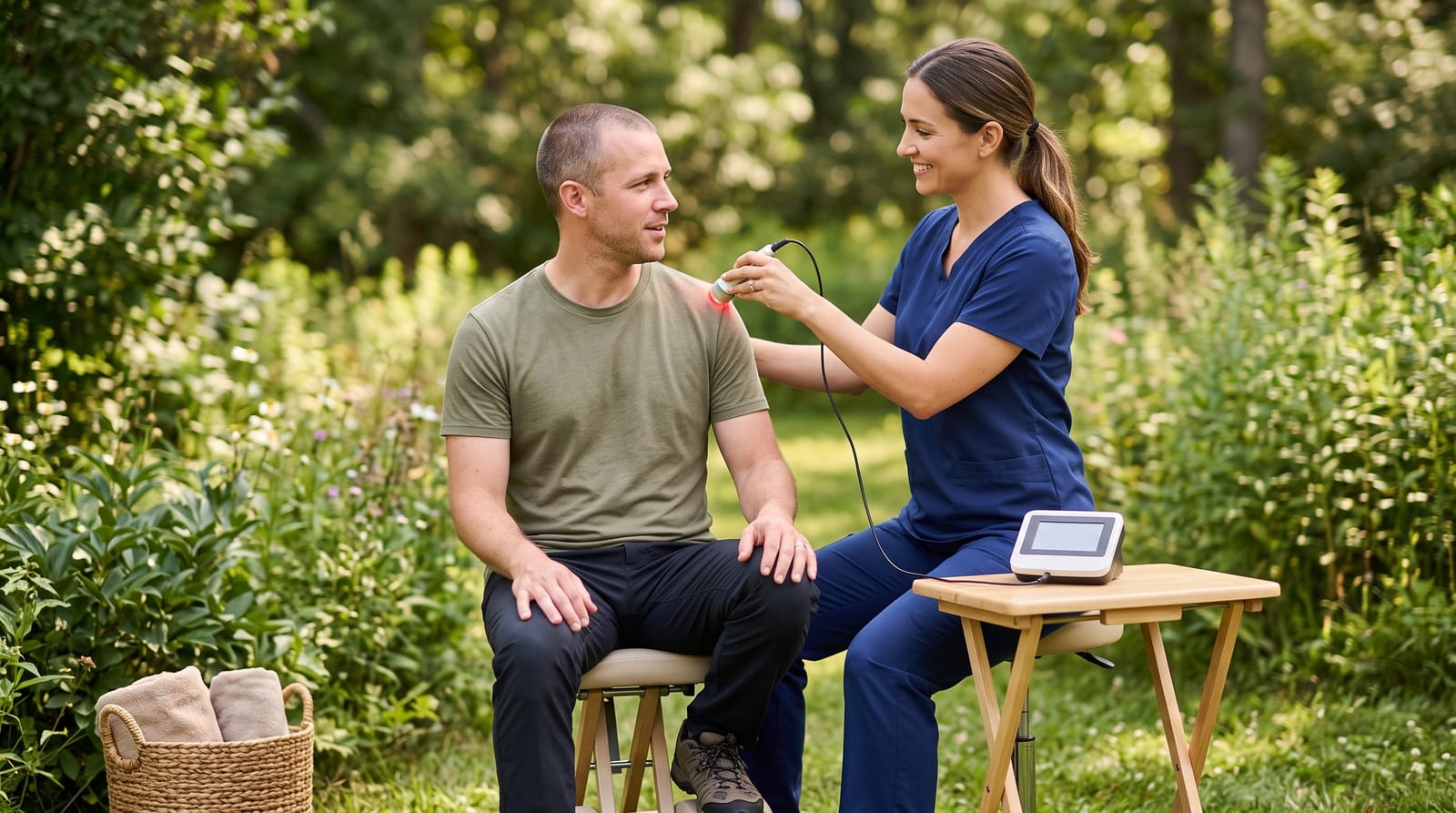
- Cold Laser Application: Following decompression, the provider applies the cold laser handpiece along key points of the sciatic nerve pathway, often starting at the lumbar region and moving toward the gluteal area and down the leg depending on where your symptoms radiate. A session generally lasts 5 to 15 minutes per targeted area.
- Soft Tissue or Rehabilitative Work: Some protocols include therapeutic exercises or soft tissue techniques to support the overall recovery process.
At Prodigy Chiro Care, the multi-treatment approach to sciatica is designed with this kind of layered support in mind: combining spinal care, laser therapy, and personalized rehabilitative guidance to address both the source of nerve irritation and the surrounding tissue environment.
What Timeline Can Patients Expect for Relief?
One of the most common questions patients ask is simply: "How long will this take?" It's a fair question, and the honest answer is that timelines vary based on how long symptoms have been present, the underlying cause of sciatic nerve irritation, and how consistently a patient is able to attend scheduled sessions.
That said, some general patterns are commonly reported in clinical settings:
- First 1-3 sessions: Some patients notice a mild reduction in the intensity of discomfort or a slight improvement in mobility. Others may not notice significant change yet: this is normal, particularly for longer-standing cases.
- Sessions 4-8: Many patients begin to report more consistent improvement, including reduced radiating sensations and improved ability to sit or walk comfortably.
- Sessions 9-12 and beyond: Cumulative effects tend to become more pronounced. Research on low-level laser therapy has suggested that a course of 8 to 12 sessions is often where meaningful functional improvements are observed for nerve-related conditions, though individual results vary.
Chronic sciatica, symptoms that have persisted for three months or longer, typically requires a longer course of care compared to more acute presentations. Your provider can give you a more personalized sense of what to expect after a thorough evaluation.
Is Cold Laser Therapy Safe for Nerve Pain?
Cold laser therapy has a strong safety profile for most patients. Because it is noninvasive and drug-free, it avoids many of the side effect concerns associated with other approaches. The most commonly reported responses are mild and temporary: occasional slight warmth or minor skin sensitivity at the treatment site, both of which typically resolve quickly.
There are a few situations where cold laser therapy is generally not recommended, including during pregnancy or over areas with active malignancy. A thorough intake process with your provider will identify any contraindications relevant to your health history. As with any therapeutic approach, this content is educational in nature: please consult a licensed healthcare professional to assess your individual circumstances before beginning any course of care.
Frequently Asked Questions
How many cold laser therapy sessions are needed for sciatica?
The number of sessions varies depending on the severity and duration of your symptoms. Many protocols for sciatica involve 8 to 12 initial sessions, with some patients benefiting from continued maintenance care. Your provider will tailor a plan based on your individual assessment and how your body responds to early sessions.
Does cold laser therapy for sciatica hurt?
Cold laser therapy is generally well-tolerated and painless. Most patients feel little to nothing during the treatment itself: some describe a mild, gentle warmth over the treated area. There is no recovery time needed after a session, and most people return to regular daily activities immediately.
Can cold laser therapy be used alongside other sciatica treatments?
Yes. Cold laser therapy is often most effective as part of a broader care plan. In chiropractic settings, it is commonly combined with spinal decompression, manual adjustments, and therapeutic exercise. If you are currently working with other healthcare providers, it's always a good idea to let all of your providers know what treatments you are receiving.
How soon will I notice results from cold laser therapy for sciatica?
Some patients notice subtle improvements within the first few sessions, while others, particularly those with longer-standing sciatica, may need several weeks of consistent care before noticing significant change. Patience and consistency with your recommended schedule tend to support the best outcomes over time.
Bringing It Together
Cold laser therapy for sciatica offers a gentle, noninvasive pathway for patients who want to support their body's natural healing process without relying on medication alone. By targeting sciatic nerve inflammation along the full nerve pathway and combining that support with complementary approaches like spinal decompression, a well-designed protocol can help patients work toward reduced discomfort and improved daily function. At Prodigy Chiro Care, our multi-treatment approach is built around understanding your specific presentation and building a plan that makes sense for your body and your goals. If you're exploring your options for nerve pain support, we'd love to be part of that conversation.